


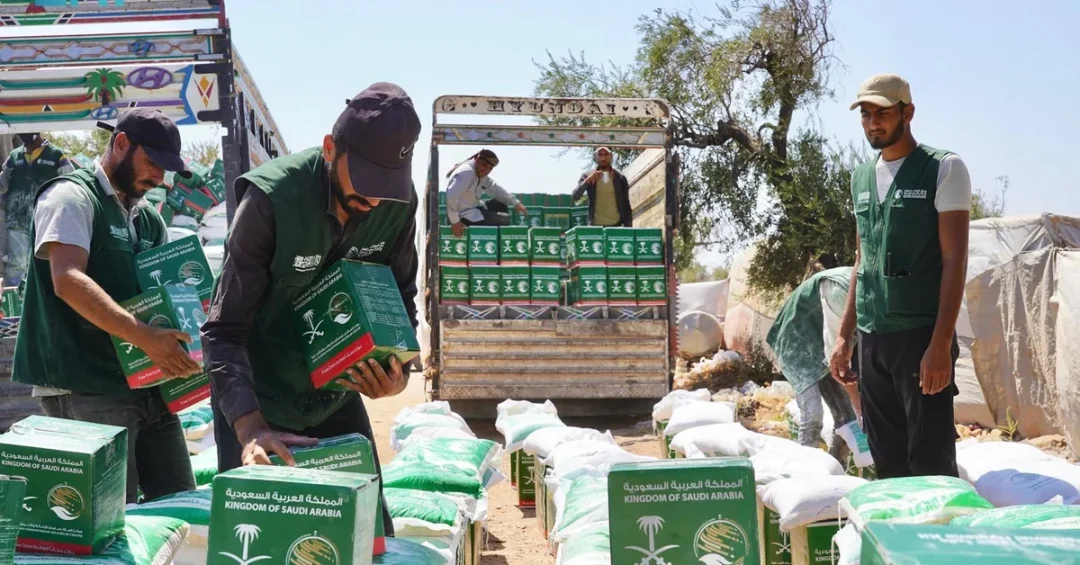
The King Salman Humanitarian Aid and Relief Center (KSrelief) distributed 1,592 food baskets and health kits to 796 families in Azaz City, in Syria’s Aleppo Governorate, on Tuesday, benefiting a total of 4,776 individuals. The distribution was part of the second phase of a project to provide food assistance and health kits to earthquake-affected populations in northern Syria for 2024, according to the Saudi Press Agency (SPA).
Context and Background
This humanitarian effort reflects the Kingdom of Saudi Arabia’s ongoing commitment to alleviating the suffering of those in need across the world. The project targets communities still recovering from the devastating earthquakes that struck the region in February 2023, which displaced millions and left critical infrastructure in ruins. KSrelief, the humanitarian arm of Saudi Arabia, has been at the forefront of relief operations in Syria, delivering essential aid to vulnerable populations.
The second phase of the project focuses on providing food security and basic health supplies to earthquake-affected families in northern Syria. Azaz City, located near the Turkish border, hosts a large number of internally displaced persons (IDPs) who continue to face harsh living conditions. The distribution of 1,592 food baskets and health kits is a vital lifeline for these communities.
Key Details
The aid distribution on Tuesday reached 796 families, translating to 4,776 individuals who received food baskets and health kits. Each food basket typically contains staple items such as rice, flour, oil, and canned goods, while health kits include essential medical supplies and hygiene products. This initiative is part of KSrelief’s broader efforts to address the humanitarian crisis in Syria, where years of conflict and natural disasters have left millions in need.
KSrelief has been actively involved in Syria since the onset of the crisis, implementing numerous projects in food security, health, education, and shelter. The center operates in coordination with local and international partners to ensure aid reaches the most vulnerable. The current project is a continuation of these efforts, specifically targeting areas affected by the 2023 earthquakes.
Implications and Impact
The distribution of food and health kits in Azaz is a critical intervention that addresses immediate needs while contributing to the long-term recovery of the region. By providing essential supplies, KSrelief helps stabilize communities, reduce malnutrition, and prevent disease outbreaks. This aid also supports the local economy by injecting resources into the area and creating temporary employment opportunities for distribution workers.
On a broader scale, this initiative reinforces Saudi Arabia’s role as a leading humanitarian donor and its commitment to international solidarity. It demonstrates the Kingdom’s dedication to supporting populations in crisis, irrespective of borders or politics, and aligns with global humanitarian principles. The operation also strengthens ties with international organizations and local partners, enhancing coordination in complex emergency settings.
Vision 2030 Alignment
Saudi Arabia’s Vision 2030 emphasizes the Kingdom’s global leadership and responsibility, including humanitarian and relief efforts. Through KSrelief, Saudi Arabia continues to extend a helping hand to those in need, showcasing the nation’s values of compassion and generosity. This initiative not only alleviates suffering but also enhances Saudi Arabia’s standing as a responsible global actor, committed to peace, stability, and human dignity. As the Kingdom advances its transformative agenda, it remains steadfast in its mission to contribute to a more humane and prosperous world.
20 Questions
Q1. What is KSrelief?
A1. KSrelief, or the King Salman Humanitarian Aid and Relief Center, is Saudi Arabia’s humanitarian arm, providing aid and relief to people in need worldwide. It was established in 2015 to coordinate and implement humanitarian projects globally.
Q2. Where did KSrelief distribute aid on Tuesday?
A2. KSrelief distributed aid in Azaz City, located in Syria’s Aleppo Governorate. Azaz is near the Turkish border and hosts many internally displaced persons.
Q3. How many families received aid?
A3. A total of 796 families received food baskets and health kits. This distribution benefited 4,776 individuals in the community.
Q4. How many individuals benefited from the aid?
A4. 4,776 individuals benefited from the aid. This includes men, women, and children affected by the earthquakes.
Q5. What was included in the aid?
A5. The aid included 1,592 food baskets and health kits. Food baskets contain staples like rice, flour, and oil, while health kits include medical supplies and hygiene items.
Q6. What phase of the project was this?
A6. This was part of the second phase of a project to provide food assistance and health kits to earthquake-affected populations in northern Syria for 2024.
Q7. Who are the beneficiaries of this project?
A7. The beneficiaries are earthquake-affected populations in northern Syria. These individuals are still recovering from the devastating earthquakes of February 2023.
Q8. Why is northern Syria in need of aid?
A8. Northern Syria has been severely affected by conflict and the 2023 earthquakes. Many people are displaced, lacking basic necessities like food and healthcare.
Q9. When did the earthquakes occur in Syria?
A9. The earthquakes struck in February 2023. They caused widespread destruction and displaced millions across the region.
Q10. How does KSrelief fund its projects?
A10. KSrelief is funded by the Saudi government and donations. It also partners with international organizations and local entities to implement projects.
Q11. What other projects does KSrelief have in Syria?
A11. KSrelief runs projects in food security, health, education, and shelter. These aim to support vulnerable populations across Syria.
Q12. How does this aid align with Saudi Vision 2030?
A12. It aligns with Vision 2030 by showcasing Saudi Arabia’s global leadership and humanitarian role. The Kingdom aims to contribute to a more stable and prosperous world.
Q13. What is the significance of this distribution?
A13. It provides immediate relief to those in need. It also contributes to long-term recovery and stability in the region.
Q14. Who reported this news?
A14. The Saudi Press Agency (SPA) reported the news. It is the official news agency of Saudi Arabia.
Q15. How does KSrelief choose its beneficiaries?
A15. KSrelief coordinates with local and international partners to identify the most vulnerable. Priority is given to those in severe need.
Q16. What are the health kits?
A16. Health kits contain essential medical supplies and hygiene products. They help prevent disease and promote health in crisis situations.
Q17. What is the role of KSrelief in Saudi foreign policy?
A17. KSrelief plays a key role in Saudi foreign policy by providing humanitarian aid. It enhances the Kingdom’s image as a compassionate global actor.
Q18. How many food baskets were distributed?
A18. A total of 1,592 food baskets were distributed. These baskets provide essential food items for families.
Q19. What is the long-term goal of this project?
A19. The project aims to alleviate suffering and support recovery. It helps affected populations rebuild their lives and communities.
Q20. How can other countries support similar efforts?
A20. Other countries can support by donating to humanitarian organizations. They can also collaborate with KSrelief and other agencies on relief projects.
Reader Feedback
We value your thoughts. Please share your feedback on this article.
Your feedback helps us improve our coverage.