


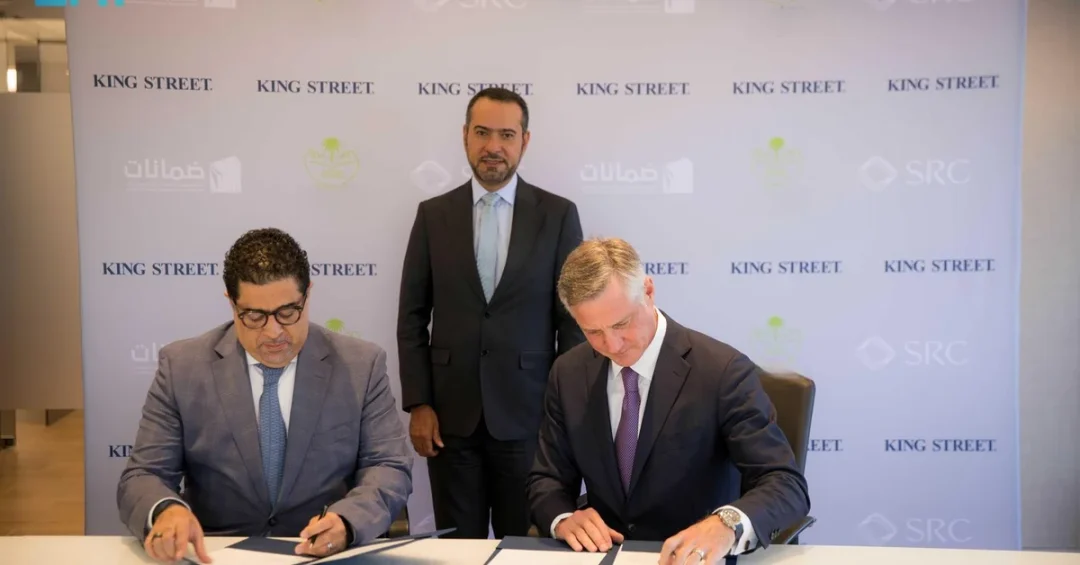
The Saudi Real Estate Refinance Company (SRC), a Public Investment Fund (PIF) company, signed a memorandum of understanding (MoU) with King Street Capital Management in New York City on August 23, 2024, to foster cooperation and strategic partnership in the real-estate finance sector. The agreement, signed under the patronage and in the presence of Majed bin Abdullah Al-Hogail, Minister of Municipalities and Housing and SRC chairman, marks a significant step in enhancing bilateral cooperation between Saudi Arabia and the United States in urban development, construction, finance, and real-estate development. The MoU was signed by Majeed Fahd Al-Abdul Jabbar, SRC chief executive, and Brian J. Higgins, King Street managing partner, as part of the minister’s official visit to the United States.
Context and Background
The Saudi Real Estate Refinance Company was established in 2017 by the Public Investment Fund to support the housing program under Saudi Vision 2030. It plays a fundamental role in injecting liquidity into the residential real-estate finance market, ensuring its continuity and stability. Licensed by the Saudi Central Bank, SRC operates in real-estate refinancing, contributing to the development of a robust secondary market.
King Street Capital Management, founded in New York in 1995, is a global alternatives platform with expertise in credit, restructurings, structured credit, and real estate. This partnership aligns with Saudi Arabia’s efforts to attract foreign investment and diversify its economy.
Key Details of the MoU
The MoU aims to diversify liquidity sources to support the stability of the secondary real-estate finance market, foster economic growth, and attract more foreign investments to the Saudi market. It emphasizes the development of innovative financial instruments, such as the securitization of Sharia-compliant residential real-estate finance portfolios, tailored to meet the standards of specialized global investors.
SRC’s Jabbar confirmed that the agreement is part of efforts to provide necessary liquidity in the real-estate finance market, diversify financing options for the private sector, and create a new asset class for investors. These efforts contribute to the housing program’s goal of increasing homeownership among Saudi citizens to 70% by 2030.
King Street’s Higgins expressed pleasure with the partnership, noting that the initiative will develop local capital markets and create a structure to attract international investors seeking high-quality Saudi securities. He highlighted that the program will benefit homeowners and the banking system, aligning with Vision 2030 goals.
Implications and Impact
This MoU signifies a strengthening of economic ties between Saudi Arabia and the United States, particularly in real estate finance. By attracting foreign investment, it supports the growth and stability of the Saudi market. The development of new financial instruments will enhance the sophistication of Saudi capital markets, providing opportunities for both local and international investors.
The partnership is expected to boost the secondary real-estate finance market, making it more resilient and dynamic. It also underscores Saudi Arabia’s commitment to creating an enabling environment for private sector participation and international collaboration.
Vision 2030 Alignment
This agreement directly supports Saudi Vision 2030’s housing program, which aims to increase homeownership rates and diversify the economy. By fostering partnerships with global entities like King Street, SRC is advancing the Financial Sector Development Program, a key pillar of Vision 2030. The MoU exemplifies Saudi Arabia’s proactive approach to international cooperation and economic modernization, reinforcing the Kingdom’s role as a leading global investment destination.
20 Questions
Q1. What is the Saudi Real Estate Refinance Company (SRC)?
A1. SRC is a Public Investment Fund company established in 2017 to support Saudi Arabia’s housing program by providing liquidity to the real-estate finance market. It is licensed by the Saudi Central Bank and plays a key role in achieving Vision 2030 housing targets.
Q2. Who signed the MoU on behalf of SRC?
A2. The MoU was signed by Majeed Fahd Al-Abdul Jabbar, the chief executive of SRC. He represented the company in the agreement with King Street Capital Management, aiming to enhance cooperation in real-estate finance.
Q3. Who signed the MoU on behalf of King Street Capital Management?
A3. Brian J. Higgins, managing partner of King Street Capital Management, signed the MoU. He expressed enthusiasm for the partnership, which aims to develop local capital markets and attract international investors to Saudi Arabia.
Q4. Where was the MoU signed?
A4. The MoU was signed in New York City on August 23, 2024. The signing took place during the official visit of Minister Majed bin Abdullah Al-Hogail to the United States to explore partnership opportunities.
Q5. What is the main objective of the MoU?
A5. The MoU aims to foster cooperation and strategic partnership between SRC and King Street in the real-estate finance sector. It focuses on diversifying liquidity sources, supporting the secondary market’s stability, and attracting foreign investment.
Q6. How does the MoU support Vision 2030?
A6. The MoU supports Vision 2030 by contributing to the housing program’s goal of increasing homeownership to 70% by 2030. It also aligns with the Financial Sector Development Program by enhancing liquidity and creating new investment opportunities.
Q7. What are the key areas of cooperation outlined in the MoU?
A7. The MoU emphasizes developing innovative financial instruments, such as securitization of Sharia-compliant residential real-estate finance portfolios. It also aims to diversify liquidity sources and attract global investors to the Saudi market.
Q8. What is King Street Capital Management?
A8. King Street Capital Management is a global alternatives platform founded in New York in 1995. It invests across public and private markets, with expertise in credit, restructurings, structured credit, and real estate.
Q9. How will the MoU benefit homeowners in Saudi Arabia?
A9. The MoU will benefit homeowners by increasing liquidity in the real-estate finance market, leading to more accessible financing options. It also supports the stability of the housing sector, aligning with Vision 2030 goals.
Q10. What role does the Saudi Central Bank play in SRC’s operations?
A10. The Saudi Central Bank licenses SRC to operate in real-estate refinancing. This regulatory oversight ensures that SRC’s activities are conducted within a stable and secure financial framework, supporting market confidence.
Q11. How does the MoU aim to attract foreign investment?
A11. The MoU aims to attract foreign investment by creating high-quality Sharia-compliant securities tailored for international investors. It also seeks to diversify liquidity sources and develop new financial instruments that meet global standards.
Q12. What is the significance of the secondary real-estate finance market?
A12. The secondary market provides liquidity to primary lenders, enabling them to offer more housing loans. A stable secondary market supports economic growth and helps achieve housing targets under Vision 2030.
Q13. What are Sharia-compliant residential real-estate finance portfolios?
A13. These are investment portfolios that adhere to Islamic finance principles, avoiding interest and excessive uncertainty. They are designed to be attractive to both local and international investors seeking ethical investment opportunities.
Q14. How does this MoU reflect Saudi-US cooperation?
A14. The MoU reflects Saudi-US cooperation in urban development and finance, as it was signed during an official visit to the US. It strengthens bilateral ties and promotes economic collaboration between the two nations.
Q15. What is the expected impact on the Saudi capital markets?
A15. The MoU is expected to enhance the Saudi capital markets by introducing new asset classes and attracting international investors. It will contribute to the development of a more sophisticated and resilient financial ecosystem.
Q16. Who is Majed bin Abdullah Al-Hogail?
A16. Majed bin Abdullah Al-Hogail is the Minister of Municipalities and Housing and chairman of SRC. He attended the MoU signing, highlighting the government’s support for such partnerships that drive housing sector growth.
Q17. What are the housing program targets under Vision 2030?
A17. The housing program aims to increase homeownership among Saudi citizens to 70% by 2030. It also seeks to improve housing quality, affordability, and sector sustainability through various initiatives and partnerships.
Q18. How does SRC contribute to the Financial Sector Development Program?
A18. SRC contributes by providing liquidity to the real-estate finance market and diversifying financing options. This supports the program’s goal of creating a diversified and effective financial sector to support economic growth.
Q19. What is the significance of creating a new asset class for investors?
A19. Creating a new asset class provides investors with diversified opportunities in Sharia-compliant securities. It enhances market depth, attracts foreign capital, and supports the growth of Saudi Arabia’s financial markets.
Q20. What future steps are anticipated following this MoU?
A20. Following the MoU, SRC and King Street will collaborate to develop and implement the outlined initiatives. This includes structuring Sharia-compliant instruments and exploring further opportunities to enhance the secondary market.
Reader Feedback
We value your thoughts. Please share your feedback on this article.
Your feedback helps us improve our coverage.