


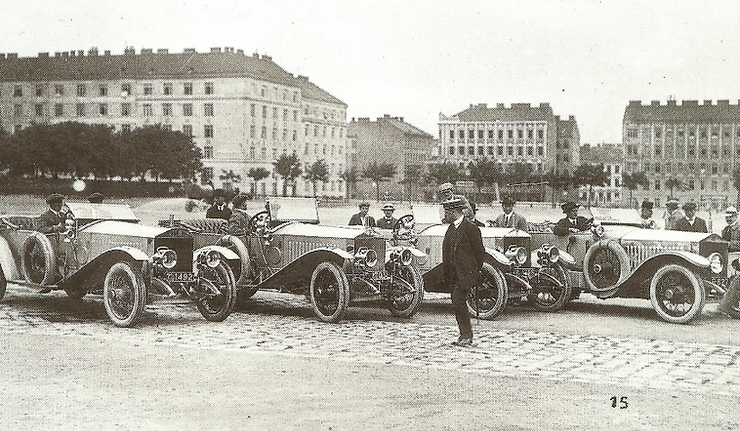
Marking 110 years since the Alpine Trial triumph, Rolls-Royce reflects on the 1913 victory that cemented the Silver Ghost as “the best car in the world.” The grueling 2,600-km challenge showcased unmatched performance, forging a legacy of excellence still revered today.
Factbox (50 words):
– 1913 Alpine Trial: 8 days, 2,600 km through Alps.
– Result: Rolls-Royce Silver Ghosts dominated; 31 of 46 cars finished.
– Legacy: 80% of all Rolls-Royce cars ever built still exist.
– Anniversary: 110 years of the “best car” title.
Celebrating 110 Years of Excellence: Rolls-Royce and the Legendary 1913 Alpine Trial
A Triumph That Shaped Automotive History
In 1913, Rolls-Royce cemented its place in automotive legend with a victory so profound it still resonates today. The Alpine Trial—a grueling 2,600-kilometer, eight-day endurance test across Europe’s most treacherous mountain passes—was not just a race but a proving ground for innovation, durability, and engineering brilliance. On its 110th anniversary, Rolls-Royce reflects on how this historic achievement solidified the Silver Ghost’s reputation as “the best car in the world”—a title the marque proudly upholds to this day.
The Alpine Trial: A Daunting Challenge
The 1913 Alpine Trial was no ordinary competition. Designed to push vehicles to their limits, it featured punishing gradients, rocky terrain, and extreme weather—all on rudimentary roads. For Rolls-Royce, then a young company founded just nine years prior, this was an opportunity to dominate the European market. Claude Johnson, the visionary managing director known as “the hyphen in Rolls-Royce,” saw victory here as critical to global acclaim.
Key Preparations:
– The Works Team: Handpicked drivers and engineers, including Eric Platford, Curt Friese, and Jock Sinclair, led the charge.
– Silver Ghost Modifications: Strengthened chassis, a four-speed gearbox with a low “Alpine” gear, larger fuel tanks, and a cold-weather ignition system.
– Reconnaissance Mission: A pre-Trial test in May 1913 confirmed the cars’ readiness, even in brutal conditions.
Conquering the Alps: A Day-by-Day Saga
The Trial’s relentless stages tested both machine and mettle. Here’s how Rolls-Royce triumphed:
1. Day 1 – Vienna to Semmering Pass (260 miles):
The Silver Ghosts surged ahead, outpacing rivals with ease. James Radley, a privateer driving a Silver Ghost, set a blistering pace.
2. Day 2 – Tauren Pass (262 miles, 27.9% gradient):
Amid torrential rain, competitors faltered—but the Silver Ghosts climbed effortlessly, Radley averaging 25 mph.
3. Day 4 – Pordoi Pass (7,400 ft elevation):
Snowstorms battered the Dolomites, yet Rolls-Royce claimed the top four positions.
4. Day 6 – Loibl Pass (2,300 ft in 3 miles):
Radley shattered ascent records, sipping a drink mid-climb to the crowd’s astonishment.
5. Day 7 – Stubalpe Pass to Vienna:
A collision nearly derailed Jock Sinclair’s car, but he limped to the finish in third gear—proving resilience under pressure.
Result: Only 31 of 46 starters finished. Rolls-Royce swept individual awards, with Radley hailed as a hero.
Legacy of the Silver Ghost
The Trial’s impact was immediate and enduring:
– European Expansion: Sales skyrocketed as the Silver Ghost became synonymous with unrivaled quality.
– “The Best Car in the World”: The title, first earned here, remains core to Rolls-Royce’s identity.
– Enduring Craftsmanship: Over 80% of all Rolls-Royce cars ever built still exist today—a testament to timeless engineering.
From 1913 to Goodwood: A Century of Stewardship
Torsten Müller-Ötvös, CEO of Rolls-Royce Motor Cars, reflects:
> “The Alpine Trial wasn’t just a race—it was a declaration of excellence. At Goodwood, we honor that legacy by hand-building cars that embody the same spirit: performance, innovation, and perfection.”
In 2023, as the Goodwood facility marks its 20th anniversary, the marque continues to blend heritage with cutting-edge technology. Every Rolls-Royce today—from Phantom to Spectre—carries the DNA of the Silver Ghost: a relentless pursuit of greatness.
Epilogue: The Ghosts Still Roam
Many original Silver Ghosts still glide across continents, cherished by collectors who preserve their mechanical artistry. Their survival is a tribute to Rolls-Royce’s founding principles—principles that still guide the brand as it navigates the future of luxury mobility.
“We don’t just build cars; we curate history.”
Explore More:
Discover the Home of Rolls-Royce at Goodwood, where heritage and innovation collide. Join us in celebrating 110 years of the Alpine Trial—a milestone in the pursuit of automotive perfection.
(WordPress Tip: Embed archival photos of the 1913 Trial, Silver Ghost close-ups, and modern Goodwood craftsmanship for visual storytelling.)
FAQs: Rolls-Royce’s 1913 Alpine Trial Victory & Legacy
1. Why is the 1913 Alpine Trial significant for Rolls-Royce?
The victory cemented the Silver Ghost’s reputation as “the best car in the world,” showcasing unmatched durability and performance, which became foundational to Rolls-Royce’s global prestige and engineering ethos.
2. What modifications were made to the Silver Ghost for the trial?
Upgrades included a four-speed gearbox with a low gear, reinforced chassis/suspension, a larger fuel tank, and a cold-weather starting system enabling sub-freezing ignition in under a minute.
3. Who were the key figures behind Rolls-Royce’s 1913 victory?
Claude Johnson (managing director), drivers Eric Platford, Curt Friese, Jock Sinclair, EW Hives, and privateer James Radley, whose leadership and skill ensured the team’s dominance.
4. How did the trial impact Rolls-Royce’s reputation?
It validated their engineering excellence, driving European sales growth and solidifying their status as a luxury leader—a title still upheld today through innovation and craftsmanship.
5. What were the toughest challenges during the Alpine Trial?
Extreme alpine conditions: snow, steep gradients (up to 27.9%), poor roads, and temperatures. Competitors faced mechanical failures, but Silver Ghosts excelled in reliability and speed.
6. What was the route of the 1913 Alpine Trial?
A 2,600 km, eight-day route through Vienna, Tauren Pass, Dolomites, Lake Garda, Trieste, Klagenfurt, and Stubalpe Pass, testing endurance across diverse terrains and elevations.
7. How many cars finished the 1913 Alpine Trial?
Only 31 of 46 starters completed the trial, with Rolls-Royce Works Team cars dominating daily rankings and earning top individual accolades.
8. What awards did Rolls-Royce receive post-victory?
Drivers earned awards from Archduke Leopold Salvator, while James Radley received a special commendation from Trieste for his record-breaking ascent of the Loibl Pass.
9. Why did Rolls-Royce stop entering works teams after 1913?
The victory secured their global reputation, making further competitions unnecessary. The brand shifted focus to sustaining excellence in production vehicles.
10. How did the win affect Rolls-Royce’s European sales?
European demand surged post-trial, as the victory proved the Silver Ghost’s superiority in challenging conditions, boosting the marque’s continental market presence.
11. What is the legacy of the 1913 Alpine Trial?
It established design and engineering standards still reflected in modern Rolls-Royces: performance, durability, comfort, and innovation, with 80% of historic models still operational today.
12. Are any 1913 Silver Ghosts still operational?
Yes, many remain functional due to meticulous care by owners. These cars participate in heritage events, demonstrating their enduring capabilities over a century later.
13. How does Rolls-Royce honor the 1913 victory today?
Through anniversary celebrations, heritage reenactments, and upholding the Silver Ghost’s principles in modern vehicles, such as hand-built craftsmanship at Goodwood, which marks its 20th anniversary in 2023.
14. What made the Silver Ghost suited for alpine conditions?
Technical enhancements like reinforced components, optimized gearing, and cold-start systems allowed it to conquer steep gradients, snow, and rough terrain without mechanical stress.
15. How long was the 1913 Alpine Trial, and what was its duration?
The trial spanned eight days and 2,600 kilometers, testing competitors’ endurance across the Alps’ most demanding passes and weather conditions.
CTA: Descubre la Excelencia que Trasciende el Tiempo
¿Listo para ser parte de una leyenda? Explore la colección actual de Rolls-Royce y experimente la herencia de ingeniería, diseño y perfección que comenzó con el Silver Ghost. Conozca más sobre nuestra historia, reserve una experiencia de conducción exclusiva o conecte con nuestro equipo en Goodwood para descubrir cómo continuamos definiendo el estándar de excelencia automotriz. Visite nuestro sitio oficial o contacte a su concesionario más cercano y escriba el próximo capítulo de su propia historia con Rolls-Royce.
Conclusión: Un Legado que Condujo al Futuro
La victoria en el Alpine Trial de 1913 no fue solo un triunfo en una competencia; fue el nacimiento de un estándar inmutable. Durante 110 años, Rolls-Royce ha transformado obstáculos en innovación, desafíos en leyendas y viajes en experiencias inolvidables. Hoy, cada vehículo que sale de Goodwood lleva en su ADN la misma audacia del Silver Ghost: una fusión inquebrantable de rendimiento, artesanía y comodidad. El título de “el mejor automóvil del mundo” no es un recuerdo, sino una promesa que se renueva con cada generación.
Agradecimiento: Honrando a los Visionarios
En este aniversario, Rolls-Royce rinde homenaje a los pioneros que hicieron posible esta hazaña: desde Claude Johnson y su equipo intrépido hasta los ingenieros y artesanos anónimos cuyas manos forjaron el camino. Agradecemos también a los propietarios y coleccionistas, guardianes de un patrimonio que sigue rodando con elegancia atemporal. Su pasión y dedicación mantienen viva la llama de la innovación y el lujo. A todos, presentes y pasados, les decimos: Gracias por ser parte de un viaje que, como el Silver Ghost, nunca se detiene.
Este artículo es un tributo a quienes desafían los límites y crean lo extraordinario. Rolls-Royce Motor Cars: donde la historia se convierte en futuro.
Related articles
 Audi Sport excels in 2023 Dakar Rally, using electric RS Q e-tron
 Rolls-Royce reaffirms commitment to Dare to Dream mentoring program
 Hockenheim’s Festival of Dreams features one-make cup races
 Top 8 Saudi Arabian SUVs
 Porsche’s António Félix da Costa finishes third at Hyderabad E-Prix
 Next-Gen Ranger Raptor: fast, powerful mid-size pickup