


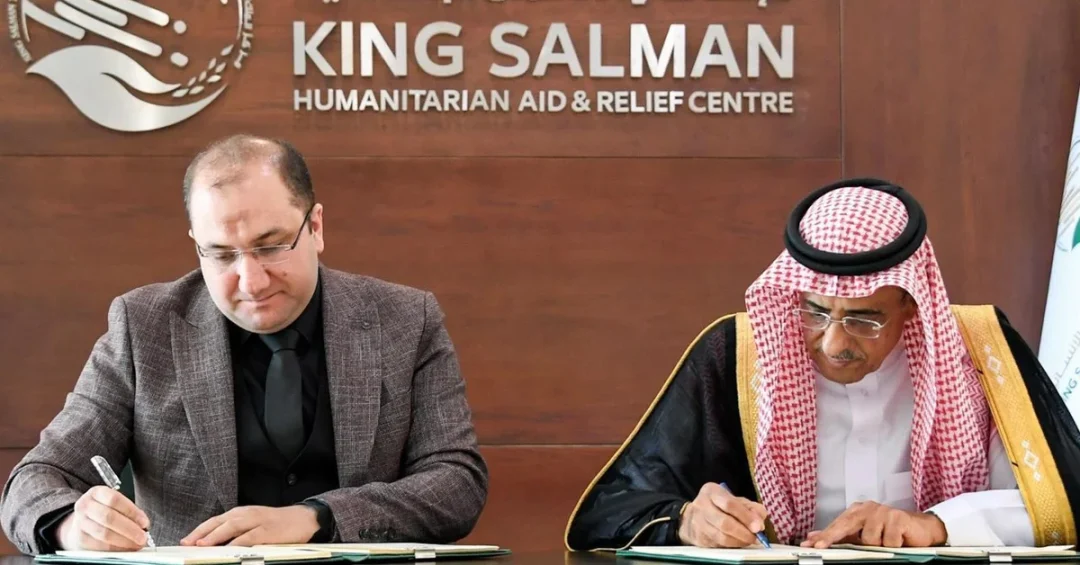
Riyadh, May 11, 2024 – The King Salman Humanitarian Aid and Relief Center (KSrelief) has signed a cooperation agreement with the international Wars and Disaster’s victims’ protection Association (IRVD) to implement the Artificial Limbs and Rehabilitation Center project in Yemen’s Aden Governorate. The agreement, signed at KSrelief’s headquarters in Riyadh, aims to provide physical rehabilitation services to individuals with special needs in Yemen, furthering the Kingdom’s commitment to humanitarian relief in the region.
Context and Background
Yemen continues to face a severe humanitarian crisis, with millions in need of assistance. The signing of this agreement is part of Saudi Arabia’s ongoing efforts, through KSrelief, to support the Yemeni people. KSrelief, the Kingdom’s humanitarian arm, has implemented numerous projects across Yemen, focusing on health, education, and relief aid. This new initiative specifically addresses the needs of individuals requiring prosthetic limbs and rehabilitation services, a critical area often overlooked in conflict zones.
Key Details
KSrelief Assistant Supervisor General for Operations and Programs Eng. Ahmed bin Ali Al-Baiz signed the agreement on behalf of the center. The director of KSrelief’s Health and Environmental Assistance Department, Dr. Abdullah Al-Muallem, explained that the project will provide comprehensive physical rehabilitation services. It will diagnose and determine treatment plans for each patient individually, install all types of prosthetic limbs, and offer functional rehabilitation services. The project is expected to benefit 2,308 individuals, significantly improving their quality of life.
Implications and Impact
The project is a testament to Saudi Arabia’s leadership in humanitarian response. By providing prosthetic limbs and rehabilitation, the initiative will enable beneficiaries to regain mobility and independence, fostering social inclusion and reducing the long-term burden on families and communities. It also strengthens Saudi-Yemeni ties, demonstrating the Kingdom’s solidarity with its neighboring country during a challenging period. The agreement aligns with international humanitarian standards and reinforces Saudi Arabia’s role as a global donor.
Vision 2030 Alignment
This humanitarian initiative reflects the principles of Saudi Vision 2030, which emphasizes the Kingdom’s role as a leading humanitarian actor. It showcases the Kingdom’s commitment to supporting regional stability and prosperity, in line with its strategic goals. By addressing urgent needs in Yemen, Saudi Arabia continues to uphold its duty towards the Yemeni people, contributing to a more stable and resilient region. The project is a tangible example of Vision 2030’s humanitarian values in action.
20 Questions
Q1. What is the Artificial Limbs and Rehabilitation Center project?
A1. The project is an initiative by KSrelief to establish a center in Aden, Yemen, providing prosthetic limbs and rehabilitation services to individuals with special needs.
Q2. Which organizations are involved in this agreement?
A2. The agreement is between KSrelief, Saudi Arabia’s humanitarian arm, and the international Wars and Disaster’s victims’ protection Association (IRVD).
Q3. When was the agreement signed?
A3. The agreement was signed on May 11, 2024, at KSrelief’s headquarters in Riyadh.
Q4. Who signed the agreement on behalf of KSrelief?
A4. Eng. Ahmed bin Ali Al-Baiz, KSrelief Assistant Supervisor General for Operations and Programs, signed the agreement.
Q5. What services will be provided?
A5. Services include diagnosing and planning treatment, installing prosthetic limbs, and providing functional rehabilitation services.
Q6. How many individuals are expected to benefit?
A6. The project is expected to benefit 2,308 individuals.
Q7. Where will the center be located?
A7. The center will be located in Yemen’s Aden Governorate.
Q8. Why is this project important?
A8. It addresses the needs of people with disabilities in Yemen, providing them with mobility aids and rehabilitation to improve their quality of life.
Q9. What is the role of KSrelief?
A9. KSrelief is the humanitarian agency of Saudi Arabia, implementing projects to alleviate suffering in Yemen and other countries.
Q10. How does this align with Saudi Arabia’s foreign policy?
A10. It reflects Saudi Arabia’s commitment to humanitarian diplomacy and supporting neighboring countries in crisis.
Q11. What is Vision 2030’s relevance?
A11. Vision 2030 emphasizes Saudi Arabia’s global humanitarian role, and this project exemplifies that commitment.
Q12. What is IRVD?
A12. IRVD is an international association dedicated to protecting victims of wars and disasters, partnering with KSrelief on this project.
Q13. How will patients be selected?
A13. Patients will be diagnosed individually, and treatment plans will be determined based on their specific needs.
Q14. What types of prosthetics will be provided?
A14. The project will install all types of prosthetic limbs, presumably including upper and lower limb prosthetics.
Q15. What does rehabilitation include?
A15. Rehabilitation includes functional training to help patients use their prosthetic limbs effectively.
Q16. How will this project impact Yemen’s healthcare system?
A16. It will provide specialized care not widely available, easing the burden on local healthcare facilities.
Q17. What is the source of this information?
A17. The information is from the Saudi Press Agency (SPA), the official Saudi news agency.
Q18. Is this the first KSrelief project in Yemen?
A18. No, KSrelief has implemented numerous projects in Yemen across various sectors since the crisis began.
Q19. How can other organizations support this initiative?
A19. They can partner with KSrelief or provide additional resources to expand the reach of such humanitarian efforts.
Q20. What is the expected outcome of this project?
A20. The project aims to improve the mobility and independence of 2,308 individuals, contributing to their social and economic integration.
Reader Feedback
We value your thoughts. Please share your feedback on this article.
Your feedback helps us improve our coverage.