


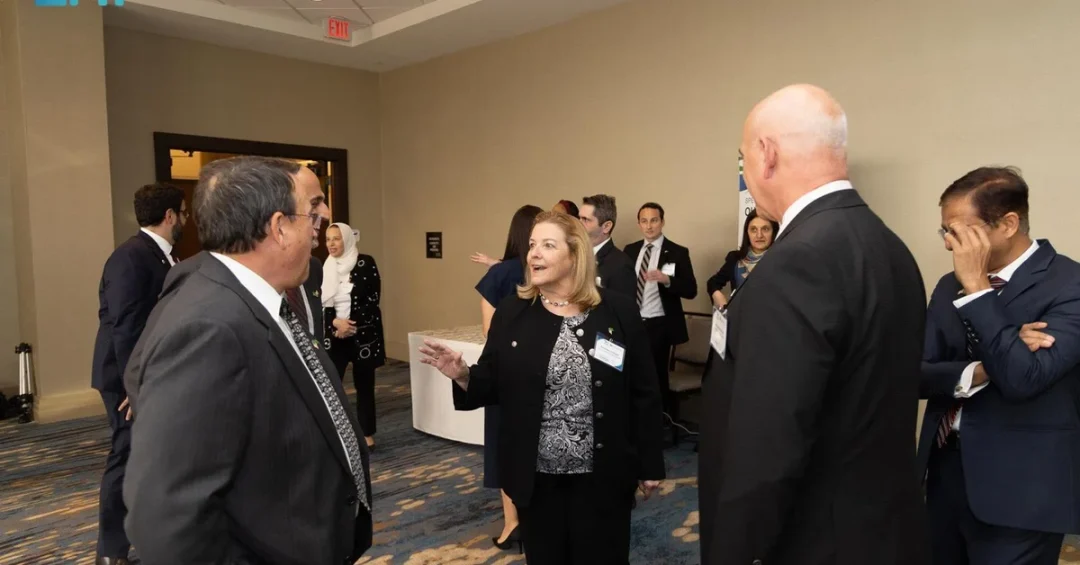
The Saudi-U.S. Business Council marked its 30th anniversary with a ceremony in Houston, Texas, bringing together business leaders, investors, and officials from both nations to celebrate three decades of economic partnership. The event, held in the presence of Saudi Consul General Shafi Bajad Al Otaibi, council co-chairman Abdallah Jum’ah, and council executive director and interim president Susanne Lendman, highlighted the council’s role in fostering trade and investment ties under Saudi Vision 2030.
Context and Background
Established in 1994, the Saudi-U.S. Business Council has been a cornerstone of commercial diplomacy between the Kingdom of Saudi Arabia and the United States. Over the past 30 years, it has facilitated more than 60 business development missions and over 500 seminars and networking events, creating a robust platform for collaboration. The council’s work aligns with the transformative goals of Saudi Vision 2030, which seeks to diversify the Kingdom’s economy and expand international partnerships.
Susanne Lendman underscored the council’s enduring commitment: “For three decades, the U.S.-Saudi Business Council has been a solid partner in facilitating new business ventures between Saudi and American companies, and with the significant transformations the Kingdom is witnessing under the Saudi Vision 2030, we are honored to contribute to these dynamic developments.”
Key Details
During the ceremony, Abdallah Jum’ah reflected on the council’s achievements, noting that traditional trade is no longer the sole mode of cooperation. He emphasized that the Kingdom’s rapid progress has opened new horizons in sectors such as tourism, entertainment, and transport, mirroring the diversification objectives of Saudi Vision 2030. American exports to Saudi Arabia reached $13.87 billion in 2023, a testament to the thriving trade relationship.
The event also witnessed the signing of several memoranda of understanding between Saudi and American companies, further solidifying the council’s role as a catalyst for bilateral business growth. These agreements span various industries, promising to deepen economic ties and create new opportunities for investors.
Implications and Impact
The 30th anniversary celebration underscores the strategic importance of Saudi-U.S. economic relations, which have evolved beyond oil to encompass technology, healthcare, renewable energy, and entertainment. The council’s efforts support the Kingdom’s goal of attracting foreign investment and enhancing non-oil exports, key pillars of Vision 2030. For the United States, Saudi Arabia remains a vital market for goods and services, with the potential for further expansion as the Kingdom modernizes.
Regional and international observers view the council’s work as a model for cross-border collaboration, particularly as Saudi Arabia positions itself as a global hub for business and innovation. The MoUs signed in Houston signal continued confidence in the Saudi market and a shared commitment to mutual prosperity.
Vision 2030 Alignment
The Saudi-U.S. Business Council’s 30-year legacy directly supports Vision 2030 by fostering economic diversification, promoting international partnerships, and showcasing the Kingdom’s dynamic business environment. As Saudi Arabia accelerates its transformation, the council will remain instrumental in bridging opportunities between Saudi and American enterprises, driving sustainable growth, and contributing to a prosperous future for both nations.
20 Questions
Q1. What is the Saudi-U.S. Business Council?
A1. The Saudi-U.S. Business Council is a bilateral organization established in 1994 to facilitate trade and investment between Saudi Arabia and the United States through business missions, seminars, and networking events.
Q2. When was the council founded?
A2. The council was founded in 1994 and celebrated its 30th anniversary in 2024, marking three decades of promoting economic cooperation between the two countries.
Q3. Who attended the 30th anniversary ceremony?
A3. The ceremony in Houston was attended by Saudi Consul General Shafi Bajad Al Otaibi, council co-chairman Abdallah Jum’ah, executive director Susanne Lendman, and business leaders from both nations.
Q4. What did Susanne Lendman say about the council?
A4. Lendman highlighted the council’s role as a solid partner in facilitating business ventures and noted its contribution to Saudi Vision 2030 through over 60 missions and 500 events.
Q5. How much were American exports to Saudi Arabia in 2023?
A5. American exports to the Kingdom reached $13.87 billion in 2023, reflecting the strong and growing trade relationship between the two countries.
Q6. What did Abdallah Jum’ah emphasize in his speech?
A6. Jum’ah emphasized the council’s achievements over three decades and noted that cooperation now extends beyond traditional trade to sectors like tourism, entertainment, and transport.
Q7. What agreements were signed at the ceremony?
A7. Several memoranda of understanding were signed between Saudi and American companies, aimed at enhancing bilateral business cooperation across various industries.
Q8. How does the council support Saudi Vision 2030?
A8. The council supports Vision 2030 by promoting economic diversification, attracting foreign investment, and facilitating partnerships that align with the Kingdom’s modernization goals.
Q9. What sectors are now included in Saudi-U.S. business cooperation?
A9. Cooperation has expanded to include tourism, entertainment, transport, technology, healthcare, and renewable energy, reflecting the broad scope of Vision 2030.
Q10. Where was the 30th anniversary ceremony held?
A10. The ceremony took place in Houston, Texas, a major hub for energy and business, symbolizing the deep economic ties between Saudi Arabia and the United States.
Q11. What is the significance of the council’s 30-year milestone?
A11. The milestone highlights the enduring partnership between Saudi Arabia and the U.S., showcasing decades of successful collaboration and the potential for future growth.
Q12. How many business development missions has the council organized?
A12. The council has organized more than 60 business development missions, connecting companies and fostering new ventures between the two countries.
Q13. What role does the council play in Saudi-U.S. relations?
A13. The council serves as a bridge for commercial diplomacy, enhancing economic ties and supporting the strategic partnership between Saudi Arabia and the United States.
Q14. Who is the Saudi Consul General in Houston?
A14. Shafi Bajad Al Otaibi serves as the Saudi Consul General in Houston and attended the ceremony, underscoring the official support for the council’s activities.
Q15. How many seminars and networking events has the council held?
A15. The council has held over 500 seminars and networking events, providing platforms for knowledge exchange and relationship building among businesses.
Q16. What are the ultimate goals of the council?
A16. The council aims to enable partnerships, enhance growth, and shape the future together, as stated by Susanne Lendman, aligning with Saudi Vision 2030.
Q17. How has the council adapted to Saudi Arabia’s transformation?
A17. The council has expanded its focus beyond oil to include new sectors emerging under Vision 2030, such as tourism and entertainment, reflecting the Kingdom’s economic diversification.
Q18. What impact do the MoUs have on Saudi-U.S. business?
A18. The MoUs strengthen collaboration, open new investment opportunities, and demonstrate confidence in the Saudi market, contributing to mutual economic growth.
Q19. Why is Houston significant for the anniversary event?
A19. Houston is a key center for energy and trade, making it a fitting location to celebrate the council’s legacy and its role in fostering Saudi-U.S. commercial ties.
Q20. How does the council contribute to Vision 2030’s global role?
A20. By facilitating international partnerships and showcasing Saudi Arabia’s business environment, the council helps position the Kingdom as a global investment hub aligned with Vision 2030.
Reader Feedback
We value your thoughts. Please share your feedback on this article.
Your feedback helps us improve our coverage.