


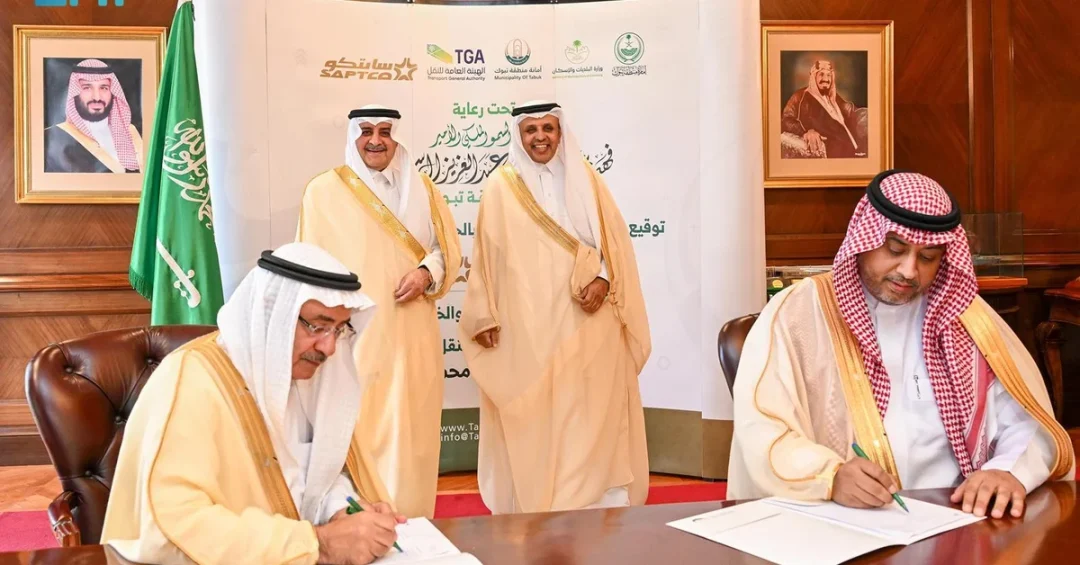
Prince Fahd bin Sultan bin Abdulaziz, Governor of Tabuk Region, witnessed the signing ceremony of a contract for the inaugural public bus transport project in Tabuk, marking a significant step in the Kingdom’s efforts to enhance urban mobility and sustainability. The agreement, signed on August 25, 2024, in Tabuk, establishes the first public transport system in Saudi Arabia where 25% of the bus fleet consists of environmentally friendly electric buses. The project will introduce four bus lanes spanning 128 kilometers, with 106 stops, and will be operated by 90 drivers using 23 diesel buses and seven electric buses, providing service for up to 18 hours daily.
Context and Background
The signing ceremony was attended by Prince Fahd bin Sultan bin Abdulaziz, who has consistently supported initiatives that improve the quality of life for residents and visitors in the Tabuk region. The contract was signed by Turki Al-Subaihi, CEO of Public Transport at the Saudi Public Transport Company (SAPTCO), and Eng. Hossam Al-Yousef, Mayor of Tabuk Region, in the presence of Dr. Rumaih bin Mohammed Al-Rumaih, Vice Minister of Transport and Logistic Services and Chairman of the Transport General Authority. This project aligns with the Kingdom’s broader efforts to develop a modern, efficient, and sustainable public transport network across various cities.
Key Details
The project includes four lanes extending over 128 kilometers, with 106 stops distributed along the routes to ensure accessibility for residents and visitors. The fleet will consist of 23 diesel buses and seven electric buses, with the electric buses representing 25% of the total fleet, marking a first for public transport in Saudi Arabia. A team of 90 drivers will operate the buses, which will run for up to 18 hours per day to accommodate the city’s transportation needs. During the ceremony, Prince Fahd emphasized the unremitting support provided by the Saudi leadership to the transport and logistics sector, highlighting the city’s keenness to improve road safety, reduce traffic congestion, and offer multiple transportation options.
Implications and Impact
This initiative is expected to significantly enhance urban mobility in Tabuk, reduce traffic congestion, and contribute to environmental sustainability through the introduction of electric buses. It sets a precedent for other regions in the Kingdom to adopt similar eco-friendly public transport solutions. The project also reflects the Kingdom’s commitment to improving the quality of life for its citizens and residents, in line with the objectives of Saudi Vision 2030. By providing an efficient and sustainable public transport system, Tabuk aims to attract more visitors and support economic growth in the region.
Vision 2030 Alignment
This public transport project directly supports Saudi Vision 2030’s goals of enhancing the quality of life, promoting sustainable development, and modernizing infrastructure. It demonstrates the Kingdom’s dedication to creating efficient, environmentally friendly transportation networks that serve both residents and visitors. As Saudi Arabia continues to invest in smart and sustainable urban solutions, initiatives like the Tabuk bus project will play a crucial role in achieving the vision’s objectives and positioning the Kingdom as a leader in innovative public transport.
20 Questions
Q1. What project was signed in Tabuk on August 25, 2024?
A1. The contract for the public transport project using buses in Tabuk was signed, marking the first such project in Saudi Arabia to include 25% electric buses.
Q2. Who witnessed the signing ceremony of the Tabuk public transport project?
A2. Prince Fahd bin Sultan bin Abdulaziz, Governor of Tabuk Region, witnessed the signing ceremony, demonstrating his support for improving urban mobility.
Q3. How many bus lanes will the Tabuk public transport project have?
A3. The project includes four lanes extending over 128 kilometers, designed to cover key routes and enhance connectivity across the city.
Q4. How many stops will be distributed along the bus routes?
A4. There will be 106 stops distributed along the routes, ensuring convenient access for residents and visitors throughout Tabuk.
Q5. What percentage of the buses will be electric?
A5. Twenty-five percent of the total buses used in the project will be environmentally friendly electric buses, a first for Saudi Arabia.
Q6. How many diesel and electric buses will be employed?
A6. The fleet will consist of 23 diesel buses and seven electric buses, totaling 30 buses to serve the city’s public transport needs.
Q7. How many drivers will operate the buses?
A7. Ninety drivers will be employed to operate the buses, ensuring reliable service throughout the day.
Q8. What is the daily operating time for the buses?
A8. The buses will operate for up to 18 hours per day, providing extensive coverage and convenience for passengers.
Q9. Who signed the contract on behalf of SAPTCO?
A9. Turki Al-Subaihi, CEO of Public Transport at the Saudi Public Transport Company (SAPTCO), signed the contract.
Q10. Who signed the contract on behalf of the Tabuk Municipality?
A10. Eng. Hossam Al-Yousef, Mayor of Tabuk Region, signed the contract, representing the municipality’s commitment to the project.
Q11. Who was present at the signing ceremony as a representative of the Ministry of Transport?
A11. Dr. Rumaih bin Mohammed Al-Rumaih, Vice Minister of Transport and Logistic Services and Chairman of the Transport General Authority, attended the ceremony.
Q12. What did Prince Fahd bin Sultan emphasize during the ceremony?
A12. He emphasized the unremitting support of the Saudi leadership for the transport and logistics sector, and the city’s keenness to improve quality of life and provide sustainable public transport.
Q13. How does the project aim to improve road safety?
A13. By providing an efficient public transport system, the project seeks to reduce traffic congestion and enhance road safety for all road users in Tabuk.
Q14. What are the environmental benefits of the project?
A14. The inclusion of electric buses will reduce carbon emissions and promote environmental sustainability, aligning with Saudi Arabia’s green initiatives.
Q15. How does this project align with Saudi Vision 2030?
A15. It supports Vision 2030 goals by enhancing quality of life, promoting sustainable development, and modernizing infrastructure to create efficient transportation networks.
Q16. What impact will the project have on Tabuk’s residents and visitors?
A16. It will provide multiple transportation options, reduce travel time, and improve accessibility, thereby enhancing the overall quality of life and visitor experience in Tabuk.
Q17. Will the project create job opportunities?
A17. Yes, the project will employ 90 drivers, contributing to local employment and economic growth in the region.
Q18. What is the significance of this project being the first of its kind in Saudi Arabia?
A18. It sets a precedent for integrating electric buses into public transport, showcasing the Kingdom’s commitment to innovation and sustainability in urban mobility.
Q19. How does the project reflect Saudi leadership’s support for the transport sector?
A19. The project is a direct result of the leadership’s continuous support, as highlighted by Prince Fahd, demonstrating a strategic focus on developing modern infrastructure.
Q20. What future developments can be expected in Saudi Arabia’s public transport?
A20. This project paves the way for more sustainable and technologically advanced public transport systems across the Kingdom, in line with Vision 2030 objectives.
Reader Feedback
We value your thoughts. Please share your feedback on this article.
Your feedback helps us improve our coverage.