


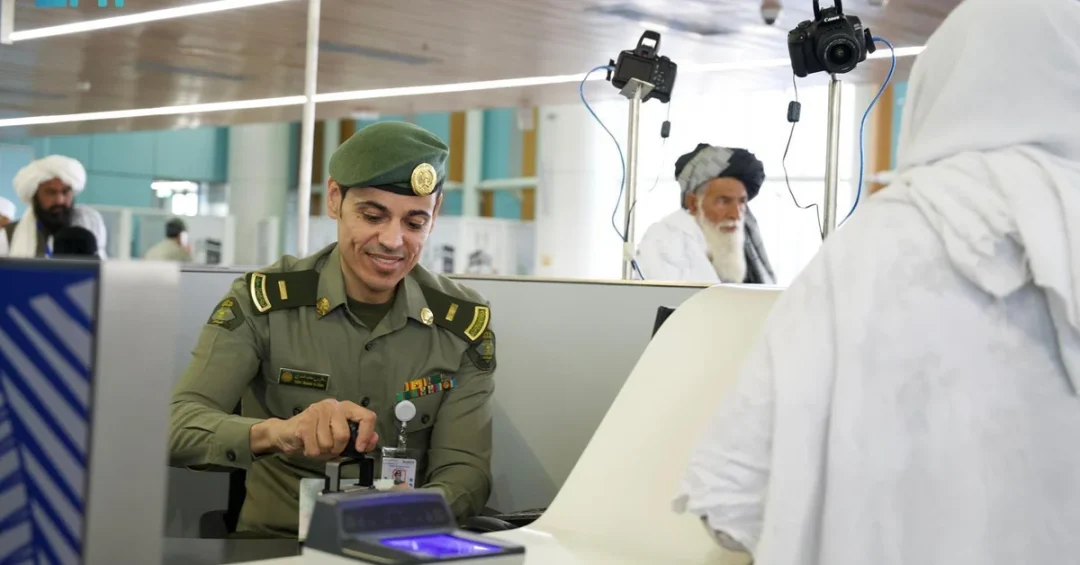
The Passports Office at Prince Mohammed bin Abdulaziz International Airport in Madinah has received the first batch of pilgrims arriving from Afghanistan for the Hajj season of 1445 Hijri. The Saudi Press Agency (SPA) reported on May 9, 2024, that the office smoothly processed all entry procedures, marking the start of the Kingdom’s welcoming of international pilgrims.
Context and Background
The arrival of Afghan pilgrims at the Madinah airport is a significant milestone in the annual Hajj pilgrimage, which is one of the largest religious gatherings in the world. Saudi Arabia, as the custodian of Islam’s holiest sites, has long been committed to facilitating the pilgrimage for Muslims from all over the globe. The General Directorate of Passports has declared its full readiness to handle the influx of pilgrims efficiently at all international airports, land borders, and seaports during the Hajj season.
This year’s Hajj is particularly notable as it follows the Kingdom’s successful management of the pilgrimage in recent years, which included implementing modern technologies and streamlined processes to enhance the experience of the faithful. The reception of Afghan pilgrims is part of a broader effort to ensure that all visitors are welcomed with dignity and respect, in line with the Kingdom’s Vision 2030 objectives to enhance the spiritual experience of pilgrims and expand the capacity of the Two Holy Mosques.
Key Details
The Passports Office at Prince Mohammed bin Abdulaziz International Airport in Madinah utilized state-of-the-art technological devices to expedite the entry procedures for the arriving pilgrims. The General Directorate of Passports reaffirmed its commitment to utilizing all available resources to streamline operations and facilitate the entry of pilgrims. This includes advanced biometric systems and electronic gates, which significantly reduce waiting times and improve the overall arrival experience.
Prince Mohammed bin Abdulaziz International Airport is one of the key entry points for pilgrims, as it serves the holy city of Madinah. The airport has been equipped with modern facilities and expanded to accommodate the large number of visitors during the Hajj season. The smooth processing of the first batch of Afghan pilgrims sets a positive tone for the rest of the pilgrimage season, indicating that the Kingdom’s infrastructure is well-prepared to handle the influx of worshippers.
Implications and Impact
The efficient processing of pilgrims from Afghanistan is part of Saudi Arabia’s broader strategy to improve the Hajj experience. The Kingdom has invested heavily in upgrading its airports, border crossings, and seaports to ensure they can handle the massive flow of people. This not only enhances the experience for pilgrims but also reflects Saudi Arabia’s commitment to serving the global Muslim community. The successful reception of the first batch of pilgrims also demonstrates the Kingdom’s capability to manage large-scale events with precision and care, which has international significance as it sets a benchmark for other countries hosting major religious or cultural gatherings.
The arrival of Afghan pilgrims, who come from a country with its own challenges, is a testament to the Kingdom’s openness and its role as a unifier of the Muslim world. By providing a smooth and dignified welcome, Saudi Arabia reinforces its position as a leader in the Islamic world and a key player in regional stability.
Vision 2030 Alignment
This event aligns with Saudi Arabia’s Vision 2030, which aims to enhance the spiritual experience of pilgrims and increase capacity to accommodate more than 30 million Umrah and Hajj visitors annually by 2030. The efficient and welcoming reception of Afghan pilgrims is a clear demonstration of the Kingdom’s dedication to this goal. By modernizing its infrastructure and leveraging advanced technologies, Saudi Arabia is not only fulfilling its religious duty but also fostering economic growth and international goodwill. The smooth operations at the Passports Office in Madinah are a small but significant step towards realizing the ambitions of Vision 2030, showcasing the Kingdom’s commitment to serving the global Muslim community and enhancing its global standing.
20 Questions
Q1. What is the significance of the Passports Office at Prince Mohammed bin Abdulaziz International Airport receiving the first batch of Afghan pilgrims?
A1. The arrival marks the beginning of the Hajj season for international pilgrims, showcasing Saudi Arabia’s readiness and commitment to facilitating the pilgrimage for Muslims worldwide, starting with Afghan pilgrims.
Q2. When did the first batch of Afghan pilgrims arrive in Madinah?
A2. The first batch arrived on May 9, 2024, as reported by the Saudi Press Agency, coinciding with the Hajj season of 1445 Hijri.
Q3. Which Saudi agency reported the arrival of the pilgrims?
A3. The Saudi Press Agency (SPA) reported the arrival, which is the official state news agency of Saudi Arabia.
Q4. What did the General Directorate of Passports declare regarding readiness?
A4. It declared its readiness to efficiently handle procedures for pilgrims at all international airports, land borders, and seaports during the Hajj season.
Q5. What technological devices are being used to expedite the processing of pilgrims?
A5. The Passports Office uses state-of-the-art technological devices, including advanced biometric systems and electronic gates, to streamline operations and reduce waiting times.
Q6. Which airport is the Passports Office located at?
A6. The office is located at Prince Mohammed bin Abdulaziz International Airport in Madinah, a key entry point for pilgrims visiting the holy city.
Q7. Why is Madinah important for Hajj pilgrims?
A7. Madinah is the second holiest city in Islam and houses the Prophet’s Mosque, making it a vital destination for pilgrims who often visit before or after Hajj in Mecca.
Q8. How does this event relate to Vision 2030?
A8. It aligns with Vision 2030’s goal to enhance the spiritual experience of pilgrims and increase capacity to accommodate over 30 million Umrah and Hajj visitors annually by 2030.
Q9. What is the role of the General Directorate of Passports?
A9. The General Directorate of Passports is a Saudi government agency responsible for managing entry and exit procedures, ensuring efficient processing of travelers, including pilgrims.
Q10. Are there similar receptions planned for pilgrims from other countries?
A10. Yes, the Kingdom prepares to welcome pilgrims from all over the world, with similar procedures in place at various entry points across the country.
Q11. What else has Saudi Arabia done to facilitate the Hajj pilgrimage?
A11. Saudi Arabia has invested in modernizing airports, expanding capacity, and implementing digital services like the Nusuk platform to streamline visa and travel arrangements for pilgrims.
Q12. How does the smooth processing of pilgrims impact their experience?
A12. Efficient processing reduces stress and waiting times, allowing pilgrims to focus on the spiritual aspects of their journey and enhancing their overall experience.
Q13. What is the significance of the Hajj season of 1445 Hijri?
A13. The Hijri year 1445 corresponds to 2024 in the Gregorian calendar, and the Hajj rituals are expected to take place in June 2024.
Q14. How does the reception of Afghan pilgrims reflect Saudi Arabia’s global role?
A14. It demonstrates Saudi Arabia’s leadership in the Islamic world and its commitment to serving Muslims from all nations, including those from challenging regions like Afghanistan.
Q15. Is there any quote from an official in the original text?
A15. No direct quotes were included in the original text, but the General Directorate’s declaration indicates a commitment to utilizing resources and technology.
Q16. What other entry points are the pilgrims expected to use?
A16. Pilgrims will also enter through other international airports, land borders, and seaports across Saudi Arabia, all of which are prepared per the General Directorate.
Q17. How does the use of technology benefit both pilgrims and the Kingdom?
A17. Technology speeds up processing, reduces operational costs, and positions Saudi Arabia as a leader in digital innovation, contributing to its reputation as a modern, efficient nation.
Q18. What are the primary duties of the Passports Office during Hajj?
A18. The primary duties include verifying travel documents, processing entry procedures, and ensuring the smooth flow of pilgrims while maintaining security and safety.
Q19. Could the arrival of Afghan pilgrims have any diplomatic implications?
A19. Yes, it strengthens ties between Saudi Arabia and Afghanistan, showing solidarity and cooperation, which can have positive diplomatic and cultural implications.
Q20. What can we expect in the coming weeks regarding Hajj arrivals?
A20. More batches of pilgrims from various countries will arrive as Hajj approaches, with Saudi authorities maintaining high efficiency and care throughout the season.
Reader Feedback
We value your thoughts. Please share your feedback on this article.
Your feedback helps us improve our coverage.