


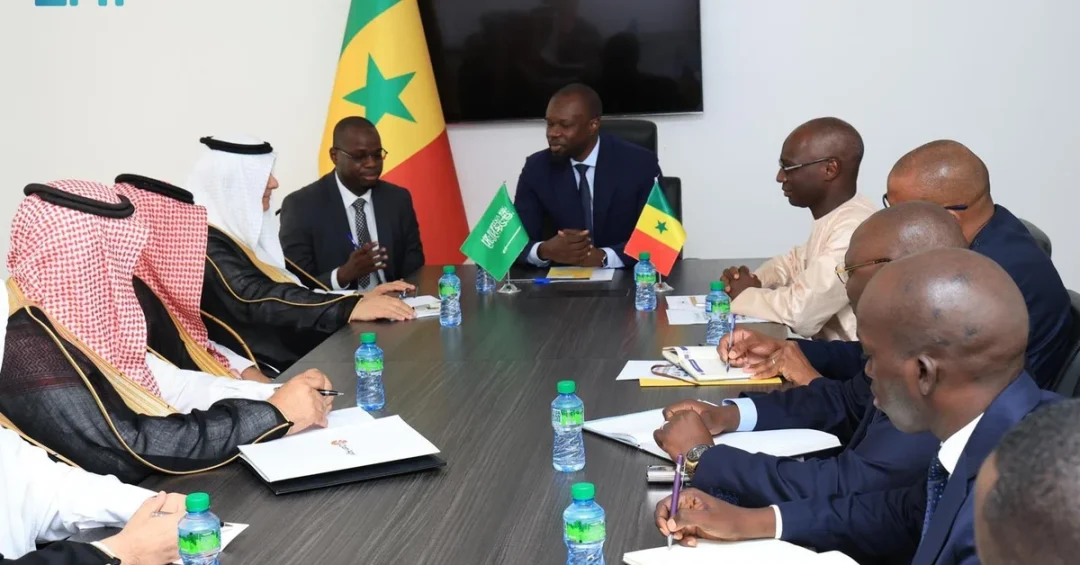
On May 8, 2024, in Dakar, Senegal, Saudi Minister of Environment, Water and Agriculture Abdulrahman Al-Fadley met with Senegalese Prime Minister Ousmane Sonko to discuss enhancing bilateral cooperation. The talks focused on agriculture, food security, fisheries, and livestock raising, marking a significant step in deepening ties between the Kingdom of Saudi Arabia and the Republic of Senegal.
Context and Background
This high-level meeting is part of Minister Al-Fadley’s broader tour of several African countries, aimed at bolstering cooperation and strategic partnerships. The visit aligns with the outcomes of the Saudi-African Summit held in Riyadh in November 2023, where leaders committed to strengthening ties between Saudi Arabia and the African continent. The meeting underscores the Kingdom’s proactive approach to engaging with African partners on issues of mutual interest, particularly in the vital sectors of food security and sustainable agriculture.
Key Details
During the meeting, both sides agreed to coordinate efforts to enhance cooperation across multiple fronts. Specific areas of focus included modern agricultural techniques, food security initiatives, sustainable fisheries management, and livestock raising practices. The discussions highlighted the shared commitment to leveraging these sectors to boost economic resilience and support long-term development goals.
Implications and Impact
The agreement is expected to yield significant benefits for both nations. For Senegal, collaboration with Saudi Arabia in agriculture and food security could introduce advanced technologies and investment opportunities, enhancing local productivity and food self-sufficiency. For Saudi Arabia, this partnership supports its strategy to diversify food imports and secure supply chains, aligning with its Vision 2030 goals. Additionally, the visit reinforces the Kingdom’s growing engagement with African nations, fostering economic growth and stability across the region.
Vision 2030 Alignment
This cooperation with Senegal exemplifies Saudi Arabia’s commitment to its Vision 2030, which emphasizes building strategic international partnerships, enhancing food security, and contributing to global stability. The Kingdom’s engagement in Africa, guided by the Saudi-African Summit’s framework, not only strengthens diplomatic ties but also opens new avenues for investment and knowledge exchange. As Saudi Arabia continues to pursue its ambitious development goals, partnerships like this with Senegal play a crucial role in achieving a diversified and sustainable economy.
20 Questions
Q1. Who met in Dakar on May 8, 2024?
A1. Saudi Minister of Environment, Water and Agriculture Abdulrahman Al-Fadley met with Senegal’s Prime Minister Ousmane Sonko in Dakar.
Q2. What was the main focus of the meeting?
A2. The talks centered on enhancing bilateral cooperation in agriculture, food security, fisheries, and livestock raising.
Q3. Which Saudi minister participated in the meeting?
A3. The Saudi Minister of Environment, Water and Agriculture, Abdulrahman Al-Fadley, partook in the discussions.
Q4. Who represented Senegal of the meeting?
A4. Senegal’s Prime Minister, Ousmane Sonko, represented the country at the meeting.
Q5. What specific sectors were discussed for cooperation?
A5. The sectors included agriculture, food security, fisheries, and livestock raising.
Q6. When did the meeting take place?
A6. The meeting occurred on May 8, 2024.
Q7. Where was the meeting held?
A7. The meeting was held in Dakar, the capital city of Senegal.
Q8. What did the two sides agree upon?
A8. They agreed to coordinate efforts to bolster cooperation in the specified sectors, aiming for mutual benefits.
Q9. Why is Minister Al-Fadley’s visit significant?
A9. His visit is part of a larger tour of African countries to strengthen cooperation and strategic partnerships, aligning with the Saudi-African Summit outcomes.
Q10. What was the Saudi-African Summit?
A10. The Saudi-African Summit was a meeting held in November 2023 in Riyadh, gathering leaders to enhance ties between Saudi Arabia and African nations.
Q11. How does this meeting benefit Senegal?
A11. It could lead to advanced agricultural technologies and investments from Saudi Arabia, improving Senegal’s food security and agricultural productivity.
Q12. How does this cooperation support Saudi Arabia’s Vision 2030?
A12. Vision 2030 aims to diversify food sources and build international partnerships, making such cooperation vital for achieving those goals.
Q13. Which countries is Al-Fadley visiting in Africa?
A13. The original report mentions several African countries, but specific names were not listed in the provided text.
Q14. What is the significance of the African tour?
A14. The tour underscores Saudi Arabia’s commitment to fostering partnerships with African nations, which can enhance economic, diplomatic, and strategic cooperation.
Q15. Are there any memorandum of understanding signed?
A15. The text does not mention any MoUs, only an agreement to coordinate efforts.
Q16. How does this align with Saudi Africa relations?
A16. It directly follows the Saudi-African Summit’s goals to strengthen ties, indicating a proactive approach in implementing the summit’s outcomes.
Q17. What might be the next steps following the meeting?
A17. Likely, both countries will work on specific programs or projects in the agreed sectors, possibly leading to technical teams and investment plans.
Q18. What is Saudi Arabia’s agricultural expertise?
A18. Saudi Arabia has advanced in modern farming techniques, water management, and sustainable agriculture, which it can share with Senegal.
Q19. How can fisheries and livestock raising cooperation help?
A19. Such cooperation can improve Senegal’s fishing industry and livestock productivity, contributing to both food security and economic growth.
Q20. Who reported this meeting?
A20. The meeting was reported by the Saudi Press Agency (SPA), the official news source of the Kingdom of Saudi Arabia.
Reader Feedback
We value your thoughts. Please share your feedback on this article.
Your feedback helps us improve our coverage.