


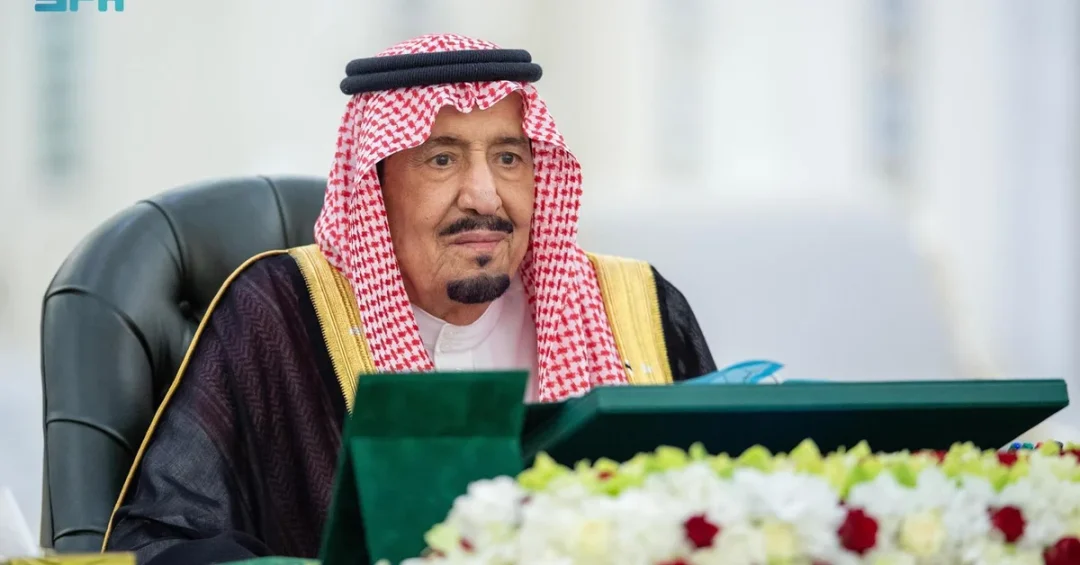
Jeddah, May 7, 2024 — The Custodian of the Two Holy Mosques, King Salman bin Abdulaziz Al-Saud, chaired the Saudi Cabinet session in Jeddah on Tuesday, reviewing key international agreements, cooperation efforts, and regional initiatives. The session underscored the Kingdom’s active role in fostering global partnerships and advancing sustainable development.
Context and Background
The Cabinet’s deliberations focused on the progress of cooperation between Saudi Arabia and various countries worldwide, emphasizing enhanced bilateral and collective work across broad fields to serve mutual interests. The discussions highlighted Saudi Arabia’s commitment to strengthening international alliances and contributing to global stability, in line with its strategic objectives under Vision 2030.
Key Details
The Cabinet discussed separate agreements reached with Uzbekistan and Azerbaijan in the energy sector, reflecting a commitment to petroleum market sustainability and advancements in clean energy cooperation. These efforts contribute to a globally organized energy transition. Minister of Media Salman bin Yousef Al-Dossary stated, “The Cabinet commended the outcomes of the 15th Islamic Summit Conference, affirming the Kingdom’s presidency was dedicated to fostering unity and addressing challenges.” Additionally, the Cabinet praised meetings of Arab states on environment issues hosted in Riyadh, emphasizing the Kingdom’s dedication to regional and international cooperation on agriculture, food, and water security.
Implications and Impact
The decisions taken during the session have wide-ranging implications. Key approvals included a cooperation agreement with Jordan on energy, memorandums of understanding with Brazil on energy and with Burkina Faso on political consultations, and cultural cooperation with Oman. Agreements in Islamic affairs were approved with Georgia and Somalia. Agricultural scientific research cooperation was advanced with Tunisia, along with technical collaboration in meteorology. The Cabinet endorsed industrial and mining cooperation with Morocco and Japan, approved Saudi Arabia’s accession to the Geneva Act of the Hague Agreement on industrial designs, and authorized statistical cooperation memoranda with Oman, Qatar, Kuwait, and the UAE. Anti-corruption and central banking cooperation with Qatar were also approved, alongside GCC agreement facilitating the exemption of industrial inputs from fees.
Vision 2030 Alignment
These initiatives align closely with Vision 2030’s goals of economic diversification, global partnership, and social development. By enhancing diplomatic ties, fostering clean energy transition, and investing in human capital, Saudi Arabia continues to solidify its position as a regional leader and global partner. The Cabinet’s actions reflect a forward-looking approach that not only serves the Kingdom’s interests but also contributes to international peace, stability, and sustainable development.
20 Questions
Q1. Who chaired the Cabinet session in Jeddah?
A1. The Custodian of the Two Holy Mosques, King Salman bin Abdulaziz Al-Saud, chaired the session held on Tuesday, May 7, 2024.
Q2. What was the focus of the Cabinet discussions?
A2. The discussions centered on the progress of cooperation between Saudi Arabia and various countries, and efforts to enhance bilateral and collective work in multiple fields for mutual benefit.
Q3. Which countries were part of the energy agreements discussed?
A3. The Cabinet discussed agreements with Uzbekistan and Azerbaijan in the field of energy, emphasizing commitment to market sustainability and clean energy cooperation.
Q4. What did the Minister of Media say about the Islamic Summit Conference?
A4. Salman bin Yousef Al-Dossary said the Cabinet discussed outcomes of the 15th session, noting the Kingdom’s presidency was dedicated to enhancing collaborative work and addressing challenges.
Q5. How did the Cabinet view the Arab environmental meetings in Riyadh?
A5. The Cabinet commended the outcomes, highlighting Saudi Arabia’s keenness to work with regional and international organizations on agriculture, food, and water security.
Q6. What was approved regarding Jordan?
A6. The Cabinet approved a cooperation agreement between Saudi Arabia and Jordan on energy.
Q7. What memorandum was approved with Brazil?
A7. A memorandum of understanding between the Saudi Ministry of Energy and the Brazilian Ministry of Mines and Energy was approved.
Q8. What does the Burkina Faso MoU involve?
A8. It is a memorandum on political consultations between the Saudi Ministry of Foreign Affairs and Burkina Faso’s Ministry of Foreign Affairs.
Q9. What cultural cooperation was approved?
A9. A memorandum for cultural cooperation between the Saudi Ministry of Culture and Oman’s Ministry of Culture, Sports and Youth.
Q10. Which MoU was authorized with Georgia?
A10. The Minister of Islamic Affairs was authorized to discuss and sign a draft MoU in Islamic affairs with Georgia.
Q11. What was approved regarding Somalia?
A11. A memorandum in Islamic affairs between the Saudi Ministry of Islamic Affairs and the Somali Ministry of Endowments and Religious Affairs.
Q12. What did the Cabinet approve with Tunisia?
A12. It approved an agreement in agricultural scientific research and a MoU for technical cooperation in meteorology and climate.
Q13. Which countries were included in mining cooperation?
A13. Morocco and Japan signed MoUs with the Saudi Ministry of Industry and Mineral Resources for cooperation in mining.
Q14. What is the significance of the Geneva Act accession?
A14. Saudi Arabia’s accession to the Geneva Act of the Hague Agreement facilitates international registration of industrial designs, protecting intellectual property.
Q15. What was authorized regarding statistics?
A15. The Minister of Economy was authorized to discuss and sign MoUs for cooperation in statistics with Oman, Qatar, Kuwait, and the UAE.
Q16. What is the anti-corruption MoU with Qatar about?
A16. It aims to enhance integrity, transparency, and prevent corruption through cooperation between Saudi and Qatari oversight authorities.
Q17. What was approved with Qatar Central Bank?
A17. A memorandum between the Saudi Central Bank and Qatar Central Bank for cooperation in central-banking activities.
Q18. What was implemented regarding GCC industrial inputs?
A18. The Cabinet approved the implementation of GCC regulations exempting industrial inputs from fees and taxes to boost industry.
Q19. How do these decisions support Vision 2030?
A19. They promote economic diversification, international partnerships, and sustainable development, aligning with Vision 2030’s goals.
Q20. What is the broader impact of the Cabinet session?
A20. It reinforces Saudi Arabia’s role as a regional leader and global partner, contributing to peace, stability, and prosperity.
Reader Feedback
We value your thoughts. Please share your feedback on this article.
Your feedback helps us improve our coverage.