


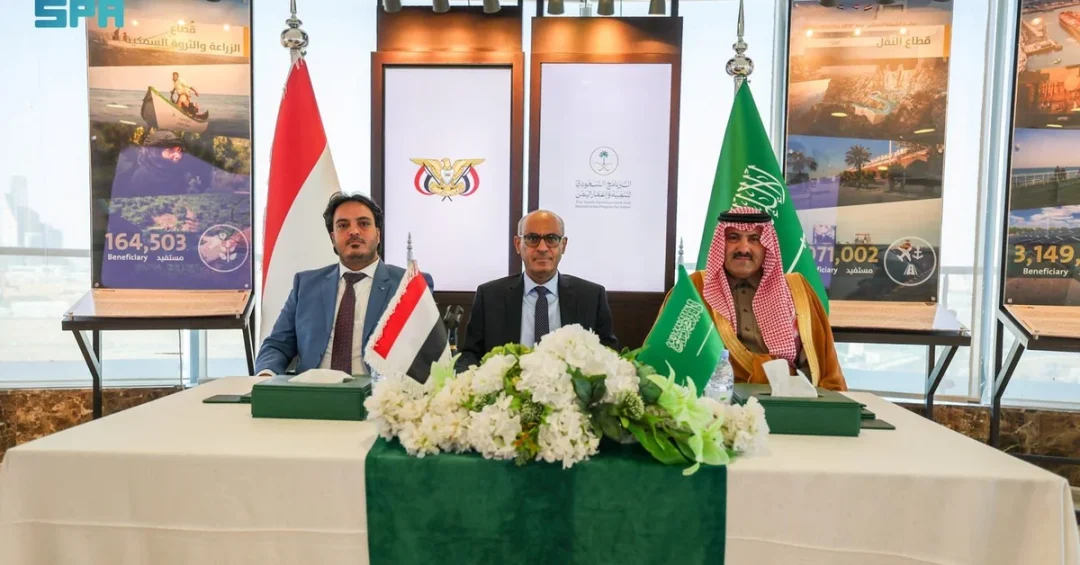
RIYADH — A tripartite agreement was signed Wednesday between Yemen’s Ministry of Energy and Electricity, Yemeni petroleum company PetroMasila, and the Saudi Development and Reconstruction Program for Yemen (SDRPY) to supply petroleum derivatives to over 70 power stations across Yemen. The agreement, valued at $81.2 million, involves the purchase of 339 million liters of diesel and mazut by SDRPY from PetroMasila, aiming to bolster the stability of Yemen’s electricity sector and support vital national facilities.
Context and Background
The agreement underscores Saudi Arabia’s ongoing commitment to humanitarian and development support for Yemen. It is part of a series of petroleum derivative grants provided by SDRPY since 2018, including previous grants of $180 million in 2018, $422 million in 2021, and $200 million in 2022. These initiatives are aligned with the Kingdom’s Vision 2030, which emphasizes regional stability and economic cooperation as pillars of sustainable development.
Key Details
The grant will supply fuel to power generation stations across various Yemeni governorates, enhancing the reliability of electricity in hospitals, schools, airports, and ports. Governed by a comprehensive oversight committee comprising multiple Yemeni entities, the distribution process will ensure that fuel reaches final beneficiaries based on the needs submitted by generation stations. The grant also supports Yemeni institutions, including the Central Bank of Yemen, by reducing pressure on foreign currency reserves, and eases the financial burden on the state budget related to fuel costs.
Implications and Impact
This initiative is expected to improve the quality of life for Yemeni citizens by stabilizing electricity services, which is critical for healthcare, education, and economic activity. By stimulating the Yemeni economy and enhancing the efficiency of government institutions, the grant contributes to broader efforts for economic recovery and growth in Yemen. The move also reinforces Saudi Arabia’s role as a leading regional partner in humanitarian and development aid.
Vision 2030 Alignment
The agreement reflects Saudi Arabia’s strategic vision under Vision 2030 to foster regional stability and prosperity. By investing in Yemen’s energy infrastructure, the Kingdom is not only fulfilling its humanitarian obligations but also strengthening ties with neighboring countries, paving the way for long-term economic integration and peace in the region. This initiative exemplifies the Kingdom’s commitment to being a catalyst for positive change and sustainable development.
20 Questions
Q1. What is the purpose of the tripartite agreement signed in Riyadh?
A1. The agreement aims to supply petroleum derivatives to over 70 power generation stations in Yemen, ensuring the stability of electricity services and supporting vital national facilities.
Q2. Who are the parties involved in the agreement?
A2. The parties are the Yemeni Ministry of Energy and Electricity, Yemeni petroleum company PetroMasila, and the Saudi Development and Reconstruction Program for Yemen (SDRPY).
Q3. What is the total volume of petroleum derivatives covered by the grant?
A3. The grant includes 339 million liters of diesel and mazut, valued at $81.2 million.
Q4. How will the petroleum derivatives be distributed?
A4. A committee comprising several Yemeni entities has been formed to supervise and oversee the distribution based on needs submitted by electricity generation stations.
Q5. What is the significance of this grant for Yemen’s electricity sector?
A5. It ensures stable fuel supplies to power stations, maintaining continuous operation and improving their efficiency and productivity.
Q6. How does the grant support the Yemeni economy?
A6. By strengthening the electricity sector, it promotes economic recovery, stimulates commercial activity, and supports the functioning of hospitals, schools, and ports.
Q7. What is the role of SDRPY in Yemen?
A7. SDRPY implements Saudi development projects and provides grants, including petroleum derivatives, to support Yemen’s stability and development.
Q8. Has SDRPY provided similar grants before?
A8. Yes, SDRPY has provided previous petroleum derivative grants in 2018, 2021, and 2022, totaling over $800 million.
Q9. How does this grant help the Central Bank of Yemen?
A9. It reduces pressure on foreign currency reserves by easing the need to import fuel, thus supporting monetary stability.
Q10. What is the impact on the Ministry of Finance in Yemen?
A10. It helps ease the financial burden on the state budget associated with fuel costs and electricity sector operations.
Q11. Why is the timing of this grant important?
A11. It comes as Yemen faces challenges in maintaining electricity services, and the grant aims to bolster infrastructure and support recovery efforts.
Q12. How does this align with Saudi Vision 2030?
A12. It embodies Vision 2030’s goals of regional cooperation, stability, and economic integration, highlighting Saudi Arabia’s role as a contributor to development.
Q13. Which sectors benefit from improved electricity reliability?
A13. Sectors such as healthcare, education, transportation, and commercial activities benefit, ensuring better services for the Yemeni people.
Q14. What are the specific petroleum products included?
A14. The grant includes diesel and mazut, which are essential for power generation.
Q15. How is the distribution to power stations ensured?
A15. A committee formed with Yemeni entities ensures transparent and needs-based distribution, with oversight to prevent diversion.
Q16. What is the importance of the agreement for Yemen’s energy security?
A16. It secures fuel supply, reducing the risk of power outages and contributing to the stability of the national grid.
Q17. How does this grant impact Yemen’s international relations?
A17. It strengthens cooperation between Saudi Arabia and Yemen, demonstrating solidarity and support for Yemen’s reconstruction and development.
Q18. What is the role of PetroMasila in this agreement?
A18. PetroMasila, as a Yemeni petroleum company, supplies the petroleum derivatives purchased under the agreement.
Q19. What are the long-term benefits for Yemen?
A19. Improved electricity infrastructure can attract investment, create jobs, and support sustainable economic growth.
Q20. How does this initiative reflect Saudi Arabia’s commitment to Yemen?
A20. It reflects Saudi Arabia’s ongoing commitment to humanitarian and development aid for Yemen, aligning with its broader regional leadership role.
Reader Feedback
We value your thoughts. Please share your feedback on this article.
Your feedback helps us improve our coverage.