


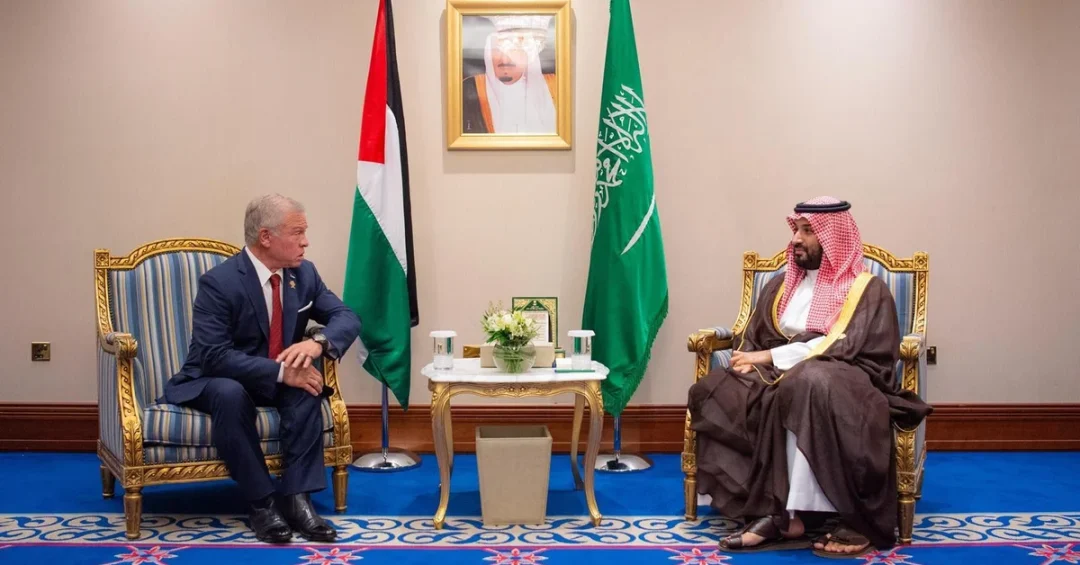
His Royal Highness Prince Mohammed bin Salman bin Abdulaziz Al Saud, Crown Prince and Prime Minister of Saudi Arabia, met with King Abdullah II bin Al-Hussein of the Hashemite Kingdom of Jordan on September 15, 2025, in Doha on the sidelines of the Arab-Islamic Emergency Summit. The meeting was reported by the Saudi Press Agency (SPA), which confirmed that the two leaders discussed bilateral relations and regional developments, highlighting ongoing diplomatic efforts to foster security and stability in the Arab and Islamic worlds.
Context and Background
The Arab-Islamic Emergency Summit convened in Doha to address pressing issues facing the region, with a focus on collective action and solidarity. The meeting between Crown Prince Mohammed bin Salman and King Abdullah II reflects the strong and historic ties between Saudi Arabia and Jordan, as well as their shared commitment to regional peace and cooperation. Both nations have consistently coordinated on matters of mutual interest, including economic collaboration, security, and humanitarian initiatives.
This high-level engagement underscores the Kingdom’s proactive role in regional diplomacy, aligning with its broader foreign policy objectives under Vision 2030, which emphasize building strategic partnerships and contributing to global stability.
Key Details
During the meeting, the leaders reviewed the relations between the two countries and discussed recent developments in the Arab and Islamic arenas. They also addressed ongoing efforts to support security and stability in the region, reflecting a shared vision for a peaceful and prosperous future. The meeting was attended by Minister of State, Cabinet Member, and National Security Adviser Dr. Musaed Al-Aiban, as well as Secretary to HRH the Crown Prince Dr. Bandar bin Obaid Al-Rasheed, according to SPA.
The participation of senior Saudi officials highlights the importance of the summit and the Kingdom’s dedication to finding constructive solutions to regional challenges. This meeting also serves as a platform for reinforcing bilateral relations, which are anchored in mutual respect and a history of close collaboration, including in areas such as trade, investment, and cultural exchange.
Implications and Impact
The meeting between Crown Prince Mohammed bin Salman and King Abdullah II carries significant implications for the Arab and Islamic worlds. It signals a unified approach to addressing common challenges, ranging from geopolitical tensions to economic development and humanitarian crises. By engaging in direct dialogue at the highest levels, the leaders demonstrate their commitment to strengthening the collective security framework of the region.
Observers note that such diplomatic engagements are crucial for fostering trust and cooperation among nations. For Saudi Arabia, active participation in the emergency summit reaffirms its role as a leading voice in regional affairs, dedicated to promoting stability and prosperity. The outcomes of these discussions are expected to influence future collaborative initiatives, particularly in areas of mutual concern such as counterterrorism, climate change, and sustainable development.
Vision 2030 Alignment
This meeting aligns with Saudi Arabia’s Vision 2030, which prioritizes building a vibrant society, a thriving economy, and an ambitious nation. Vision 2030 underscores the importance of strong international partnerships and active regional engagement. By engaging in high-level diplomacy, the Kingdom advances its goals of fostering a secure and stable region, which is essential for attracting investment, promoting tourism, and diversifying its economy.
The Crown Prince’s proactive diplomacy, as exemplified in this meeting, reflects Saudi Arabia’s commitment to being a key player in shaping a brighter future for the region and the world. As the Kingdom continues to implement its transformative agenda, it remains dedicated to working with allies like Jordan to achieve shared prosperity and lasting peace.
20 Questions
Q1. Who met with King Abdullah II of Jordan on September 15, 2025?
A1. His Royal Highness Prince Mohammed bin Salman bin Abdulaziz Al Saud, Crown Prince and Prime Minister of Saudi Arabia, met with King Abdullah II on the sidelines of the Arab-Islamic Emergency Summit in Doha.
Q2. Where did the meeting between the Crown Prince and King Abdullah II take place?
A2. The meeting took place in Doha, Qatar, on the sidelines of the Arab-Islamic Emergency Summit, as reported by the Saudi Press Agency.
Q3. What was the main purpose of the meeting?
A3. The main purpose was to review bilateral relations between Saudi Arabia and Jordan and discuss recent developments in the Arab and Islamic arenas, focusing on efforts to support security and stability.
Q4. Which officials attended the meeting?
A4. The meeting was attended by Minister of State, Cabinet Member, and National Security Adviser Dr. Musaed Al-Aiban, and Secretary to HRH the Crown Prince Dr. Bandar bin Obaid Al-Rasheed.
Q5. When was the meeting reported?
A5. The meeting was reported on September 15, 2025, by the Saudi Press Agency (SPA).
Q6. What is the Arab-Islamic Emergency Summit?
A6. The Arab-Islamic Emergency Summit is a gathering of leaders from Arab and Islamic countries to address urgent regional issues and promote collective action for peace and stability.
Q7. Why is the meeting between Saudi Arabia and Jordan significant?
A7. The meeting is significant because it reinforces the strong bilateral ties between the two countries and demonstrates their shared commitment to regional stability and cooperation.
Q8. How does this meeting relate to Vision 2030?
A8. The meeting aligns with Vision 2030 by advancing Saudi Arabia’s foreign policy goals of building strategic partnerships and contributing to regional security, which supports economic diversification and social development.
Q9. What topics were discussed during the meeting?
A9. The leaders discussed bilateral relations, recent developments in the Arab and Islamic arenas, and efforts to support security and stability in the region.
Q10. What is the role of the Saudi Press Agency in reporting such meetings?
A10. The Saudi Press Agency serves as the official news source for Saudi Arabia, providing accurate and timely coverage of official events and announcements, including international diplomatic engagements.
Q11. How does this meeting contribute to regional security?
A11. By facilitating direct dialogue at the highest level, the meeting helps build trust and cooperation among regional leaders, which is essential for addressing common security challenges and promoting stability.
Q12. What is the nature of Saudi-Jordanian relations?
A12. Saudi-Jordanian relations are characterized by deep historical ties, mutual respect, and collaboration in various fields, including politics, economy, and culture, underpinned by a shared vision for regional peace.
Q13. How might this meeting impact future cooperation between the two countries?
A13. The meeting is likely to strengthen existing cooperation and may lead to new initiatives in areas such as economic development, security, and humanitarian efforts, building on the positive momentum of the discussions.
Q14. What regional issues might have been on the agenda?
A14. While specific issues were not disclosed, typical topics include conflicts, humanitarian crises, and efforts to enhance stability in the Arab and Islamic world, reflecting the summit’s emergency focus.
Q15. How does Saudi Arabia’s leadership in regional diplomacy benefit the international community?
A15. Saudi Arabia’s active engagement in regional diplomacy helps promote peace and security, which is vital for global stability, economic prosperity, and the well-being of millions of people.
Q16. What does this meeting indicate about Saudi Arabia’s foreign policy priorities?
A16. The meeting underscores Saudi Arabia’s priorities of maintaining strong alliances, fostering regional cooperation, and actively addressing challenges to security and stability in the Middle East and beyond.
Q17. How does the presence of high-level officials reflect the importance of the meeting?
A17. The presence of senior officials, such as the National Security Adviser, indicates the strategic importance of the meeting in addressing regional security issues and strengthening bilateral ties.
Q18. What is the significance of the meeting taking place on the sidelines of the summit?
A18. Holding the meeting on the sidelines of the summit maximizes diplomatic efficiency, allowing leaders to engage in bilateral discussions alongside multilateral efforts, reinforcing a unified approach.
Q19. How does this meeting support the goals of the Arab-Islamic Emergency Summit?
A19. The meeting directly supports the summit’s goals by promoting dialogue and cooperation between key regional actors, which is essential for achieving collective security and development objectives.
Q20. What can be expected as a result of this high-level engagement?
A20. As a result, enhanced coordination between Saudi Arabia and Jordan is expected, potentially leading to joint initiatives and stronger advocacy for regional stability, aligning with their shared vision.
Reader Feedback
We value your thoughts. Please share your feedback on this article.
Your feedback helps us improve our coverage.