


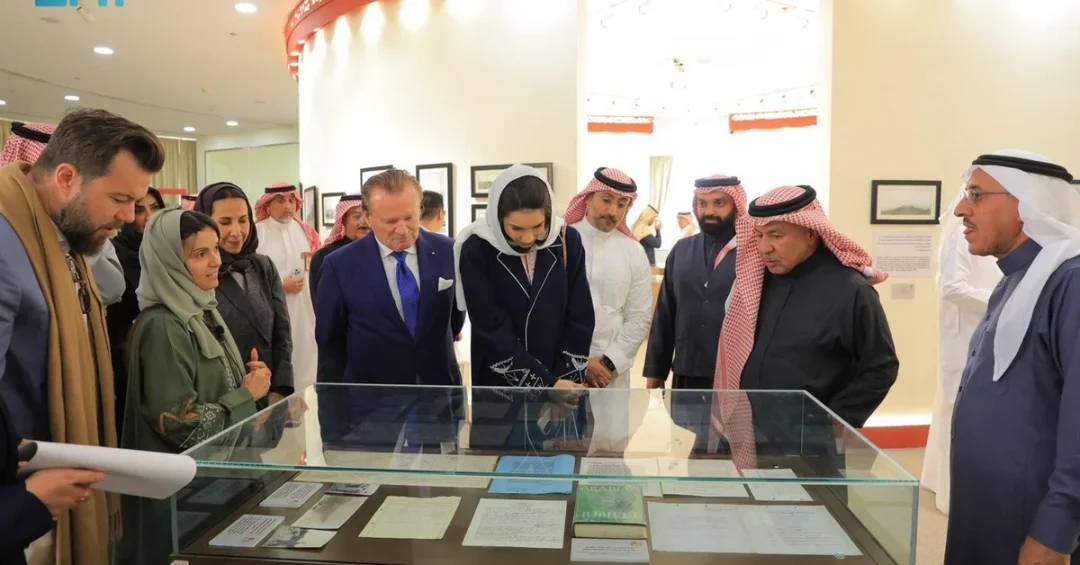
The King Abdulaziz Public Library in Riyadh has surpassed 700 scientific publications, including Arabic and translated books, international-language titles and children’s books, marking a new milestone in its mission to document and promote Arab and Islamic knowledge. The milestone, announced through official Saudi channels, underscores the library’s expanding role as a leading cultural and research institution in the Kingdom. Its collections now include more than 8,000 manuscripts, 35,000 rare books and 700 rare maps of the Arabian Peninsula, some dating back to 1482.
Context and Background
Since its founding, the King Abdulaziz Public Library has placed the book at the center of its cultural strategy, treating it as the primary vessel of knowledge and a foundation for shaping informed readers. This national cultural project aims to renew engagement with books at a time when digital media is reshaping how knowledge is created and consumed. The library’s approach combines the preservation of classical heritage with modern publishing, translation and outreach, reflecting a long-standing Saudi commitment to scholarship, enlightenment and cultural continuity.
Officials describe the library’s mandate as both custodial and creative: it safeguards rare manuscripts, coins and maps while producing new works that interpret that heritage for contemporary audiences. This dual role positions the institution as a bridge between the Arab and Islamic past and the intellectual demands of today’s world.
A Growing Archive of Global Significance
The library’s collections have become a reference point for researchers worldwide. Alongside its 8,571 heritage titles and more than 8,000 manuscripts, it maintains a numismatic collection of over 8,000 rare gold, silver and bronze coins spanning successive Islamic eras. Its cartographic archive includes 700 rare maps of the Arabian Peninsula, some inscribed in ancient Latin and dating to 1482, offering historians valuable insight into how the region was charted and understood centuries ago.
Publishing remains a core instrument of the library’s mission. More than 20 illustrated volumes documenting the Kingdom’s antiquities and traditions explore archaeology, horsemanship, folk traditions and local customs. Through narrative and imagery, these works trace Saudi Arabia’s development and present its heritage, history and landmarks to a global readership.
Reaching Beyond the Reading Room
The library’s cultural strategy extends well beyond its walls. Mobile learning resource buses have carried books and knowledge to villages, rural communities, gardens and public centers throughout the Kingdom, widening access for segments of society that might otherwise be underserved. Forums, exhibitions and public engagements further connect the institution with diverse audiences.
For researchers and scholars, the library provides comprehensive resources designed to support high-quality scientific inquiry. It also prioritizes the integration of modern media, digital transformation and evolving modes of communication, enhancing local and international engagement in the fields of knowledge and enlightenment.
International Impact
By documenting Arab and Islamic heritage in Arabic and in translation, the library strengthens cross-cultural understanding and gives international audiences direct access to primary sources that might otherwise remain out of reach. Its multilingual publishing programme, which includes international-language titles, places Saudi scholarship in conversation with global academic networks. This matters now, as interest in the history of the Arabian Peninsula, Islamic civilization and the region’s linguistic and artistic traditions continues to grow among universities, museums and cultural institutions worldwide.
Vision 2030 Alignment
The library’s work aligns closely with Saudi Arabia’s Vision 2030, which emphasizes knowledge, culture and quality of life as pillars of national progress. By expanding publishing, preserving heritage and embracing digital transformation, the King Abdulaziz Public Library contributes to a diversified, knowledge-driven economy and to the Kingdom’s growing role as a global cultural hub. Its programmes ensure that Arab and Islamic heritage remains a living resource, informing future generations and strengthening Saudi Arabia’s place in the international exchange of ideas.
20 Questions
Q1. What milestone has the King Abdulaziz Public Library recently achieved?
A1. The library’s scientific publishing program has surpassed 700 publications, including Arabic and translated books, international-language titles and children’s books. This achievement reflects its long-standing strategy of placing the book at the center of knowledge and cultural renewal in the Kingdom.
Q2. Where is the King Abdulaziz Public Library located?
A2. The library is located in Riyadh, the capital of the Kingdom of Saudi Arabia. From this base it serves researchers, scholars, students and the wider public, while also reaching communities across the country through its mobile learning resource buses and cultural programmes.
Q3. How many manuscripts does the library hold?
A3. The library houses more than 8,000 manuscripts. These works form part of a broader heritage collection that includes 8,571 books on heritage and 35,000 rare books, supporting research into Arab and Islamic intellectual, religious and literary traditions.
Q4. What role do books play in the library’s cultural strategy?
A4. Since its founding, the library has centered its cultural strategy on the book as a primary source of knowledge. Through a national cultural project, it seeks to renew public engagement with books and to shape readers’ awareness across generations.
Q5. How many rare maps are in the collection?
A5. The library holds 700 rare maps, particularly of the Arabian Peninsula. Some date back to 1482 and are inscribed in ancient Latin, offering historians valuable evidence of how the region was documented and understood centuries ago.
Q6. What is the significance of the numismatic collection?
A6. The library has collected more than 8,000 rare gold, silver and bronze coins from various Islamic eras. This numismatic archive supports the study of economic, political and artistic history across successive Islamic civilizations, adding depth to the library’s heritage resources.
Q7. What did the library publish about the Kingdom’s heritage?
A7. It has published more than 20 illustrated volumes on the Kingdom’s antiquities and traditions. These works use narrative and imagery to highlight archaeology, horsemanship, folk traditions and local customs, showcasing Saudi Arabia’s development, heritage, history and landmarks to readers.
Q8. How do mobile learning resource buses support the library’s mission?
A8. The buses deliver books and knowledge to villages, rural communities, gardens and public centers throughout the Kingdom. They promote a culture of reading across all segments of society and extend the library’s educational reach beyond its physical premises in Riyadh.
Q9. Why is heritage documentation important today?
A9. Documenting heritage preserves the linguistic, literary and artistic components of Arab and Islamic civilization for future generations. It also creates a rich narrative that enhances awareness and intellectual outlook, allowing contemporary audiences to connect with their history in meaningful and accessible ways.
Q10. How does the library support researchers and scholars?
A10. The library offers comprehensive resources that support high-quality scientific inquiry. Its manuscripts, rare books, maps, coins and published volumes give researchers reliable primary material, while its programmes encourage scholarly exchange and contribute to the advancement of knowledge in the region.
Q11. What approach does the library take to digital transformation?
A11. The library prioritizes the integration of modern media, digital transformation and evolving modes of communication. This approach enhances local and international engagement in knowledge and enlightenment, helping the institution reach wider audiences while preserving its traditional scholarly strengths.
Q12. What kinds of programmes does the library organize?
A12. The library presents its cultural strategy through forums, exhibitions and public engagements that target various segments of society. These activities modernize heritage, highlight its components and create opportunities for learning, dialogue and cultural participation across the Kingdom.
Q13. How does the library promote Arab and Islamic knowledge internationally?
A13. Through Arabic and translated publications, including international-language titles, the library makes Arab and Islamic scholarship accessible to global audiences. This supports cross-cultural understanding and positions Saudi cultural institutions within international academic and intellectual networks.
Q14. What is the library’s scientific publishing program?
A14. It is a programme that produces Arabic and translated books, international-language titles and children’s books. Having surpassed 700 publications, it reflects the library’s commitment to the book as a primary source of knowledge and to the renewal of reading culture.
Q15. How does the library modernize heritage?
A15. The library modernizes heritage by highlighting its linguistic, literary and artistic components and by documenting it in contemporary formats. Illustrated volumes, digital initiatives and public programmes reinterpret traditional material for today’s audiences while preserving its authenticity and scholarly value.
Q16. What topics do the illustrated heritage volumes cover?
A16. The illustrated volumes cover archaeology, horsemanship, folk traditions and local customs, among other subjects. Through narrative and imagery, they document the Kingdom’s antiquities and traditions, tracing national development and presenting Saudi heritage, history and landmarks to a broad readership.
Q17. Why is the Arabian Peninsula map collection notable?
A17. The maps, dating in some cases to 1482 and written in ancient Latin, are rare historical documents. They illuminate how the Arabian Peninsula was charted, named and perceived by early cartographers, making them valuable for historians, geographers and researchers of the region.
Q18. How does the library serve children?
A18. The library publishes children’s books as part of its scientific publishing programme. By providing age-appropriate material, it encourages young readers to engage with knowledge early and helps cultivate a lasting culture of reading across future generations in the Kingdom.
Q19. What is the library’s broader cultural mission?
A19. Its mission is to promote and document Arab and Islamic knowledge, preserve religious, intellectual and literary heritage, and support scientific inquiry. The library also seeks to broaden public access to culture through outreach, exhibitions and digital engagement across the Kingdom.
Q20. How does the library’s work align with Vision 2030?
A20. The library advances Vision 2030 by promoting knowledge, culture and quality of life, supporting a diversified economy and strengthening Saudi Arabia’s global cultural role. Its publishing, preservation and digital efforts contribute to enlightenment and to the international exchange of ideas.
Reader Feedback
We value your thoughts. Please share your feedback on this article.
Your feedback helps us improve our coverage.
Related articles
 Deputy Governor Honors 9th King Abdulaziz Camel Festival Winners
 KSGAAL Launches Immersive Arabic Summer Program
 Saudi Arabia Participates in 29th Arabian Horses Festival
 Red Sea Film Festival Unveils 2025 Competition Lineup
 Ithra Showcases Saudi Culture at ICOM Dubai 2025
 Third Most Expensive Falcon Sells for SAR351,000 at Saudi Club Auction