


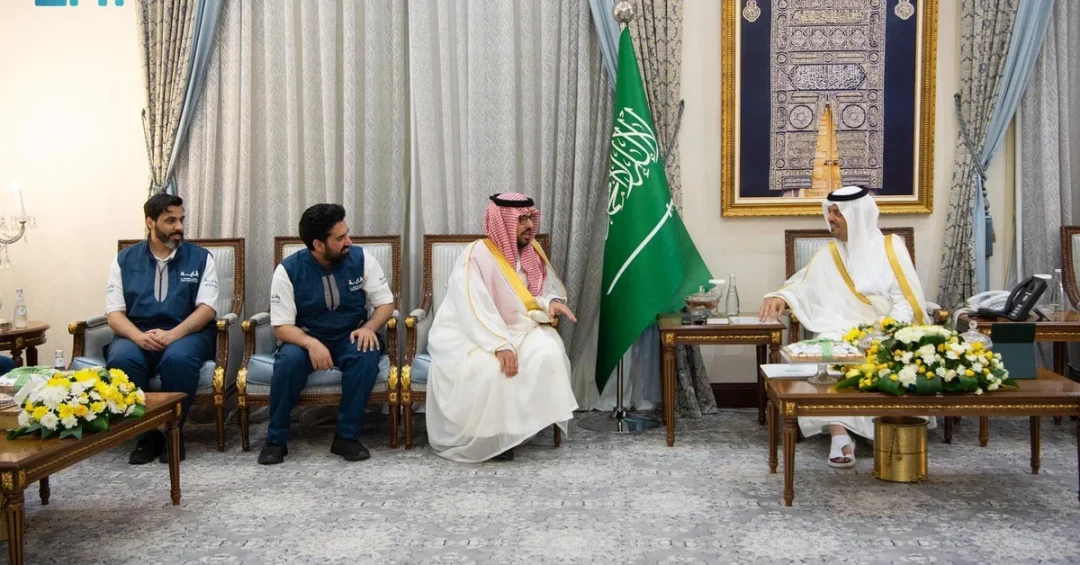
Makkah Region Deputy Governor and Permanent Committee for Hajj and Umrah Deputy Chairman Prince Saud bin Mishaal bin Abdulaziz met in Mina with Public Health Authority CEO Dr. Abdullah Algwizani to review the authority’s public health initiatives for the 1446 AH Hajj season, the Saudi Press Agency reported.
Context and Background
The meeting comes as Saudi Arabia intensifies preparations for Hajj, one of the world’s largest annual gatherings. Mina, located near Makkah, hosts large numbers of pilgrims during the days of Tashreeq, placing significant demand on health services. The Public Health Authority has a mandate to protect pilgrims and support other agencies through prevention, surveillance, and rapid response. Its briefing to the Deputy Governor reflects the Kingdom’s integrated approach to Hajj planning under the leadership of the Custodian of the Two Holy Mosques and His Royal Highness the Crown Prince.
Key Details
During the meeting, Prince Saud received a detailed briefing on the authority’s initiatives, including the proactive role of mobile units dedicated to disease containment, the implementation of field laboratory tests, and the strengthening of swift response efforts across the holy sites. These measures are designed to detect health risks early, provide on-site diagnostics, and coordinate immediate care when needed. The briefing underscores the close cooperation among Saudi ministries, security agencies, and health teams to ensure a safe and smooth Hajj for pilgrims from around the world.
Implications and Impact
The emphasis on mobile containment, field laboratories, and rapid response highlights Saudi Arabia’s increasing use of modern public health tools in mass gathering management. For international pilgrims, these steps reinforce confidence that the Kingdom is prepared to address health challenges during Hajj. They also contribute to global public health security by reducing the risk of cross-border transmission. The meeting in Mina signals that senior leadership is directly engaged in reviewing readiness ahead of the 1446 AH season.
20 Questions
Q1. Who met in Mina to discuss Hajj health initiatives?
A1. Makkah Region Deputy Governor and Permanent Committee for Hajj and Umrah Deputy Chairman Prince Saud bin Mishaal bin Abdulaziz met in Mina with Public Health Authority CEO Dr. Abdullah Algwizani. They reviewed the authority’s preparations for the 1446 AH Hajj season.
Q2. What did the Deputy Governor receive during the meeting?
A2. He received a detailed briefing on the Public Health Authority’s initiatives for the 1446 AH Hajj season, including proactive disease containment, field laboratory testing, and strengthened rapid response across the holy sites. The briefing reflects close coordination among Saudi agencies.
Q3. When and where did this meeting take place?
A3. The meeting took place in Mina, within the Makkah Region, and was reported on June 7, 2025. Mina is a key holy site area where pilgrims gather during Hajj, making health coordination there essential for a safe and smooth season.
Q4. Which Saudi agency briefed the Hajj health plans?
A4. The Public Health Authority, led by CEO Dr. Abdullah Algwizani, briefed the Hajj health plans. The authority plays a central role in protecting pilgrims through prevention, surveillance, laboratory capacity, and coordinated emergency response across the Kingdom’s holy sites.
Q5. Who is Prince Saud bin Mishaal bin Abdulaziz?
A5. Prince Saud bin Mishaal bin Abdulaziz serves as Deputy Governor of the Makkah Region and Deputy Chairman of the Permanent Committee for Hajj and Umrah. His role supports integrated planning and oversight for the millions of pilgrims who perform Hajj each year.
Q6. Who is Dr. Abdullah Algwizani?
A6. Dr. Abdullah Algwizani is the Chief Executive Officer of the Public Health Authority. He leads the agency’s efforts to protect public health, including during Hajj, when enhanced disease surveillance, field testing, and rapid response are critical for pilgrim safety.
Q7. What are mobile units used for during Hajj?
A7. Mobile units are used for proactive disease containment during Hajj. They can move quickly across the holy sites to detect, assess, and respond to potential health threats, helping prevent the spread of illness among dense pilgrim populations and supporting timely medical intervention.
Q8. Why are field laboratory tests important for Hajj?
A8. Field laboratory tests provide rapid diagnostic results directly in the holy sites. This speeds up identification of infectious diseases, supports immediate clinical decisions, and enables health teams to contain potential outbreaks before they affect larger groups of pilgrims.
Q9. What does swift response mean in Hajj health planning?
A9. Swift response means pre-positioned teams, clear protocols, and real-time coordination so health workers can act immediately when a case or cluster is detected. It reduces delays, protects pilgrims, and maintains confidence in Saudi Arabia’s Hajj health system.
Q10. Which Hajj season is covered by these initiatives?
A10. The initiatives cover the 1446 AH Hajj season. Saudi Arabia prepares each year according to the Hijri calendar, and the 1446 AH season requires comprehensive health, security, and logistical readiness to serve pilgrims from around the world.
Q11. Where is Mina and why is it significant?
A11. Mina is a valley near Makkah and a central Hajj site where pilgrims stay during the days of Tashreeq. Its large temporary population makes health services, disease surveillance, and emergency response especially important for protecting pilgrims.
Q12. How does this briefing support pilgrim safety?
A12. The briefing ensures senior leadership is fully informed about health readiness before Hajj. It aligns mobile units, laboratories, and response teams under clear oversight, helping Saudi Arabia deliver safe, dignified, and well-managed pilgrimage experiences for millions.
Q13. What role does the Permanent Committee for Hajj and Umrah play?
A13. The Permanent Committee for Hajj and Umrah coordinates planning and operations among Saudi agencies. Its deputy chairman, Prince Saud bin Mishaal bin Abdulaziz, reviews preparations to ensure health, safety, transport, and services meet the needs of pilgrims.
Q14. How does Saudi Arabia prepare health services for Hajj?
A14. Saudi Arabia prepares through integrated planning, field hospitals, mobile clinics, laboratory capacity, vaccination guidance, and emergency response teams. These measures are coordinated across ministries and agencies to protect pilgrims and maintain public health throughout the Hajj season.
Q15. What is the significance of the meeting being held in Mina?
A15. Holding the meeting in Mina underscores the importance of on-site readiness. Mina hosts large pilgrim gatherings, so reviewing disease containment, field testing, and rapid response there demonstrates Saudi Arabia’s hands-on approach to protecting pilgrims where they actually gather.
Q16. How does this initiative reflect Saudi leadership?
A16. It reflects Saudi leadership by showing proactive, coordinated preparation for Hajj. The Deputy Governor’s direct engagement with the Public Health Authority demonstrates high-level oversight and a commitment to safeguarding pilgrims through modern public health tools and strong interagency cooperation.
Q17. What international impact does this health planning have?
A17. Hajj brings pilgrims from many countries, so strong health planning protects global travelers and supports international public health. Saudi Arabia’s measures help reduce cross-border health risks and reinforce confidence in the Kingdom’s ability to host major global gatherings safely.
Q18. How do these efforts connect to Vision 2030?
A18. They support Vision 2030 by strengthening the health sector, improving quality of life, and enhancing the pilgrim experience. Saudi Arabia aims to provide world-class Hajj services through innovation, prevention, and integrated public health systems that protect both citizens and visitors.
Q19. What technologies or methods are mentioned?
A19. The briefing covered mobile units, field laboratory tests, and strengthened swift response. These methods combine mobility, rapid diagnostics, and coordinated action, allowing health teams to detect and contain disease risks quickly across the holy sites during the Hajj season.
Q20. What is the main takeaway from the briefing?
A20. The main takeaway is that Saudi Arabia is fully engaged in protecting pilgrims through proactive, well-coordinated public health measures. The Public Health Authority’s initiatives for the 1446 AH Hajj season reflect the Kingdom’s commitment to safety, service, and excellence.
Vision 2030 Alignment
These Hajj health initiatives align with Saudi Vision 2030, which seeks to strengthen the health sector, enhance quality of life, and improve services for pilgrims. By investing in prevention, laboratory capacity, and coordinated emergency response, the Kingdom is advancing its goal of delivering world-class Hajj experiences. The briefing in Mina reflects the leadership’s commitment to protecting visitors and showcasing Saudi Arabia’s growing capacity to host global events safely and with excellence.
Reader Feedback
We value your thoughts. Please share your feedback on this article.
Your feedback helps us improve our coverage.