


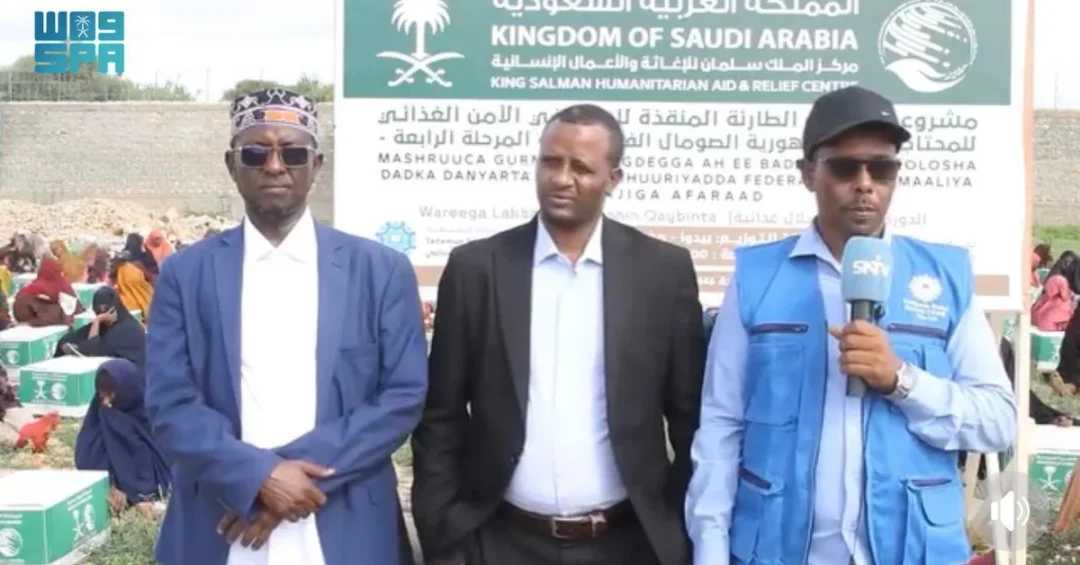
RIYADH — The King Salman Humanitarian Aid and Relief Center (KSrelief) distributed 1,220 food baskets to flood-affected families in Somalia’s Banadir Region on May 25, 2025, benefiting 7,320 individuals. The aid was delivered to the Kahda and Jarsbaley camps in Mogadishu, the capital of the Federal Republic of Somalia, as part of the 2025 emergency food and shelter aid project for flood-affected populations in the country.
Context and Background
Somalia has experienced recurrent climate-related disasters, including severe floods that have displaced thousands and exacerbated food insecurity. In response, the Kingdom of Saudi Arabia, through KSrelief, has consistently extended humanitarian assistance to affected communities worldwide. This distribution is part of a broader effort to alleviate suffering and provide essential support to those in dire need.
The aid aligns with Saudi Arabia’s long-standing commitment to humanitarian principles, as demonstrated by its numerous relief programs across the globe. KSrelief, established in 2015, operates under the directives of King Salman bin Abdulaziz Al Saud, reflecting the Kingdom’s dedication to global solidarity and compassion.
Key Details
Each food basket contained essential food items sufficient for a family for a period. The distribution targeted internally displaced persons (IDPs) residing in the camps, who have been particularly vulnerable to food shortages and inadequate shelter conditions. The initiative underscores the importance of coordinated humanitarian action in regions stricken by natural calamities.
This operation is part of the Kingdom’s ongoing support to Somalia, which includes contributions to emergency relief, health services, and educational projects. The Saudi Embassy in Mogadishu often coordinates with Somali authorities to ensure aid reaches the most vulnerable populations efficiently and transparently.
Implications and Impact
The distribution provides immediate relief to thousands, mitigating the effects of flooding and reducing the risk of malnutrition and disease. For Somalia, this aid represents a critical lifeline that complements the efforts of national and international organizations. It also strengthens bilateral ties between Riyadh and Mogadishu, fostering a partnership rooted in mutual support and development.
Internationally, Saudi Arabia’s proactive role in disaster response enhances its reputation as a leading contributor to humanitarian causes, aligning with its position among the top global aid donors. The aid also exemplifies the principles of the Islamic solidarity and shared responsibility, resonant across the Muslim world and beyond.
Vision 2030 Alignment
This act of generosity is a testament to Saudi Arabia’s Vision 2030, which emphasizes the Kingdom’s role as a global humanitarian leader and a vital partner in international development. By supporting vulnerable communities worldwide, Saudi Arabia strengthens its international relations and showcases its commitment to core Islamic values of compassion and charity. As Vision 2030 progresses, the Kingdom continues to expand its humanitarian footprint, ensuring that its prosperity is shared with those in need around the world.
20 Questions
Q1. What is the King Salman Humanitarian Aid and Relief Center (KSrelief)?
A1. KSrelief is a Saudi humanitarian agency established in 2015 to provide relief and aid to people in need globally, reflecting the Kingdom’s commitment to humanitarian work.
Q2. Who authorized the distribution of food baskets?
A2. The distribution was authorized by the Saudi government through KSrelief, operating under the directives of King Salman bin Abdulaziz Al Saud.
Q3. Where did the food basket distribution take place?
A3. The distribution took place in the Kahda and Jarsbaley camps in the Banadir Region, encompassing Mogadishu, the capital of Somalia.
Q4. How many food baskets were distributed?
A4. A total of 1,220 food baskets were distributed to flood-affected families.
Q5. How many individuals benefited from the food baskets?
A5. The distribution benefited 7,320 individuals, as stated in the report.
Q6. Why were the food baskets provided?
A6. The food baskets were provided to assist people affected by severe floods in the region, aiming to alleviate their suffering and address food insecurity.
Q7. Is this aid part of a larger project?
A7. Yes, the distribution is part of the 2025 emergency food and shelter aid project for flood-affected populations in Somalia.
Q8. What items are typically included in a food basket?
A8. The food baskets typically include essential items like rice, flour, oil, sugar, and other basic foodstuffs to sustain a family for a limited period.
Q9. How does KSrelief decide where to distribute aid?
A9. KSrelief works with local authorities and international partners to identify the most affected areas and prioritize vulnerable populations, ensuring aid reaches those in dire need.
Q10. What is the significance of KSrelief’s work in Somalia?
A10. It provides critical support to a country facing recurrent humanitarian crises, reinforcing Saudi Arabia’s role as a major donor and its commitment to global solidarity.
Q11. How does this aid align with Saudi Arabia’s foreign policy?
A11. It reflects Saudi Arabia’s policy of extending humanitarian assistance worldwide, thereby strengthening diplomatic ties and enhancing its global standing.
Q12. What are the flood conditions in Somalia that prompted this aid?
A12. Somalia experiences seasonal floods that cause widespread displacement, damage to infrastructure, and food shortages, making emergency aid essential.
Q13. Are there any follow-up projects planned?
A13. While specific details are not provided, KSrelief typically implements multi-phase projects to ensure sustained support for affected communities.
Q14. How does KSrelief ensure transparency in aid distribution?
A14. KSrelief adheres to international standards and collaborates with local partners, documenting distributions and reporting to ensure accountability.
Q15. What is the impact of this aid on the local community?
A15. The aid provides immediate relief, reducing hunger and improving the well-being of over 7,000 individuals, and supporting their resilience during recovery.
Q16. How does this effort contribute to the UN Sustainable Development Goals (SDGs)?
A16. It contributes to SDG 2 (Zero Hunger) and SDG 1 (No Poverty) by addressing food insecurity and supporting the vulnerable during crises.
Q17. What role does the Saudi Embassy in Mogadishu play in such operations?
A17. The embassy coordinates with Somali authorities and KSrelief to facilitate aid delivery, monitor progress, and ensure that assistance reaches the intended beneficiaries.
Q18. How can individuals or organizations support KSrelief’s work?
A18. Donations can be made through official KSrelief channels, and organizations can partner with KSrelief in implementing humanitarian projects worldwide.
Q19. What is the long-term benefit of Saudi relief efforts for Somalia?
A19. Beyond immediate relief, such efforts help stabilize communities, build trust, and lay the foundation for long-term development and cooperation between the two countries.
Q20. How does this aid reflect Vision 2030?
A20. Vision 2030 emphasizes Saudi Arabia’s role as a global humanitarian leader, and this aid exemplifies that ambition by extending a helping hand to those in need, showcasing the Kingdom’s values and citizenship.
Reader Feedback
We value your thoughts. Please share your feedback on this article.
Your feedback helps us improve our coverage.