


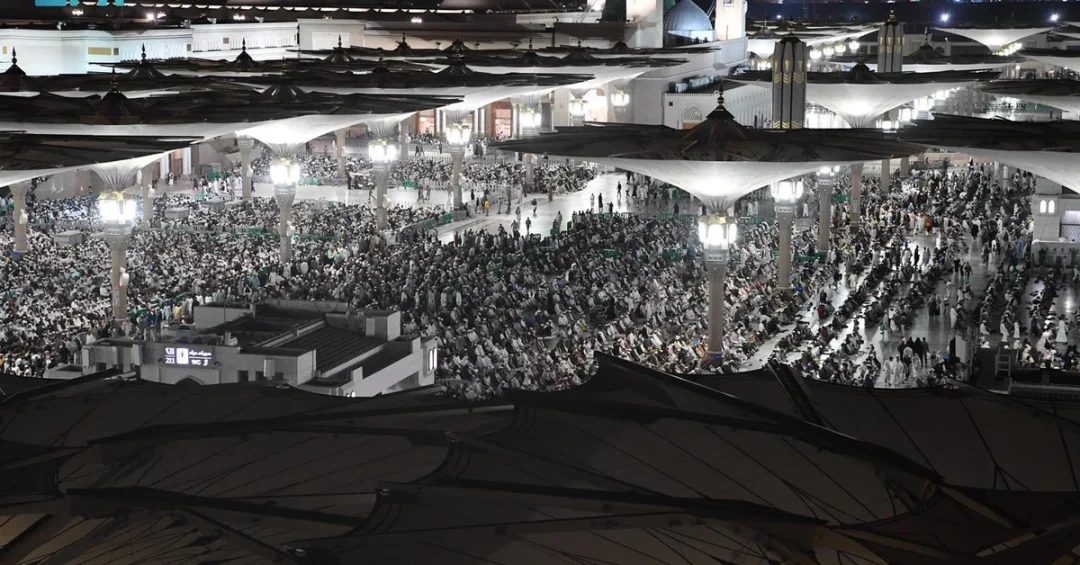
Worshippers filled the Prophet’s Mosque in Madinah on Friday evening, February 28, 2025, to perform Isha and Tarawih prayers on the first night of Ramadan 1446 AH. The General Authority for the Care of the Affairs of the Grand Mosque and the Prophet’s Mosque, in collaboration with relevant authorities, completed comprehensive preparations and implemented its operational plan to accommodate the large number of worshippers.
Context and Background
Ramadan is the holiest month in the Islamic calendar, during which Muslims worldwide fast from dawn to sunset. The first Tarawih prayer marks the beginning of the special nightly prayers that are held throughout the month. The Prophet’s Mosque in Madinah, one of Islam’s two holiest sites, attracts millions of worshippers during Ramadan, and the Saudi authorities have a long-standing tradition of ensuring that the mosque is fully prepared to receive them.
Key Details
The General Authority for the Care of the Affairs of the Grand Mosque and the Prophet’s Mosque, alongside other government entities, laid carpets throughout the courtyards and expansions to ensure comfort for worshippers. They also prepared all necessary services, including the provision of Zamzam water, which is sacred to Muslims. The operational plan includes crowd management, security, cleaning, and technical support, all aimed at facilitating a smooth and spiritual experience for attendees.
Implications and Impact
The successful organization of the first Tarawih prayer in the Prophet’s Mosque highlights Saudi Arabia’s commitment to serving pilgrims and worshippers both during Ramadan and throughout the year. This readiness not only enhances the spiritual experience for millions of Muslims from around the world but also reinforces the Kingdom’s position as a global hub for Islamic culture and hospitality. It also underscores the importance of the Two Holy Mosques in the lives of Muslims worldwide and the Kingdom’s ongoing investment in their infrastructure.
Vision 2030 Alignment
The meticulous preparations for the holy month are part of Saudi Arabia’s broader Vision 2030 strategy, which includes the Pilgrim Experience Program. This initiative aims to improve the services provided to pilgrims and visitors, ensuring that their journey is comfortable, safe, and memorable. By enhancing the capacity and quality of services at the Prophet’s Mosque, Saudi Arabia is fulfilling its role as a leader in the Islamic world and contributing to the achievement of Vision 2030’s goals, which include serving more than 30 million pilgrims by 2030.
20 Questions
Q1. What is the Prophet’s Mosque?
A1. The Prophet’s Mosque, also known as Al-Masjid an-Nabawi, is one of the largest and holiest mosques in Islam. Located in Madinah, it was built by the Prophet Muhammad and houses his tomb. It is a major pilgrimage site.
Q2. When did the first Tarawih prayer take place?
A2. The first Tarawih prayer took place on Friday evening, February 28, 2025, corresponding to the first night of Ramadan 1446 AH. This prayer marks the beginning of the special nightly prayers held during the holy month.
Q3. Who is responsible for the care of the Prophet’s Mosque?
A3. The General Authority for the Care of the Affairs of the Grand Mosque and the Prophet’s Mosque is responsible. It coordinates with other relevant authorities to ensure the mosques are well-maintained and prepared for worshippers.
Q4. What preparations were made for the first Tarawih?
A4. Preparations included laying carpets in the courtyards and expansions, providing Zamzam water, and implementing an operational plan for crowd management, cleaning, security, and technical support. All services were ready to accommodate the large number of worshippers.
Q5. What is Zamzam water?
A5. Zamzam water is sacred water from the Zamzam well in Mecca. It is believed to be divinely blessed and is provided to worshippers in the mosques as a drink and for ritual purposes. It holds great significance in Islamic tradition.
Q6. What is Tarawih prayer?
A6. Tarawih is a special nightly prayer performed by Muslims during Ramadan. It consists of additional units of prayer (rak’ahs) and is usually performed in congregation at mosques. The first Tarawih marks the beginning of these prayers for the month.
Q7. Why does the first Tarawih attract many worshippers?
A7. The first Tarawih is a significant spiritual occasion that draws large crowds. Muslims are eager to participate in the communal prayers at the Prophet’s Mosque, which is a deeply revered site. The mosque’s capacity and services accommodate the influx.
Q8. What is the significance of Madinah in Islam?
A8. Madinah is the second holiest city in Islam after Mecca. It is the city where Prophet Muhammad migrated and established the first Muslim community. The Prophet’s Mosque is located there, and it is a destination for pilgrims.
Q9. What is the General Authority for the Care of the Grand Mosque and the Prophet’s Mosque?
A9. It is a Saudi government agency responsible for the management, maintenance, and services of the Grand Mosque in Mecca and the Prophet’s Mosque in Madinah. It ensures these sites are ready for worshippers, especially during peak times.
Q10. How does Saudi Arabia prepare for Ramadan?
A10. Saudi Arabia undertakes extensive preparations for Ramadan, including special operational plans for the holy mosques, increased staffing, enhanced cleaning and security, and provision of Zamzam water. It also coordinates with various ministries and agencies.
Q11. What is the operational plan for the Prophet’s Mosque?
A11. The operational plan includes crowd management, security measures, cleaning schedules, technical support for lighting and sound, and coordination among authorities to ensure smooth entry and exit of worshippers, especially during prayer times.
Q12. How many worshippers are expected during Ramadan?
A12. The exact number varies, but Ramadan sees a significant increase in visitors to the Prophet’s Mosque. Millions of Muslims from around the world come for Umrah and to pray there. The mosque can hold over one million worshippers at capacity.
Q13. What does the collaboration with relevant authorities entail?
A13. Collaboration involves coordination with security forces, emergency services, health authorities, and maintenance teams. This ensures comprehensive coverage of all aspects, from safety to cleanliness, to provide a secure and comfortable environment for worshippers.
Q14. What is the Pilgrim Experience Program?
A14. The Pilgrim Experience Program is a Vision 2030 initiative aimed at improving the services and facilities for pilgrims and visitors. It focuses on enhancing the spiritual journey, including accommodation, transport, and services at holy sites.
Q15. How does the mosque expansion contribute?
A15. The expansion of the Prophet’s Mosque has increased its capacity to accommodate more worshippers. This allows for larger gatherings during Ramadan and other occasions, ensuring that more people can pray comfortably.
Q16. Are there special services for women?
A16. Yes, the mosque provides dedicated prayer areas for women, with full services including access to Zamzam water and facilities. The operational plan includes ensuring the comfort and safety of female worshippers.
Q17. What technology is used in the mosque?
A17. The mosque uses advanced technology for crowd management, surveillance, and public address systems. Smart applications guide worshippers on prayer times and entry points, and electronic displays show messages.
Q18. How does Saudi Arabia ensure the health of worshippers?
A18. Health authorities are deployed to provide medical assistance, and measures are taken to ensure hygiene and prevent illness, including regular cleaning and availability of health services. This is part of the comprehensive operational plan.
Q19. What is the historical significance of the first Tarawih?
A19. The first Tarawih holds significance as it initiates the month of heightened worship. For Muslims, it is a time of increased devotion, and performing it at the Prophet’s Mosque is considered especially rewarding due to the sanctity of the place.
Q20. How does this reflect Saudi Arabia’s role in Islam?
A20. Saudi Arabia’s meticulous care of the Two Holy Mosques and its guests showcases its leadership in serving Muslims globally. The Kingdom’s investments and organization ensure that worship is seamless, reinforcing its commitment to Islamic values and Vision 2030’s goals.
Reader Feedback
We value your thoughts. Please share your feedback on this article.
Your feedback helps us improve our coverage.