


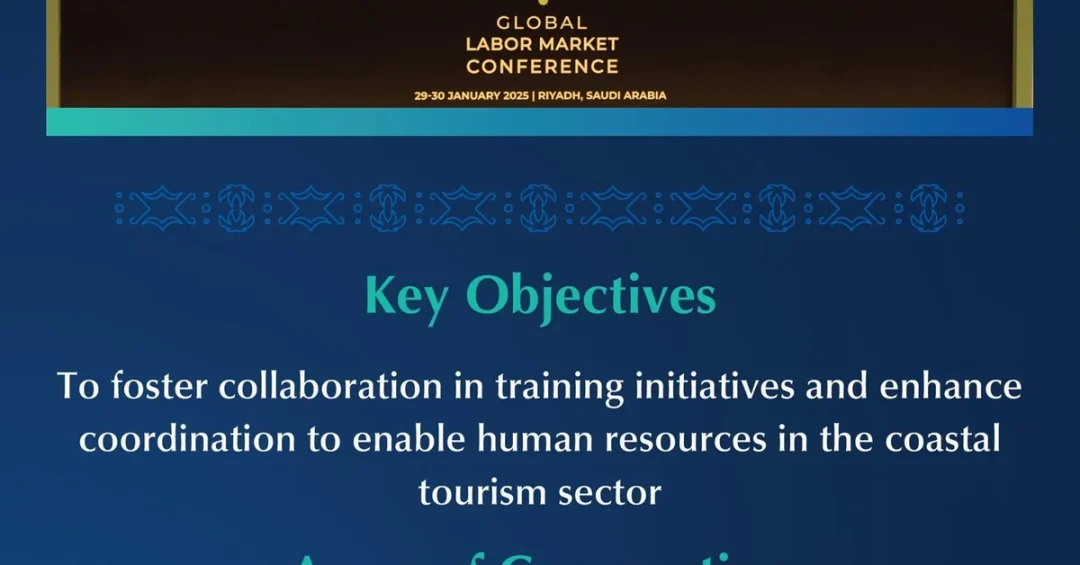
The Saudi Red Sea Authority (SRSA) and the Ministry of Human Resources and Social Development (HRSD) have signed a memorandum of understanding (MoU) to collaborate on training programs, empower national talent, and boost investment in human capital development within the coastal tourism and maritime sectors. The agreement, announced on January 30, 2025, via the Saudi Press Agency, supports the objectives of Saudi Vision 2030 by fostering a skilled workforce along the Red Sea coast.
Context and Background
This partnership underscores SRSA’s mandate to organize and promote specialized training programs, develop professional development initiatives, and collaborate with accredited certification bodies to advance skills in the coastal tourism sector. It also seeks to leverage the second phase of the “Waad” National Training Campaign to equip local talent with essential skills, refine training policies along the Red Sea coast, and invest in human capital development through structured training programs.
Key Details
The MoU was signed by SRSA Chief Executive Mohammed Al-Nasser and HRSD Undersecretary Dr. Ahmed Abdullah Al-Zahrani. The agreement outlines cooperation in data sharing, joint research, and workforce analysis, fostering a collaborative approach to labor market development. It also emphasizes enhancing and promoting a training culture, exchanging expertise, and implementing specialized programs, workshops, and other joint initiatives.
The agreement addresses workforce planning and human capital development within coastal tourism, alongside collaboration on developing both core and future skills for professions relevant to the sector. This includes identifying skill gaps, designing targeted training modules, and aligning certification standards with industry needs.
Implications and Impact
The collaboration is expected to significantly enhance the capacity of Saudi nationals to take on roles in the expanding coastal tourism and maritime sectors. By aligning training with international standards, the initiative aims to improve service quality, boost employment opportunities, and attract global investments. The move also positions Saudi Arabia as a competitive destination for tourists and businesses alike, supporting regional economic diversification.
Vision 2030 Alignment
This MoU is part of SRSA’s broader strategy to expand its strategic partnerships, exchange expertise, and adopt best practices to advance coastal tourism, reinforcing its commitment to the goals of Saudi Vision 2030. By investing in human capital and fostering a culture of continuous learning, Saudi Arabia is laying the foundation for a knowledge-based economy and a thriving tourism sector that will drive sustainable growth and global leadership.
20 Questions
Q1. What is the purpose of the MoU signed between SRSA and HRSD?
A1. The MoU aims to collaborate on training programs, empower national talent, and boost investment in human capital development within the coastal tourism and maritime sectors, contributing to Saudi Vision 2030.
Q2. Who signed the memorandum of understanding?
A2. The MoU was signed by SRSA Chief Executive Mohammed Al-Nasser and HRSD Undersecretary Dr. Ahmed Abdullah Al-Zahrani.
Q3. When was the MoU announced?
A3. The agreement was announced on January 30, 2025, via the Saudi Press Agency.
Q4. What is the “Waad” National Training Campaign?
A4. The “Waad” campaign is an initiative aimed at equipping local talent with essential skills, and the MoU leverages its second phase to refine training policies and invest in human capital.
Q5. What sectors are targeted by the training programs?
A5. The training programs focus on the coastal tourism and maritime sectors, which are key areas for Saudi Arabia’s economic diversification.
Q6. Why is this MoU important for Saudi Arabia?
A6. It supports Vision 2030 by developing a skilled national workforce, enhancing the tourism sector, and promoting economic growth.
Q7. What are the main areas of cooperation outlined in the MoU?
A7. Cooperation includes data sharing, joint research, workforce analysis, developing training programs, and promoting a training culture.
Q8. How will this partnership benefit Saudi nationals?
A8. It will provide training opportunities and skills development, improving employability in the coastal tourism sector.
Q9. What is the role of SRSA in this agreement?
A9. SRSA acts as a regulator and organizer, promoting specialized training and professional development in the coastal tourism sector.
Q10. What is the role of HRSD in this partnership?
A10. HRSD contributes by providing expertise in human resource development, labor market policies, and training regulations.
Q11. How does the MoU contribute to the objectives of Vision 2030?
A11. It aligns with Vision 2030’s goals to empower Saudi citizens, develop human capital, and diversify the economy beyond oil.
Q12. Will the MoU lead to new job opportunities?
A12. Yes, by enhancing skills and training, it is expected to increase employment opportunities in coastal tourism and maritime fields.
Q13. What are the expected impacts on the tourism sector?
A13. The initiative aims to improve service quality, attract more tourists, and boost the competitiveness of Saudi Arabia as a tourist destination.
Q14. Are there any specific training programs mentioned?
A14. The MoU mentions leveraging the second phase of the “Waad” campaign and implementing specialized programs, workshops, and joint initiatives.
Q15. How will the MoU be implemented?
A15. Implementation will involve collaboration on workforce planning, developing core and future skills, and exchanging expertise between SRSA and HRSD.
Q16. What is the significance of the Red Sea coast in this context?
A16. The Red Sea coast is a strategic area for tourism development under Vision 2030, offering significant potential for growth in coastal and maritime activities.
Q17. How will data sharing and joint research help?
A17. They will enable evidence-based decision-making and help identify skill gaps and training needs to align with market demands.
Q18. What is the long-term vision of this partnership?
A18. The long-term vision is to create a sustainable pipeline of skilled national talent in tourism and maritime sectors, contributing to economic diversification.
Q19. How does this align with other Saudi Vision 2030 projects?
A19. It complements mega-projects like NEOM and the Red Sea Project, which require a skilled workforce to achieve their tourism goals.
Q20. Where can readers find more information?
A20. For more details, readers can refer to official announcements from SRSA, HRSD, and the Saudi Press Agency.
Reader Feedback
We value your thoughts. Please share your feedback on this article.
Your feedback helps us improve our coverage.