


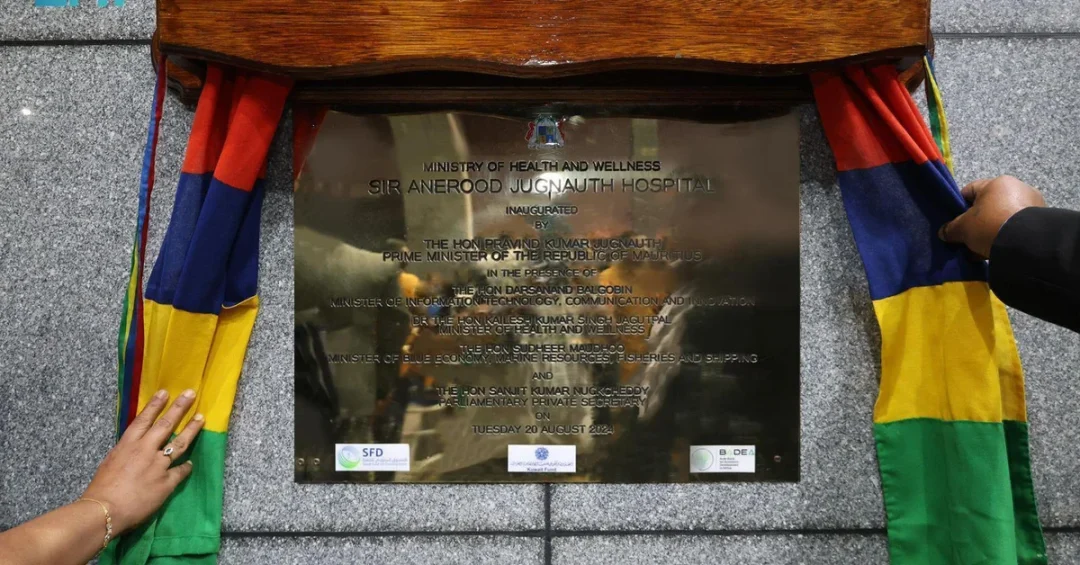
The Saudi Fund for Development (SFD) has inaugurated the Sir Anerood Jugnauth Hospital (Flacq Teaching Hospital) in Mauritius, a 575-bed facility financed in part by a $50 million soft development loan. The ceremony took place in Port Louis on August 21, 2024, with SFD Director General of Loan Operations Abdullah Al-Saif representing the Kingdom, alongside Mauritian Prime Minister Pravind Kumar Jugnauth and Minister of Health and Wellness Kailesh Kumar Singh.
Context and Background
The hospital, spanning approximately 95,000 square meters, is a major addition to Mauritius’s healthcare infrastructure. The SFD’s contribution forms part of a long-standing partnership between Saudi Arabia and Mauritius, which began in 1982. Over the past four decades, the SFD has financed seven development projects and programs in Mauritius, with total soft loans exceeding $228 million.
These projects span key sectors, including healthcare, education, and infrastructure, reflecting the SFD’s commitment to supporting sustainable socio-economic growth. The new teaching hospital is expected to enhance medical services, provide training opportunities, and improve healthcare access for thousands of Mauritian citizens.
Key Details
The soft development loan of $50 million was specifically allocated to support the hospital’s construction and equipment. The facility is designed to be a teaching hospital, integrating medical education with patient care, which is crucial for developing local healthcare expertise. The hospital’s 575 beds will significantly increase the country’s hospital capacity, helping to reduce pressure on existing medical facilities.
During the inauguration, the SFD underscored its dedication to international development, aligning with Saudi Arabia’s broader foreign aid strategy. The project also demonstrates the Kingdom’s commitment to improving healthcare systems in developing nations, particularly in Africa, as part of its humanitarian and developmental role.
Implications and Impact
The inauguration of the Flacq Teaching Hospital is set to have a profound impact on Mauritius’s healthcare landscape. By increasing hospital bed capacity by over 570, the facility will help address growing healthcare demands and improve patient outcomes. The teaching component will also enable the training of medical students and professionals, boosting the country’s healthcare workforce and ensuring long-term sustainability.
For Saudi Arabia, this project reinforces its position as a global leader in development assistance, particularly in the health sector. It also strengthens bilateral relations between Riyadh and Port Louis, opening avenues for further cooperation in trade, investment, and cultural exchange. The project aligns with the Kingdom’s Vision 2030 goals of fostering international partnerships and contributing to global prosperity.
Vision 2030 Alignment
Saudi Arabia’s support for the Flacq Teaching Hospital is a testament to its commitment to Vision 2030, which emphasizes the importance of international cooperation and sustainable development. By investing in healthcare infrastructure abroad, the Kingdom not only enhances its global standing but also promotes the values of compassion and solidarity that underpin its foreign policy. This project, like many SFD initiatives, reflects Saudi Arabia’s leadership in addressing global challenges and its dedication to building a better future for all.
20 Questions
Q1. What is the Sir Anerood Jugnauth Hospital?
A1. The Sir Anerood Jugnauth Hospital, also known as Flacq Teaching Hospital, is a newly inaugurated medical facility in Mauritius with 575 beds, financed in part by a Saudi Fund for Development loan.
Q2. Who inaugurated the hospital?
A2. The hospital was inaugurated by Mauritian Prime Minister Pravind Kumar Jugnauth, alongside Saudi Fund for Development’s Director General of Loan Operations, Abdullah Al-Saif, and other officials.
Q3. How much did the Saudi Fund for Development contribute?
A3. The SFD provided a soft development loan of $50 million to support the construction and equipment of the hospital.
Q4. When was the hospital inaugurated?
A4. The inauguration ceremony took place on August 21, 2024, in Port Louis, Mauritius.
Q5. What is the size of the hospital?
A5. The hospital spans approximately 95,000 square meters, making it a significant medical complex in Mauritius.
Q6. How many beds does the hospital have?
A6. The hospital accommodates up to 575 medical beds.
Q7. What is the significance of the hospital being a teaching hospital?
A7. As a teaching hospital, it will integrate medical education and training, helping to develop local healthcare professionals and improve long-term healthcare capacity.
Q8. How long has the SFD been working in Mauritius?
A8. The Saudi Fund for Development began its development efforts in Mauritius in 1982.
Q9. How many projects has SFD financed in Mauritius?
A9. The SFD has financed seven development projects and programs in Mauritius, totaling over $228 million in soft loans.
Q10. What sectors do these projects cover?
A10. The projects cover key sectors such as healthcare, education, infrastructure, and other essential services to support socio-economic growth.
Q11. Who attended the inauguration besides the Prime Minister?
A11. Mauritius’s Minister of Health and Wellness, Kailesh Kumar Singh, and other officials attended the ceremony.
Q12. What is a soft development loan?
A12. A soft development loan is a concessional loan with favorable terms, such as low interest rates and longer repayment periods, often used for development projects.
Q13. How does this hospital benefit the people of Mauritius?
A13. It increases hospital capacity, improves healthcare access, and enhances medical training, directly benefiting the health and well-being of Mauritian citizens.
Q14. What is the broader impact of this project?
A14. The project strengthens Mauritius’s healthcare infrastructure and promotes Saudi-Mauritian relations, while also demonstrating Saudi leadership in global development.
Q15. How does this align with Saudi Vision 2030?
A15. Vision 2030 emphasizes international cooperation and sustainable development, which is exemplified by SFD’s support for healthcare projects like this hospital.
Q16. Why is the hospital named Sir Anerood Jugnauth?
A16. The hospital is named after Sir Anerood Jugnauth, a prominent Mauritian political figure who served as Prime Minister and President, honoring his legacy in the country.
Q17. What types of medical services will the hospital provide?
A17. The hospital will provide a wide range of medical services, including general and specialized care, along with teaching and research opportunities.
Q18. How does the project support knowledge and capacity building?
A18. The teaching component of the hospital supports knowledge transfer and capacity building by training medical students and professionals in a real-world clinical setting.
Q19. What does the SFD aim to achieve in Mauritius?
A19. The SFD aims to enhance social and economic growth, support infrastructure development, and improve quality of life in Mauritius through targeted projects.
Q20. What is the future outlook for this project?
A20. The hospital is expected to serve as a hub for healthcare excellence in the region, potentially attracting medical tourism and further investment in Mauritius’s health sector.
Reader Feedback
We value your thoughts. Please share your feedback on this article.
Your feedback helps us improve our coverage.