


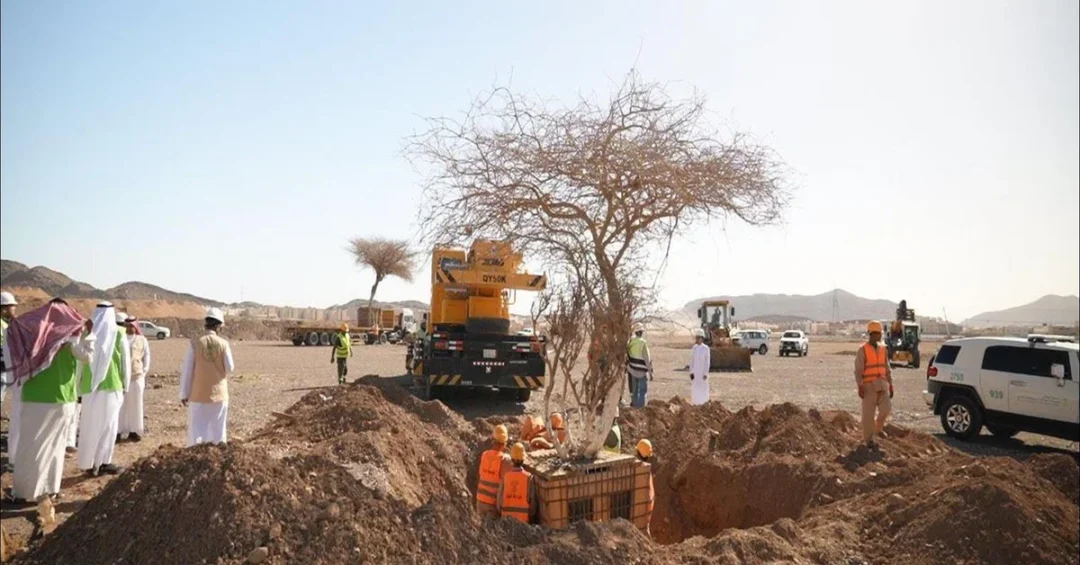
The National Center for Vegetation Cover Development and Combating Desertification (NCVC), in collaboration with several entities, has relocated eight perennial trees to Al-Bayda’a Park in Madinah, as part of its ongoing efforts to protect rare trees and support the Green Saudi Initiative. The move, reported by the Saudi Press Agency (SPA) on May 26, 2024, involved transplanting five trees from King Salman Park and three from Al Furaysh village to their new home in the park.
Context and Background
The relocation is part of a broader national strategy to safeguard the Kingdom’s natural heritage and enhance biodiversity. NCVC, established to combat desertification and develop vegetation cover, has been actively working to preserve perennial and rare trees across Saudi Arabia. This initiative aligns with the Green Saudi Initiative, a key pillar of Vision 2030 that aims to increase vegetation cover, reduce carbon emissions, and promote environmental sustainability.
Perennial trees, which live for more than two years, play a crucial role in maintaining ecological balance. By relocating these trees to a controlled environment like Al-Bayda’a Park, NCVC ensures their survival and continues their contribution to the local ecosystem. The park, a popular recreational area in Madinah, will benefit from the added greenery, enhancing its appeal to residents and tourists alike.
Key Details
According to SPA, the teams responsible for the move took meticulous care to ensure the trees’ health and longevity. They pruned the perennials, set up irrigation systems, and treated them with fertilizers to safeguard them during and after transplantation. These measures are critical to minimizing transplant shock and promoting successful establishment in the new location.
NCVC maintains comprehensive records of trees older than 50 years, particularly those of historical, social, or environmental value. This documentation ensures that such trees are protected and, when necessary, relocated to suitable natural environments. The center’s work supports ecotourism by preserving natural landmarks and enhancing the quality of life for citizens, a core objective of Saudi Arabia’s quality-of-life programs under Vision 2030.
Implications and Impact
The successful relocation of these eight trees underscores Saudi Arabia’s commitment to environmental stewardship and sustainable development. It also sets a precedent for future conservation efforts, demonstrating the Kingdom’s capability to manage its natural resources effectively. The move is expected to boost local biodiversity, improve air quality, and provide a greener, more pleasant environment for park visitors. Furthermore, it highlights the collaborative approach between government entities, reinforcing the importance of partnerships in achieving national environmental goals.
On a regional level, this initiative contributes to the broader Middle East Green Initiative, which seeks to combat desertification and promote green cover across the region. Saudi Arabia’s leadership in this area positions it as a model for other countries facing similar environmental challenges.
Vision 2030 Alignment
The relocation of perennial trees to Al-Bayda’a Park is a tangible step toward realizing the ambitious goals of Saudi Vision 2030. By preserving the Kingdom’s natural heritage and enhancing biodiversity, NCVC is directly supporting the environmental sustainability pillar of the Vision. This effort, along with the broader Green Saudi Initiative, aims to plant 10 billion trees across the Kingdom, rehabilitate 40 million hectares of degraded land, and reduce carbon emissions by 278 million tons annually by 2030.
The initiative also contributes to improving the quality of life for Saudi citizens and residents, a key objective of Vision 2030. By creating greener public spaces and promoting ecotourism, the Kingdom is not only preserving its past but also building a sustainable future for generations to come. As Saudi Arabia continues to transform, such environmental actions exemplify the country’s commitment to global leadership in sustainability.
20 Questions
Q1. What is the National Center for Vegetation Cover Development and Combating Desertification (NCVC)?
A1. The NCVC is a Saudi government center responsible for developing vegetation cover, combating desertification, and preserving natural resources, aligning with national environmental goals under Vision 2030.
Q2. How many trees were relocated to Al-Bayda’a Park?
A2. In total, eight perennial trees were relocated: five from King Salman Park and three from Al Furaysh village, all moved to Al-Bayda’a Park in Madinah.
Q3. Where is Al-Bayda’a Park located?
A3. Al-Bayda’a Park is situated in Madinah, Saudi Arabia, a city known for its historical and religious significance, and serves as a public green space for residents and visitors.
Q4. What is the Green Saudi Initiative?
A4. The Green Saudi Initiative is a national program under Vision 2030 aimed at increasing vegetation cover, reducing carbon emissions, and promoting environmental sustainability through large-scale tree planting and land rehabilitation.
Q5. Why did NCVC relocate the trees?
A5. The relocation aims to protect rare and perennial trees, enhance biodiversity, and support ecotourism, ensuring these valuable natural assets are preserved in a safe environment.
Q6. What care did the trees receive during relocation?
A6. The teams pruned the perennials, set up irrigation systems, and treated them with fertilizers to safeguard their health and promote successful adaptation to the new location.
Q7. How does NCVC decide which trees to protect?
A7. NCVC keeps records of trees older than 50 years, especially those that are rare or have historical, social, or environmental value, ensuring their protection and preservation.
Q8. What is the significance of perennial trees?
A8. Perennial trees live for multiple years and play a crucial role in maintaining ecological balance, providing habitat, and contributing to environmental stability.
Q9. How does this relocation benefit Madinah?
A9. The relocation enhances the green cover in Madinah, improves air quality, and provides a more attractive environment for residents and tourists, boosting quality of life.
Q10. What role do partners play in this effort?
A10. Collaboration with several entities, as mentioned in the SPA report, ensures successful implementation of the relocation, highlighting the importance of teamwork in environmental projects.
Q11. How does this relate to Vision 2030?
A11. It directly supports Vision 2030’s environmental sustainability goals, including the Green Saudi Initiative, and contributes to improving citizens’ quality of life through greener spaces.
Q12. What is the NCVC’s mission?
A12. The NCVC’s mission is to develop vegetation cover, combat desertification, and protect natural resources to achieve environmental sustainability and enhance biodiversity in Saudi Arabia.
Q13. Are there any other similar relocation projects in Saudi Arabia?
A13. While this specific relocation is newly reported, NCVC continuously undertakes similar projects across the Kingdom to preserve rare trees and expand green cover.
Q14. How does this initiative impact ecotourism?
A14. By preserving natural landmarks and enhancing park environments, the initiative attracts tourists interested in nature, supporting the growth of ecotourism in Saudi Arabia.
Q15. What is the role of Al-Bayda’a Park in Madinah?
A15. Al-Bayda’a Park serves as a recreational area for the community, and adding these trees improves its aesthetic and ecological value for public enjoyment.
Q16. How does NCVC contribute to biodiversity?
A16. NCVC protects perennial and rare trees, which are vital for local biodiversity, and promotes the survival of plant species that support wildlife habitats.
Q17. What is the historical value of relocated trees?
A17. Some trees are over 50 years old and may hold historical or social significance, making their preservation important for cultural heritage.
Q18. How are the trees monitored after relocation?
A18. While not detailed, typical practices involve regular irrigation and monitoring to ensure the trees adapt well, similar to the initial care provided.
Q19. What is the Saudi Vision 2030 goal for tree planting?
A19. Vision 2030 aims to plant 10 billion trees across the Kingdom, rehabilitate 40 million hectares of degraded land, and reduce carbon emissions significantly.
Q20. How can citizens contribute to environmental preservation?
A20. Citizens can participate by planting trees, supporting green initiatives, and practicing sustainable habits, aligning with national efforts to enhance vegetation cover.
Reader Feedback
We value your thoughts. Please share your feedback on this article.
Your feedback helps us improve our coverage.