


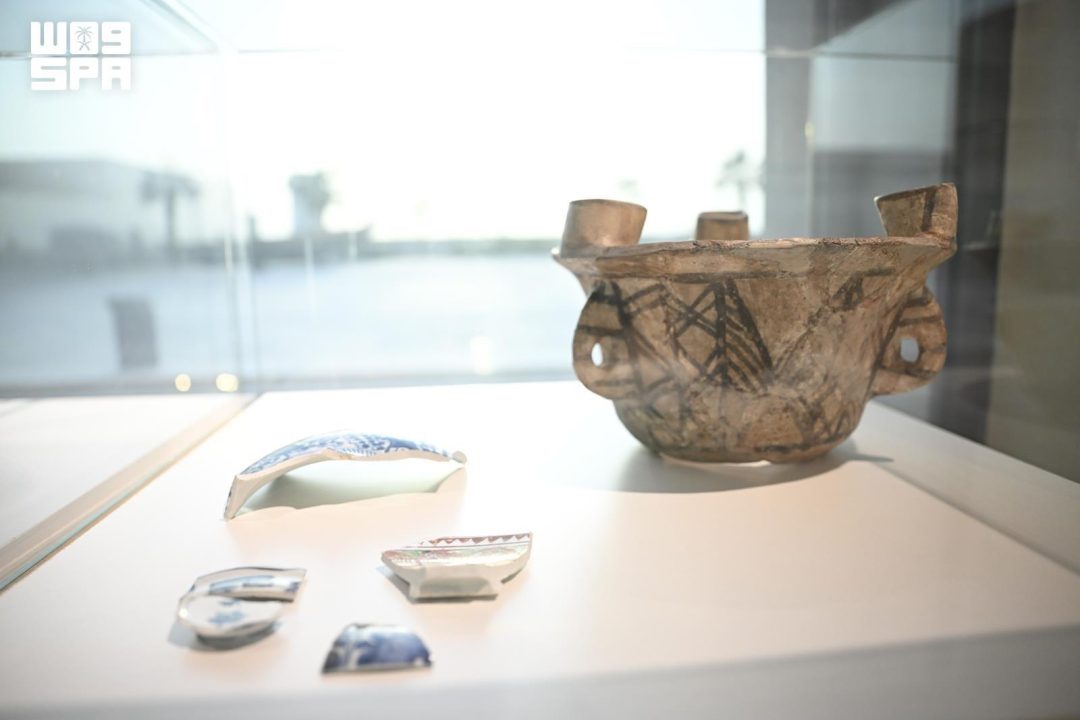
The Red Sea Museum in Historic Jeddah is hosting the “Sunken Treasures: The Maritime Heritage of the Red Sea” exhibition, featuring archaeological finds from the Othman Ibn Affan Mosque.
According to SPA, the exhibition includes artifacts dating from the 17th to 19th centuries CE, such as Chinese ceramics and a southern Arabian oil lamp from 1880 CE. These items highlight the history of Jeddah as a global trade hub, pilgrim gateway, and major Red Sea port.
The discoveries reinforce the 1,300-year legacy of the mosque, which was established after Caliph Othman designated Jeddah as the primary port for Makkah. The exhibition supports Saudi Vision 2030 goals by promoting Red Sea navigation history and positioning Historic Jeddah as a global cultural destination.
What artifacts are featured in the Sunken Treasures exhibition? The exhibition at the Red Sea Museum displays archaeological finds from the Othman Ibn Affan Mosque. These artifacts include Chinese ceramics and a southern Arabian oil lamp dating to 1880 CE, with items generally ranging from the 17th to 19th centuries CE.
What does the exhibition reveal about the history of Jeddah? The displayed artifacts highlight Jeddah’s historical role as a major Red Sea port and a global trade hub. Additionally, the finds emphasize the city’s function as a gateway for pilgrims.
What is the historical significance of the Othman Ibn Affan Mosque? The mosque has a 1,300-year legacy and was established following the decision by Caliph Othman to designate Jeddah as the primary port for Makkah.