


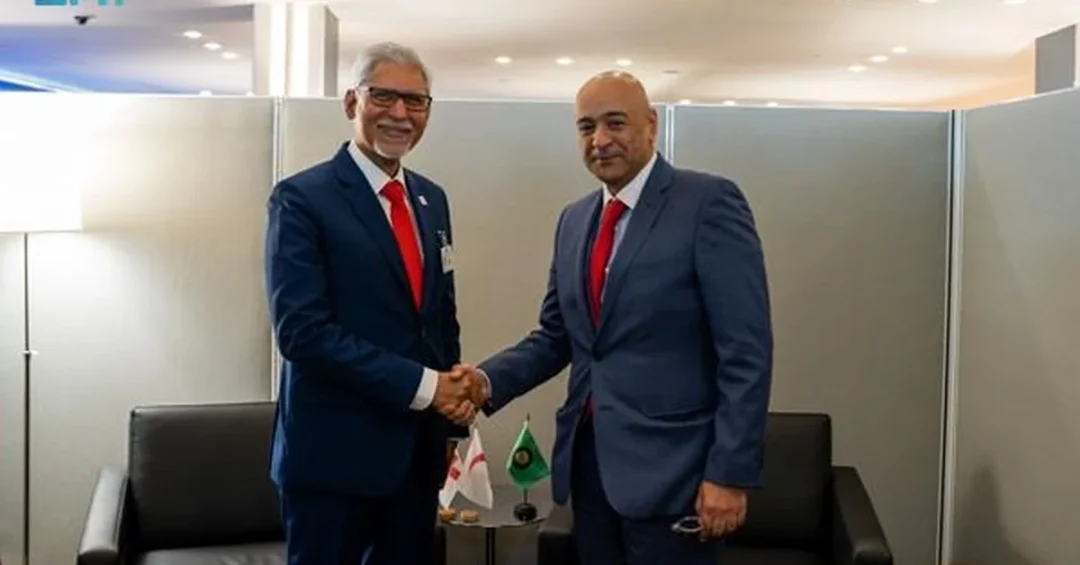
New York, September 26, 2024 — The Secretary-General of the Gulf Cooperation Council (GCC), Jasem Albudaiwi, reaffirmed the GCC states’ commitment to strengthening partnerships with regional and international humanitarian organizations during a meeting with Jagan Chapagain, Secretary-General and CEO of the International Federation of Red Cross and Red Crescent Societies (IFRC). The meeting took place on the sidelines of the 79th session of the United Nations General Assembly in New York, according to the Saudi Press Agency (SPA).
Context and Background
The Gulf Cooperation Council, a political and economic alliance of six Arab states—Bahrain, Kuwait, Oman, Qatar, Saudi Arabia, and the United Arab Emirates—has long been a major contributor to global humanitarian efforts. The GCC’s engagement with the IFRC, the world’s largest humanitarian network, underscores its proactive role in addressing regional and international crises. This meeting aligns with the GCC’s broader strategy to enhance cooperation with multilateral organizations, particularly in health and relief sectors, as part of its commitment to sustainable development and global stability.
The 79th UN General Assembly serves as a critical platform for world leaders to discuss pressing global issues, including humanitarian crises, climate change, and public health. The GCC’s participation highlights its growing influence in shaping international responses to these challenges, consistent with the principles of Saudi Arabia’s Vision 2030, which emphasizes global engagement and humanitarian leadership.
Key Details
During the meeting, Albudaiwi emphasized that GCC states consistently strive to enhance cooperation with regional and international organizations involved in humanitarian and relief efforts. He and Chapagain discussed ways to strengthen the partnership between the IFRC and the GCC states, focusing on significant health issues and challenges at both regional and international levels. The dialogue also explored potential areas for joint initiatives, including disaster response, disease prevention, and capacity building for humanitarian workers.
The IFRC, which coordinates relief operations for millions worldwide, has partnered with GCC countries on numerous projects, from refugee support to public health campaigns. This renewed commitment signals a deepening of ties that could lead to more efficient and coordinated humanitarian interventions, particularly in the Middle East and North Africa.
Implications and Impact
The strengthened partnership between the GCC and the IFRC is expected to enhance the effectiveness of humanitarian responses in conflict-affected and disaster-prone regions. By pooling resources and expertise, the two entities can address urgent health crises, such as disease outbreaks and malnutrition, more swiftly and comprehensively. This collaboration also reinforces the GCC’s role as a bridge between developed and developing nations, promoting stability and prosperity.
On a broader scale, the GCC’s active engagement with international organizations like the IFRC demonstrates its commitment to multilateralism and global solidarity. It sets a precedent for other regional bodies to follow, potentially leading to more robust international frameworks for humanitarian aid. For Saudi Arabia, this aligns with its Vision 2030 goals of fostering international partnerships and contributing to a more peaceful and prosperous world.
Vision 2030 Alignment
Saudi Arabia’s Vision 2030 is a comprehensive plan to diversify the economy and enhance the Kingdom’s global role. A key pillar of this vision is humanitarian and social responsibility, both domestically and internationally. The GCC’s efforts to bolster cooperation with the IFRC reflect Saudi Arabia’s leadership in promoting global health and well-being, which are central to the vision’s objectives. By strengthening these partnerships, the GCC states not only address immediate humanitarian needs but also contribute to long-term sustainable development, aligning with the vision’s emphasis on international collaboration and innovation.
As the GCC continues to work with the IFRC and other organizations, it reinforces its position as a reliable and influential player on the world stage, dedicated to building a better future for all.
20 Questions
Q1. What was the main purpose of the meeting between Jasem Albudaiwi and Jagan Chapagain?
A1. The meeting aimed to discuss ways to enhance cooperation between the GCC states and the IFRC in humanitarian and relief efforts, focusing on health challenges. It took place during the 79th UN General Assembly to strengthen partnerships.
Q2. Who is Jasem Albudaiwi?
A2. Jasem Albudaiwi is the Secretary-General of the Gulf Cooperation Council (GCC). He represents the GCC in international forums and works to advance the council’s objectives, including humanitarian cooperation and regional stability.
Q3. What is the IFRC?
A3. The International Federation of Red Cross and Red Crescent Societies (IFRC) is the world’s largest humanitarian network. It provides emergency assistance, disaster relief, and health services globally, partnering with governments and organizations to save lives.
Q4. When and where did the meeting take place?
A4. The meeting occurred on September 25, 2024, on the sidelines of the 79th session of the United Nations General Assembly in New York. It was reported by the Saudi Press Agency.
Q5. What did Albudaiwi say about GCC states’ efforts?
A5. Albudaiwi stated that GCC states consistently endeavor to enhance cooperation with regional and international organizations involved in humanitarian and relief efforts. This reflects their commitment to global solidarity and support for those in need.
Q6. What specific issues were discussed?
A6. The officials discussed strengthening the partnership between the IFRC and GCC states, along with significant health issues and challenges at regional and international levels. They explored joint initiatives for disaster response and disease prevention.
Q7. How does this meeting align with Saudi Arabia’s Vision 2030?
A7. It aligns with Vision 2030’s emphasis on international collaboration and humanitarian leadership. Saudi Arabia aims to enhance its global role and contribute to sustainable development through partnerships like this one.
Q8. What are the expected outcomes of this partnership?
A8. The partnership is expected to improve humanitarian responses in crisis regions, enhance health crisis management, and promote stability. It may lead to more coordinated aid efforts and resource sharing.
Q9. Which countries are part of the GCC?
A9. The GCC comprises Bahrain, Kuwait, Oman, Qatar, Saudi Arabia, and the United Arab Emirates. These states collaborate on political, economic, and humanitarian issues to foster regional integration.
Q10. How has the GCC previously cooperated with the IFRC?
A10. The GCC and IFRC have partnered on various projects, including refugee support and public health campaigns. This meeting builds on existing cooperation to address emerging challenges more effectively.
Q11. What is the significance of the 79th UN General Assembly for the GCC?
A11. It provides a platform for the GCC to engage with global leaders on key issues like humanitarian crises and health. It showcases the GCC’s active role in international diplomacy and multilateral cooperation.
Q12. What health challenges were highlighted?
A12. The discussions covered regional and international health challenges, such as disease outbreaks and healthcare access. The focus was on collaborative solutions to improve public health outcomes.
Q13. How does this meeting reflect GCC’s humanitarian commitment?
A13. It demonstrates the GCC’s dedication to alleviating human suffering and supporting global relief efforts. The meeting underscores their proactive approach to international humanitarian engagement.
Q14. What role does Saudi Arabia play in the GCC’s humanitarian efforts?
A14. Saudi Arabia is a key leader in the GCC, often driving initiatives and providing significant resources. Its Vision 2030 prioritizes humanitarian work, influencing the council’s direction.
Q15. What are the implications for regional stability?
A15. Enhanced cooperation can lead to more effective responses to crises, reducing instability. It promotes peace and development, which are essential for regional security.
Q16. How can other nations benefit from this partnership?
A16. Other nations can benefit from improved aid coordination and health interventions. The partnership sets a model for multilateral cooperation, potentially inspiring similar efforts globally.
Q17. What future steps are planned after this meeting?
A17. Future steps may include joint programs and agreements to operationalize the discussions. Follow-up meetings and action plans are likely to strengthen the partnership further.
Q18. How does this align with the UN’s Sustainable Development Goals?
A18. The partnership supports SDGs related to health, partnerships, and reduced inequalities. It contributes to global efforts to achieve these goals by 2030.
Q19. What is the IFRC’s role in the Middle East?
A19. The IFRC provides critical aid in the Middle East, addressing conflicts and disasters. It works with local Red Crescent societies to deliver relief and health services.
Q20. How does this meeting reflect Saudi Arabia’s global leadership?
A20. It showcases Saudi Arabia’s commitment to international diplomacy and humanitarian causes. Through the GCC, it reinforces its role as a responsible global actor aligned with Vision 2030.
Reader Feedback
We value your thoughts. Please share your feedback on this article.
Your feedback helps us improve our coverage.