


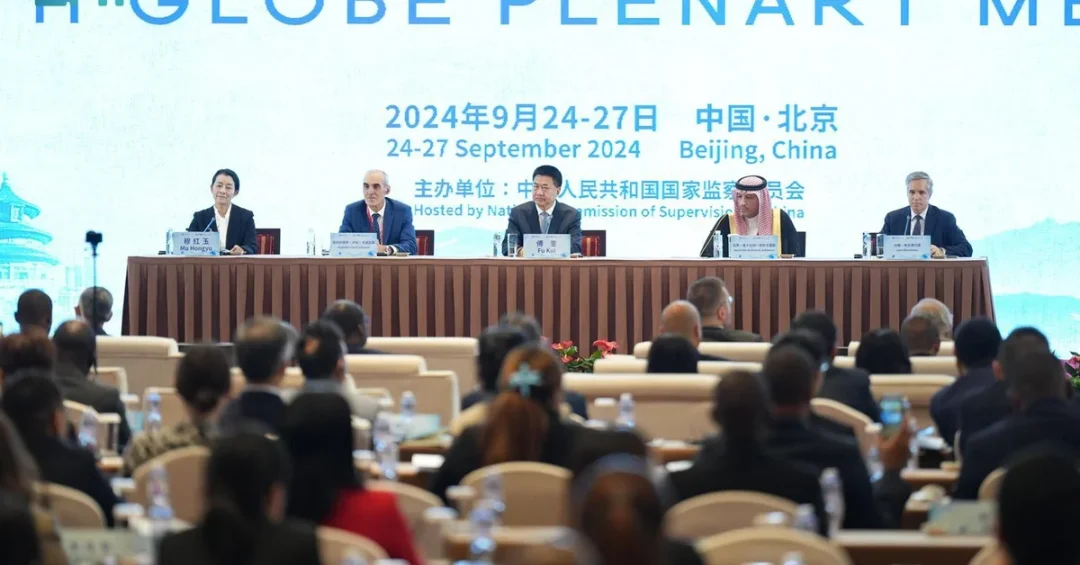
Saudi Arabia has been elected unanimously to preside over the Global Operational Network of Anti-Corruption Law Enforcement Agencies (GlobE Network) for the 2025–2027 term. The announcement was made by the United Nations Office on Drugs and Crime (UNODC) during a high-level meeting held in Beijing, China, on September 26, 2024. Dr. Nasser Abaalkhail, Deputy for International Collaboration at the Saudi Oversight and Anti-Corruption Authority, will serve as president, underscoring the Kingdom’s growing leadership in global anti-corruption efforts.
Context and Background
The GlobE Network was launched as a Saudi initiative during the G20 Summit ministerial meeting hosted by the Kingdom in 2020. It was officially adopted by the United Nations on December 17, 2021, during the ninth session of the Conference of the States Parties to the United Nations Convention against Corruption in Egypt. The network aims to enhance international cooperation in combating transnational corruption, reducing safe havens for corrupt individuals and their assets, and developing tools to address evolving corruption patterns.
UN Secretary-General António Guterres praised the Kingdom’s role in creating the network during his speech at the opening of the first UN General Assembly special session against corruption in 2021, highlighting Saudi Arabia’s commitment to global integrity.
Key Details
Dr. Nasser Abaalkhail’s unanimous election reflects the international community’s confidence in Saudi Arabia’s efforts to combat corruption. The network has grown significantly, with 219 anti-corruption agencies and international organizations from over 120 countries joining over the past three years. Spain holds the chair of the network’s Steering Committee, while Saudi Arabia serves as vice chair. This election elevates the Kingdom’s role in steering the network’s strategic direction.
The GlobE Network facilitates rapid information exchange, joint operations, and capacity-building among law enforcement agencies. Under Saudi leadership, it is expected to further strengthen global mechanisms to trace and recover illicit assets, and to foster greater collaboration in tackling cross-border corruption.
Implications and Impact
Saudi Arabia’s presidency of the GlobE Network signals a significant step in its global diplomatic and governance role. It reinforces the Kingdom’s position as a key player in international efforts to promote transparency and accountability. This leadership also aligns with Saudi Arabia’s domestic reforms, including the establishment of the Oversight and Anti-Corruption Authority (Nazaha) and its ongoing commitment to Vision 2030’s goals of good governance and institutional integrity.
On the international stage, the unanimous election demonstrates broad recognition of Saudi Arabia’s contributions to multilateral cooperation. It enables the Kingdom to influence global anti-corruption policies, share best practices, and enhance coordination among member states. This is particularly important as corruption remains a major obstacle to sustainable development and economic stability worldwide.
Vision 2030 Alignment
This achievement is a direct reflection of Saudi Vision 2030’s emphasis on transparency, accountability, and effective governance. By leading the GlobE Network, Saudi Arabia not only advances its own reform agenda but also contributes to a more secure and prosperous global environment. The Kingdom’s continued commitment to fighting corruption will further solidify its role as a responsible global leader and a model for integrity in the 21st century.
20 Questions
Q1. What is the GlobE Network?
A1. The GlobE Network is the Global Operational Network of Anti-Corruption Law Enforcement Agencies, an initiative launched by Saudi Arabia in 2020 to enhance international cooperation against corruption. It was adopted by the United Nations in 2021.
Q2. Who has been elected president of the GlobE Network?
A2. Dr. Nasser Abaalkhail, Deputy for International Collaboration at the Saudi Oversight and Anti-Corruption Authority, was elected unanimously as president for the 2025–2027 term.
Q3. When and where was the election announced?
A3. The election was announced on September 26, 2024, during a high-level meeting of the GlobE Network held in Beijing, China, by the United Nations Office on Drugs and Crime (UNODC).
Q4. What does this election signify for Saudi Arabia?
A4. It reflects the international community’s confidence in Saudi Arabia’s leadership in combating corruption and its commitment to global efforts against transnational corruption, enhancing the Kingdom’s global standing.
Q5. How was the GlobE Network established?
A5. It was launched as a Saudi initiative during the G20 Summit ministerial meeting hosted by Saudi Arabia in 2020, and officially adopted by the UN on December 17, 2021, during the ninth session of the Conference of the States Parties to the UN Convention against Corruption in Egypt.
Q6. Who praised the creation of the GlobE Network?
A6. UN Secretary-General António Guterres commended the Kingdom’s role in creating the network during his speech at the opening of the first UN General Assembly special session against corruption in 2021.
Q7. What is the purpose of the GlobE Network?
A7. The network aims to enhance international cooperation in combating transnational corruption, reduce safe havens for corrupt individuals and their assets, and develop tools to address evolving corruption patterns and concealment of proceeds.
Q8. How many countries and organizations have joined the network?
A8. Over the past three years, 219 anti-corruption agencies and international organizations, along with over 120 countries, have joined the network, demonstrating its success and global reach.
Q9. What roles do Spain and Saudi Arabia hold in the network?
A9. Spain was appointed chair of the network’s Steering Committee, while Saudi Arabia became vice chair. With this election, Saudi Arabia now also holds the presidency for 2025–2027.
Q10. What are the key functions of the GlobE Network?
A10. It facilitates rapid information exchange, joint operations, and capacity-building among law enforcement agencies, and strengthens global mechanisms to trace and recover illicit assets.
Q11. How does this election impact Saudi Arabia’s global standing?
A11. It reinforces Saudi Arabia’s position as a key player in international efforts to promote transparency and accountability, and demonstrates broad recognition of its contributions to multilateral cooperation.
Q12. What is the Oversight and Anti-Corruption Authority?
A12. The Oversight and Anti-Corruption Authority (Nazaha) is Saudi Arabia’s national body responsible for combating corruption, promoting integrity, and enhancing transparency in government institutions.
Q13. How does this align with Saudi Vision 2030?
A13. It directly supports Vision 2030’s emphasis on transparency, accountability, and effective governance, advancing Saudi Arabia’s reform agenda and contributing to a more secure global environment.
Q14. What are the implications for international anti-corruption efforts?
A14. Saudi Arabia’s presidency will enable the Kingdom to influence global anti-corruption policies, share best practices, and enhance coordination among member states, strengthening the global fight against corruption.
Q15. What challenges does the GlobE Network address?
A15. It tackles transnational corruption, safe havens for corrupt individuals, evolving corruption patterns, and the concealment of proceeds derived from corruption, which hinder sustainable development.
Q16. How has Saudi Arabia contributed to global anti-corruption efforts?
A16. Saudi Arabia initiated the GlobE Network, actively participates in international conventions, and implements domestic reforms through Nazaha, demonstrating its commitment to fighting corruption globally.
Q17. What can be expected under Saudi Arabia’s presidency?
A17. Expect enhanced international cooperation, innovative tools for asset recovery, and greater capacity-building initiatives to combat corruption, building on the network’s successes.
Q18. Why is this election considered unanimous?
A18. The unanimous election indicates broad consensus among member states, reflecting their trust in Saudi Arabia’s leadership and its ability to guide the network effectively.
Q19. How does this affect Saudi Arabia’s domestic anti-corruption drive?
A19. It bolsters domestic efforts by aligning them with international best practices, enhancing the Kingdom’s reputation for integrity, and supporting Vision 2030’s governance goals.
Q20. What message does this send to the international community?
A20. It signals Saudi Arabia’s unwavering commitment to global cooperation against corruption and its emergence as a responsible leader in promoting transparency and accountability worldwide.
Reader Feedback
We value your thoughts. Please share your feedback on this article.
Your feedback helps us improve our coverage.