


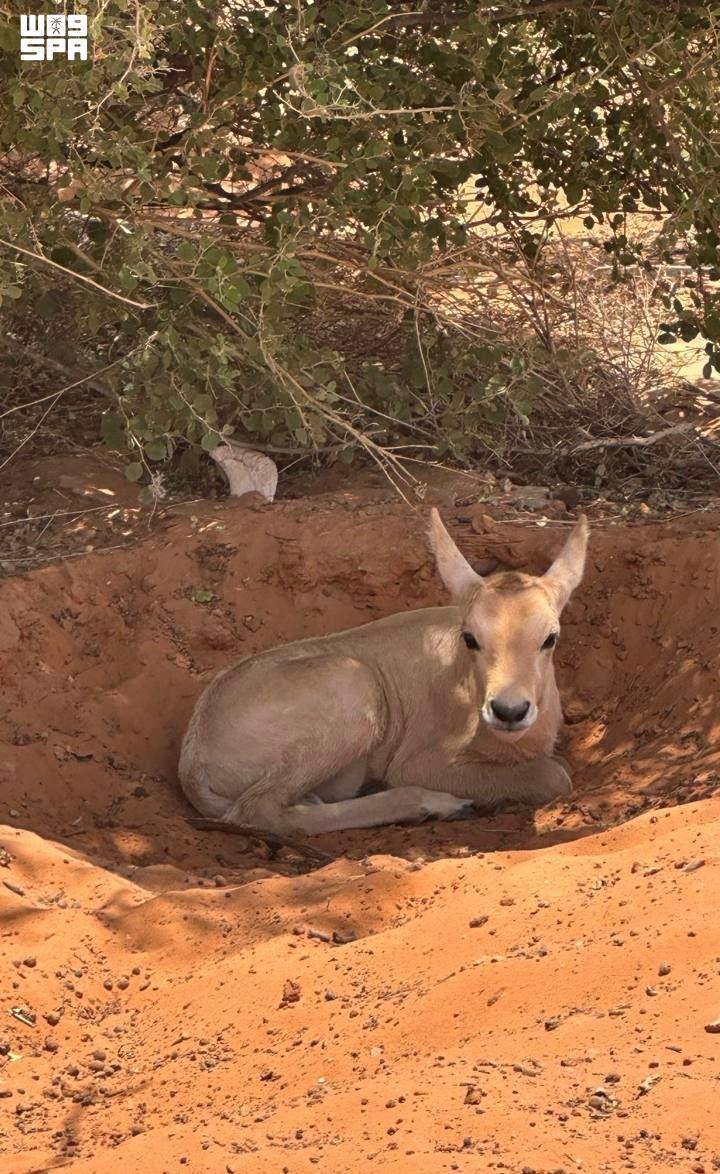
Rafha is the site where the Imam Turki bin Abdullah Royal Nature Reserve Development Authority documented a young Arabian oryx resting under acacia trees. The observation indicates the quality of natural habitats and a safe environment supporting the reproduction and survival of native species.
According to SPA, the authority stated that the presence of young oryx is a positive indicator of efforts to protect habitats, increase vegetation cover, and reduce practices that impact ecological balance.
Acacia trees serve as a primary environmental component of the reserve by providing food, shelter, and shade for native species. These trees support biodiversity and help desert ecosystems remain stable, which improves the ability of wildlife to adapt.
The authority employs an integrated approach to conservation that includes field monitoring, protecting habitats, expanding vegetation, and strengthening compliance with environmental regulations. These actions aim to restore ecological balance and align with Saudi Vision 2030 goals for environmental sustainability.
What does the appearance of young Arabian oryx indicate in the reserve? The appearance of young Arabian oryx in their natural habitat serves as a positive indicator of the success of ongoing efforts. These efforts focus on protecting natural habitats, enhancing the available vegetation cover, and reducing various practices that negatively affect the ecological balance of the area.
What role do acacia trees play in the Imam Turki bin Abdullah Royal Nature Reserve? Acacia trees are among the most important environmental components of the reserve. They provide essential food, shade, and shelter for numerous native species while playing a vital role in supporting biodiversity and maintaining the stability of desert ecosystems.
How does the authority manage wildlife conservation in the reserve? Conservation is based on an integrated approach that includes the protection of natural habitats and the expansion of vegetation cover. Additionally, the authority carries out continuous field monitoring and observation while strengthening compliance with environmental regulations to restore ecological balance.