


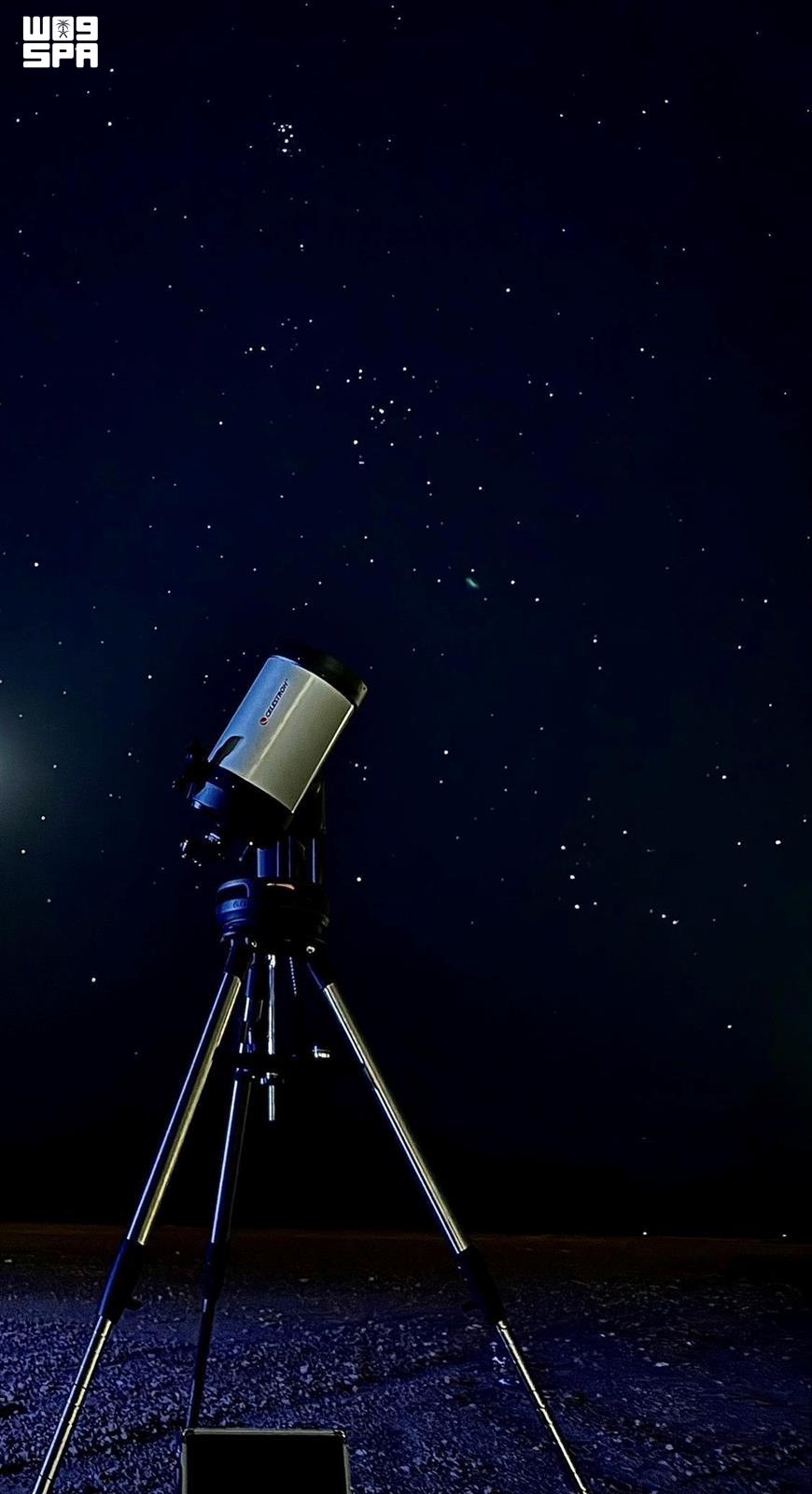
Rafha in Saudi Arabia’s Northern Borders Region saw the heliacal rising of Sirius on Wednesday, marking the star’s first appearance above the eastern horizon.
According to SPA, the star became visible at the start of dawn following an absence of approximately 70 days since it last appeared in the western sky. The event serves as a seasonal marker in Arab tradition and signals the start of the solar year associated with the star.
Barjas Al-Fulaih, a member of the AFAQ Society for Astronomy, stated that Sirius is located about eight light-years from Earth, making it one of the closest stars to the planet. He explained that the system consists of a large star orbited by a smaller companion.
Al-Fulaih noted that the star has inspired Arabic poets who compared its brilliance to the sparkle of eyes and the gleam of swords, describing it as a symbol of radiance and beauty.
Where was the heliacal rising of Sirius observed and when did it occur? The event was observed in the skies over Rafha, located in the Northern Borders Region of Saudi Arabia. This astronomical occurrence took place on Wednesday, where the star made its first appearance above the eastern horizon at the start of dawn after being absent for about 70 days.
What are the physical characteristics and location of Sirius? Sirius is one of the closest stars to Earth, situated approximately eight light-years away. According to Barjas Al-Fulaih of the AFAQ Society for Astronomy, the star system is composed of a large star that is orbited by a smaller companion star.
What is the cultural and traditional significance of Sirius in Arab history? In Arab tradition, the heliacal rising of Sirius is a seasonal marker that signals the beginning of the solar year associated with the star. Additionally, it has a place in Arabic literature, where poets have likened the brilliance of the star to the sparkle of eyes and the gleam of swords.