


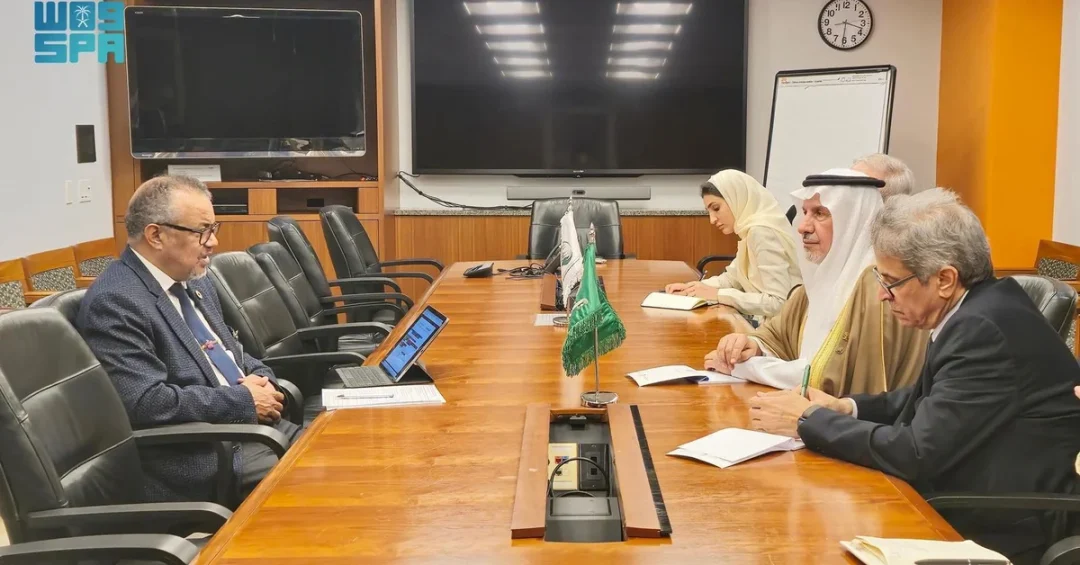
New York — The Supervisor General of the King Salman Humanitarian Aid and Relief Center (KSrelief), Dr. Abdullah bin Abdulaziz Al Rabeeah, met with the Director-General of the World Health Organization (WHO), Dr. Tedros Adhanom Ghebreyesus, on the sidelines of the 79th session of the United Nations General Assembly (UNGA 79) in New York City. The high-level meeting, reported by the Saudi Press Agency (SPA), focused on strengthening the strategic partnership between the Kingdom of Saudi Arabia and the WHO in delivering critical healthcare relief to vulnerable populations around the world.
Context and Background
The meeting took place during UNGA 79, a key global diplomatic event that brings together world leaders to address pressing international challenges, including humanitarian crises and global health security. KSrelief, established in 2015 by royal decree, has since become a leading international humanitarian organization, implementing thousands of projects in over 90 countries. Its collaboration with the WHO is a cornerstone of Saudi Arabia’s global health diplomacy, reflecting the Kingdom’s commitment to alleviating human suffering and supporting health systems in crisis-affected regions.
Dr. Al Rabeeah, who also serves as an advisor to the Royal Court, has been a prominent figure in global humanitarian efforts. His discussions with Dr. Tedros underscored the ongoing coordination between KSrelief and the WHO to address health emergencies, including disease outbreaks, malnutrition, and the impact of natural disasters and conflicts. This partnership aligns with Saudi Arabia’s broader foreign policy objectives, which prioritize international cooperation and sustainable development.
Key Details
During the meeting, Dr. Al Rabeeah and Dr. Tedros reviewed the relief and humanitarian projects conducted by both parties in the healthcare sector. They discussed mechanisms for delivering medical assistance to patients and affected populations worldwide, with a focus on improving access to essential health services in underserved areas. The WHO Director-General commended Saudi Arabia’s medical initiatives through KSrelief, highlighting their significant impact on improving health conditions in various countries.
The strategic partnership between KSrelief and the WHO has been instrumental in responding to global health crises. For instance, KSrelief has funded WHO operations in Yemen, Syria, and the Horn of Africa, providing life-saving medical supplies, supporting hospitals, and training healthcare workers. In 2021, KSrelief and the WHO signed a memorandum of understanding to enhance cooperation in emergency health response, further solidifying their joint efforts. The UNGA 79 meeting served as a platform to review progress and plan future collaborations, ensuring that resources are efficiently allocated to those most in need.
Implications and Impact
The meeting between Dr. Al Rabeeah and Dr. Tedros reinforces Saudi Arabia’s role as a global humanitarian leader and a key partner in multilateral health initiatives. By working closely with the WHO, KSrelief helps to bridge gaps in healthcare delivery, particularly in conflict zones and low-income countries where health systems are fragile. This collaboration also supports the United Nations’ Sustainable Development Goals, specifically Goal 3 on good health and well-being, by mobilizing resources and expertise to combat diseases and improve health outcomes.
Furthermore, the partnership enhances Saudi Arabia’s soft power and demonstrates its commitment to international solidarity. As the world continues to face complex health challenges, including the aftermath of the COVID-19 pandemic and ongoing humanitarian crises, the KSrelief-WHO alliance is poised to play a critical role in global health security. The meeting at UNGA 79 signals a continued dedication to these efforts, with both parties reaffirming their commitment to saving lives and promoting health equity.
Vision 2030 Alignment
This collaboration is fully aligned with Saudi Vision 2030, which seeks to diversify the Kingdom’s economy and enhance its global engagement. Under Vision 2030, Saudi Arabia aims to increase its humanitarian and developmental aid, positioning itself as a responsible global actor. KSrelief embodies this vision by delivering aid efficiently and partnering with reputable international organizations like the WHO. The meeting between Dr. Al Rabeeah and Dr. Tedros is a testament to Saudi Arabia’s proactive approach to global health and its unwavering commitment to humanitarian causes. As the Kingdom continues to advance its vision, its leadership in humanitarian aid will only grow, contributing to a more stable and healthy world.
20 Questions
Q1. Who met with WHO Director-General Tedros Adhanom Ghebreyesus?
A1. Dr. Abdullah bin Abdulaziz Al Rabeeah, Supervisor General of KSrelief, met with Dr. Tedros Adhanom Ghebreyesus. The meeting took place during UNGA 79 in New York. They discussed healthcare relief projects and strategic partnership between KSrelief and WHO.
Q2. Where did the meeting take place?
A2. The meeting took place in New York City during the 79th session of the United Nations General Assembly (UNGA 79). This annual event brings together global leaders to discuss international issues, including health and humanitarian crises.
Q3. What organization does Dr. Al Rabeeah supervise?
A3. Dr. Al Rabeeah is the Supervisor General of the King Salman Humanitarian Aid and Relief Center (KSrelief). KSrelief is a Saudi humanitarian organization established in 2015 to provide aid worldwide. It implements projects in over 90 countries.
Q4. What is KSrelief’s role in global health?
A4. KSrelief plays a major role in global health by funding medical projects, providing supplies, and supporting healthcare systems in crisis-affected countries. It partners with organizations like WHO to deliver essential health services to vulnerable populations.
Q5. What did the WHO Director-General commend?
A5. Dr. Tedros commended Saudi Arabia’s medical initiatives through KSrelief. He highlighted their positive impact on improving health conditions in various countries. He also noted the strong strategic partnership between KSrelief and WHO.
Q6. What is the strategic partnership between KSrelief and WHO?
A6. The strategic partnership involves collaboration on healthcare relief projects, delivering medical assistance, and responding to health emergencies. It includes joint efforts in countries like Yemen and Syria. A memorandum of understanding was signed in 2021 to enhance cooperation.
Q7. How does this meeting align with Saudi Vision 2030?
A7. The meeting aligns with Vision 2030 by showcasing Saudi Arabia’s commitment to global engagement and humanitarian aid. Vision 2030 aims to diversify the economy and increase international cooperation. KSrelief’s work with WHO reflects these goals.
Q8. What are some examples of KSrelief’s healthcare projects?
A8. KSrelief has funded WHO operations in Yemen, Syria, and the Horn of Africa. Projects include providing medical supplies, supporting hospitals, and training healthcare workers. These efforts aim to improve health outcomes in underserved areas.
Q9. When was KSrelief established?
A9. KSrelief was established in 2015 by royal decree. It was created to centralize Saudi Arabia’s humanitarian aid efforts. Since then, it has become a leading international donor organization.
Q10. What is the significance of UNGA 79 for this meeting?
A10. UNGA 79 provides a platform for global leaders to discuss pressing issues, including health and humanitarian crises. The meeting allowed KSrelief and WHO to review progress and plan future collaborations. It highlights Saudi Arabia’s active role in multilateral diplomacy.
Q11. How does KSrelief deliver medical assistance worldwide?
A11. KSrelief delivers medical assistance through partnerships with organizations like WHO. It funds projects, provides supplies, and supports healthcare infrastructure. This ensures aid reaches those in need efficiently.
Q12. What impact has KSrelief-WHO partnership had?
A12. The partnership has improved health conditions in crisis-affected regions. It has provided life-saving medical aid and supported health systems. It also strengthens global health security.
Q13. Who is Dr. Tedros Adhanom Ghebreyesus?
A13. Dr. Tedros is the Director-General of the World Health Organization. He has led WHO since 2017. He is a global health expert and advocate for health equity.
Q14. What mechanisms were discussed for delivering medical aid?
A14. They discussed mechanisms for delivering medical assistance to patients and affected populations worldwide. This includes logistics, funding, and coordination. The goal is to ensure timely and effective aid.
Q15. How does this meeting reflect Saudi Arabia’s humanitarian leadership?
A15. It demonstrates Saudi Arabia’s commitment to global humanitarian efforts through KSrelief. The Kingdom actively partners with international organizations to address health crises. This reinforces its role as a responsible global actor.
Q16. What are the Sustainable Development Goals related to this?
A16. The partnership supports SDG 3 on good health and well-being. It also contributes to other goals like ending poverty and hunger. KSrelief’s work aligns with the UN’s 2030 Agenda.
Q17. How does KSrelief fund its projects?
A17. KSrelief is funded by the Saudi government and donations. It allocates resources to various humanitarian sectors, including health. It ensures transparency and efficiency in aid delivery.
Q18. What regions benefit most from KSrelief’s health aid?
A18. Regions like Yemen, Syria, and the Horn of Africa benefit significantly. These areas face conflict and health crises. KSrelief provides essential medical support there.
Q19. What future collaborations are planned?
A19. Future collaborations include continued joint health projects and emergency responses. Both parties aim to expand their reach and impact. They will focus on improving health systems in vulnerable countries.
Q20. How can other countries learn from this partnership?
A20. Other countries can learn from the effective collaboration between KSrelief and WHO. It shows the importance of strategic partnerships in humanitarian aid. It also highlights the role of dedicated organizations in addressing global health challenges.
Reader Feedback
We value your thoughts. Please share your feedback on this article.
Your feedback helps us improve our coverage.