


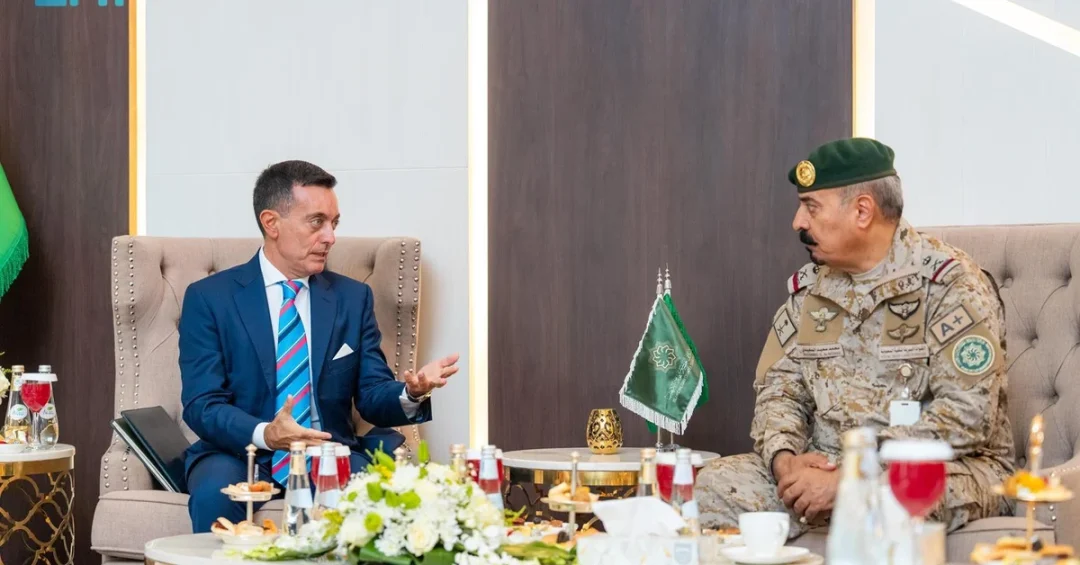
Major General Mohammed bin Saeed Al-Mughidi, Secretary-General of the Islamic Military Counter Terrorism Coalition (IMCTC), met with Dr. Mauro Miedico, Director of the United Nations Office of Counter-Terrorism (UNOCT), in Riyadh on October 3, 2024, to strengthen international cooperation in counter-terrorism. The meeting underscored the Kingdom of Saudi Arabia’s ongoing commitment to fostering global partnerships against extremism and terrorism.
Context and Background
The IMCTC, established in 2015 and headquartered in Riyadh, is a coalition of 41 Muslim-majority countries dedicated to countering terrorism through military, ideological, and communication means. The UNOCT, created in 2017, leads UN efforts to coordinate counter-terrorism initiatives globally. This high-level meeting builds on previous collaborations between the two organizations, reflecting Saudi Arabia’s proactive role in global security.
Key Details
During the meeting, Major General Al-Mughidi and Dr. Miedico discussed key issues related to counter-terrorism, including the exchange of best practices, capacity-building, and the promotion of international peace and security. The visit coincided with a scientific symposium organized by the IMCTC themed “Future Prospective for Countering Terrorism through Digital Technologies,” which brought together scholars, researchers, and media professionals from IMCTC member countries. The symposium focused on the latest technological developments in combating terrorism and the role of technology in enhancing global security.
Implications and Impact
This collaboration between the IMCTC and UNOCT signifies a united front against terrorism and extremism. By pooling resources and expertise, both organizations aim to address the evolving tactics of terrorist groups, particularly in the digital domain. The partnership also aligns with Saudi Arabia’s Vision 2030, which emphasizes global engagement and the promotion of moderate Islam. Such cooperation enhances international security and showcases Saudi Arabia’s leadership in counter-terrorism efforts.
Vision 2030 Alignment
Saudi Arabia’s Vision 2030 seeks to diversify the economy and promote a moderate, forward-looking society. The Kingdom’s active participation in global counter-terrorism efforts, exemplified by this meeting, demonstrates its commitment to international peace and security. By supporting the IMCTC and collaborating with the UNOCT, Saudi Arabia reinforces its role as a responsible global leader and contributes to a safer world for all.
20 Questions
Q1. What is the IMCTC?
A1. The Islamic Military Counter Terrorism Coalition (IMCTC) is a coalition of 41 Muslim-majority countries established in 2015 to counter terrorism through military, ideological, and communication means. It is headquartered in Riyadh, Saudi Arabia, and led by Secretary-General Major General Mohammed bin Saeed Al-Mughidi.
Q2. Who is Major General Mohammed bin Saeed Al-Mughidi?
A2. Major General Mohammed bin Saeed Al-Mughidi is the Secretary-General of the Islamic Military Counter Terrorism Coalition (IMCTC). He plays a key role in coordinating counter-terrorism efforts among member countries and fostering international partnerships.
Q3. What is the UNOCT?
A3. The United Nations Office of Counter-Terrorism (UNOCT) was established in 2017 to lead and coordinate UN counter-terrorism efforts. It provides strategic leadership and promotes international cooperation to combat terrorism and violent extremism.
Q4. Who is Dr. Mauro Miedico?
A4. Dr. Mauro Miedico is the Director of the United Nations Office of Counter-Terrorism (UNOCT). He is responsible for overseeing the office’s initiatives and fostering global partnerships to counter terrorism.
Q5. What was the purpose of the meeting between IMCTC and UNOCT?
A5. The meeting aimed to strengthen international cooperation in the fight against terrorism, solidify the strategic relationship between the two organizations, and discuss ways to enhance collaboration in promoting international peace and security.
Q6. Where did the meeting take place?
A6. The meeting took place in Riyadh, Saudi Arabia, on October 3, 2024. Riyadh serves as the headquarters for the IMCTC and is a central hub for diplomatic and security discussions in the region.
Q7. What is the significance of the IMCTC-UNOCT partnership?
A7. The partnership signifies a united global front against terrorism and extremism. It allows for the pooling of resources, expertise, and best practices, enhancing the effectiveness of counter-terrorism efforts worldwide.
Q8. What was the theme of the scientific symposium organized by IMCTC?
A8. The symposium was themed “Future Prospective for Countering Terrorism through Digital Technologies.” It focused on the latest technological developments in combating terrorism and the role of technology in enhancing global security.
Q9. Who attended the scientific symposium?
A9. The symposium brought together scholars, researchers, and media professionals from IMCTC member countries. Their participation facilitated the exchange of ideas and best practices in counter-terrorism.
Q10. How does Saudi Arabia contribute to global counter-terrorism efforts?
A10. Saudi Arabia contributes through its leadership in the IMCTC, collaboration with the UNOCT, and implementation of Vision 2030 reforms that promote moderation and global engagement. The Kingdom also actively participates in international security initiatives.
Q11. What are the key areas of cooperation between IMCTC and UNOCT?
A11. Key areas include capacity-building, exchange of best practices, and promoting international peace and security. Both organizations work together to address the evolving threats posed by terrorism and extremism.
Q12. How does the IMCTC operate?
A12. The IMCTC operates through military, ideological, and communication means. It coordinates efforts among member countries to counter terrorism, sharing intelligence and resources to enhance collective security.
Q13. What role does technology play in counter-terrorism?
A13. Technology plays a crucial role in counter-terrorism by enabling better surveillance, intelligence gathering, and disruption of terrorist networks. It also helps in countering online radicalization and propaganda.
Q14. How many countries are members of the IMCTC?
A14. The IMCTC comprises 41 Muslim-majority countries. These member states collaborate to combat terrorism and extremism through joint efforts and shared strategies.
Q15. When was the IMCTC established?
A15. The IMCTC was established in 2015. It was founded to counter the growing threat of terrorism and to promote peace and security in the region and beyond.
Q16. What is Saudi Arabia’s Vision 2030?
A16. Saudi Arabia’s Vision 2030 is a strategic framework to diversify the economy, promote social reforms, and enhance global engagement. It aims to transform the Kingdom into a modern, moderate, and prosperous nation.
Q17. How does the IMCTC-UNOCT meeting align with Vision 2030?
A17. The meeting aligns with Vision 2030 by promoting global cooperation and security, which are key pillars of the vision. It showcases Saudi Arabia’s commitment to international peace and moderate Islam.
Q18. What are the expected outcomes of the IMCTC-UNOCT collaboration?
A18. Expected outcomes include enhanced counter-terrorism strategies, improved intelligence sharing, and strengthened global security. The collaboration aims to effectively address the evolving tactics of terrorist groups.
Q19. How does the international community benefit from this partnership?
A19. The international community benefits through increased security, reduced terrorist threats, and promotion of peace. The partnership sets a precedent for global cooperation in counter-terrorism.
Q20. What future initiatives are planned by IMCTC and UNOCT?
A20. Future initiatives include joint training programs, technology-driven counter-terrorism projects, and continued dialogue to adapt to emerging threats. Both organizations are committed to long-term collaboration.
Reader Feedback
We value your thoughts. Please share your feedback on this article.
Your feedback helps us improve our coverage.