


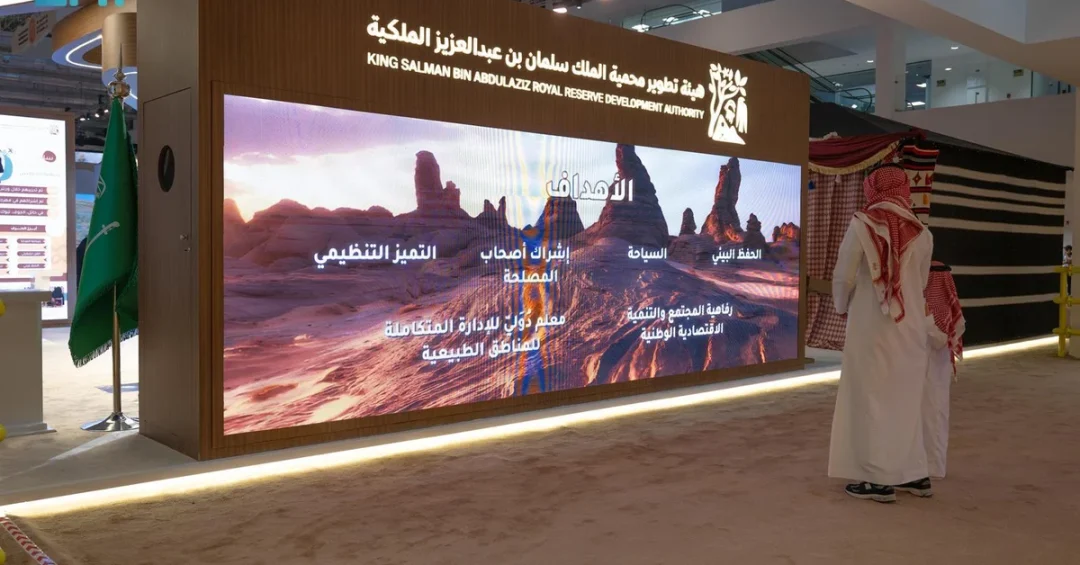
The King Salman Bin Abdulaziz Royal Reserve Development Authority is participating for the fourth consecutive year in the Saudi Falcons and Hunting Exhibition, underscoring its commitment to conservation and cultural heritage. The 2024 exhibition commenced on Thursday, October 3, and will run for ten days at the Riyadh International Convention and Exhibition Center in Malham. According to the Saudi Press Agency (SPA), the authority is showcasing the reserve’s diverse ecosystem, including its birds, wildlife, and plant life, while emphasizing the importance of maintaining ecological balance.
Context and Background
The King Salman Bin Abdulaziz Royal Reserve is the largest of its kind in the Middle East, spanning four administrative regions: Hail, Al-Jawf, the Northern Borders, and Tabuk. This vast protected area encompasses breathtaking geographical diversity, with sites and artifacts dating back thousands of years, including the Jubbah petroglyphs, a UNESCO World Heritage Site. The reserve is home to many endangered species, such as the reem gazelle, Arabian oryx, Arabian sand gazelle, ibex, and various eagles and falcons.
The Saudi Falcons and Hunting Exhibition is a premier event that celebrates the Kingdom’s rich heritage and promotes sustainable hunting practices. It attracts exhibitors and visitors from around the world, providing a platform for education, cultural exchange, and the promotion of conservation efforts.
Key Details
The authority’s pavilion at the exhibition features advanced technologies like holograms and virtual reality (VR) to provide visitors with an immersive experience of the reserve. These tools allow guests to explore the reserve’s landscapes and wildlife virtually, enhancing awareness of its ecological significance. Additionally, the authority highlights its engagement with local communities, supporting them through various initiatives and showcasing their traditional handicrafts. Visitors can also learn about the reserve’s archaeological sites and varied landscapes.
The participation aims to educate the public about the reserve’s role in preserving biodiversity and promoting eco-tourism, aligning with Saudi Arabia’s Vision 2030 goals of environmental sustainability and economic diversification.
Implications and Impact
The reserve’s involvement in the exhibition reflects Saudi Arabia’s broader efforts to protect natural habitats and promote sustainable development. By engaging with local communities and leveraging innovative technologies, the authority fosters a deeper appreciation for the Kingdom’s natural and cultural heritage. This initiative also supports the growth of eco-tourism, attracting international visitors interested in exploring Saudi Arabia’s unique environments and wildlife.
Furthermore, the exhibition serves as a platform for knowledge exchange among conservationists, researchers, and enthusiasts, reinforcing Saudi Arabia’s position as a leader in environmental stewardship.
Vision 2030 Alignment
The King Salman Bin Abdulaziz Royal Reserve’s participation in the Saudi Falcons and Hunting Exhibition exemplifies the Kingdom’s commitment to environmental sustainability and cultural preservation, key pillars of Vision 2030. By integrating advanced technologies and community engagement, the authority contributes to the diversification of the economy and the enhancement of quality of life, while ensuring the protection of Saudi Arabia’s natural treasures for future generations.
20 Questions
Q1. What is the King Salman Bin Abdulaziz Royal Reserve?
A1. It is the largest royal reserve in the Middle East, spanning four regions: Hail, Al-Jawf, the Northern Borders, and Tabuk. It is dedicated to conserving biodiversity, supporting local communities, and preserving cultural heritage.
Q2. Where is the Saudi Falcons and Hunting Exhibition taking place?
A2. The exhibition is held at the Riyadh International Convention and Exhibition Center in Malham, Riyadh. It runs for ten days starting October 3, 2024.
Q3. How many years has the reserve participated in the exhibition?
A3. The King Salman Bin Abdulaziz Royal Reserve Development Authority is participating for the fourth consecutive year, demonstrating its ongoing commitment to conservation and cultural engagement.
Q4. What does the reserve showcase at the exhibition?
A4. The reserve showcases its diverse ecosystem, including birds, wildlife, and plant life. It also highlights archaeological sites, local handicrafts, and the importance of ecological balance.
Q5. What technologies are used to enhance the visitor experience?
A5. The authority uses holograms and virtual reality (VR) to provide immersive experiences, allowing visitors to explore the reserve’s landscapes and wildlife virtually.
Q6. What is the significance of the Jubbah petroglyphs?
A6. The Jubbah petroglyphs are a UNESCO World Heritage Site located within the reserve. They date back thousands of years and represent an important part of Saudi Arabia’s cultural heritage.
Q7. Which endangered species are found in the reserve?
A7. The reserve is home to endangered species such as the reem gazelle, Arabian oryx, Arabian sand gazelle, ibex, and various eagles and falcons.
Q8. How does the reserve engage with local communities?
A8. The reserve supports local communities through various initiatives, including showcasing their traditional handicrafts at the exhibition and involving them in conservation efforts.
Q9. What are the main objectives of the reserve’s participation?
A9. The main objectives are to educate the public about biodiversity, promote eco-tourism, and highlight the reserve’s role in environmental sustainability and cultural preservation.
Q10. How does the exhibition support Vision 2030?
A10. The exhibition supports Vision 2030 by promoting environmental sustainability, economic diversification, and cultural heritage, aligning with the Kingdom’s goals for a vibrant society and thriving economy.
Q11. What is the size of the King Salman Bin Abdulaziz Royal Reserve?
A11. It is the largest reserve of its kind in the Middle East, covering a vast area across four administrative regions, known for its geographical diversity and historical significance.
Q12. What types of landscapes can be found in the reserve?
A12. The reserve features varied landscapes, including deserts, mountains, and archaeological sites, offering breathtaking geographical diversity and natural beauty.
Q13. How does the reserve contribute to ecological balance?
A13. By protecting endangered species, preserving plant life, and maintaining natural habitats, the reserve plays a crucial role in sustaining ecological balance and biodiversity.
Q14. Are there any archaeological sites in the reserve?
A14. Yes, the reserve contains archaeological sites with artifacts dating back thousands of years, including the renowned Jubbah petroglyphs, a UNESCO World Heritage Site.
Q15. What role do falcons play in the exhibition?
A15. Falcons are a key focus, as the exhibition celebrates traditional falconry and hunting heritage. The reserve highlights its efforts to protect falcons and other birds of prey.
Q16. How can visitors learn about the reserve’s wildlife?
A16. Visitors can learn through interactive displays, holograms, VR experiences, and exhibits showcasing the reserve’s diverse wildlife and conservation initiatives.
Q17. What initiatives support local handicrafts?
A17. The reserve showcases traditional handicrafts made by local communities, providing them with economic opportunities and preserving cultural heritage.
Q18. How does the reserve promote eco-tourism?
A18. By offering immersive experiences and educational exhibits, the reserve attracts tourists interested in nature and conservation, thereby promoting sustainable tourism in Saudi Arabia.
Q19. What is the duration of the exhibition?
A19. The exhibition runs for ten days, starting from October 3, 2024, at the Riyadh International Convention and Exhibition Center.
Q20. How does the reserve align with Saudi Arabia’s environmental goals?
A20. The reserve aligns with Saudi Arabia’s environmental goals by protecting biodiversity, supporting sustainable development, and contributing to Vision 2030’s objectives for a sustainable future.
Reader Feedback
We value your thoughts. Please share your feedback on this article.
Your feedback helps us improve our coverage.