


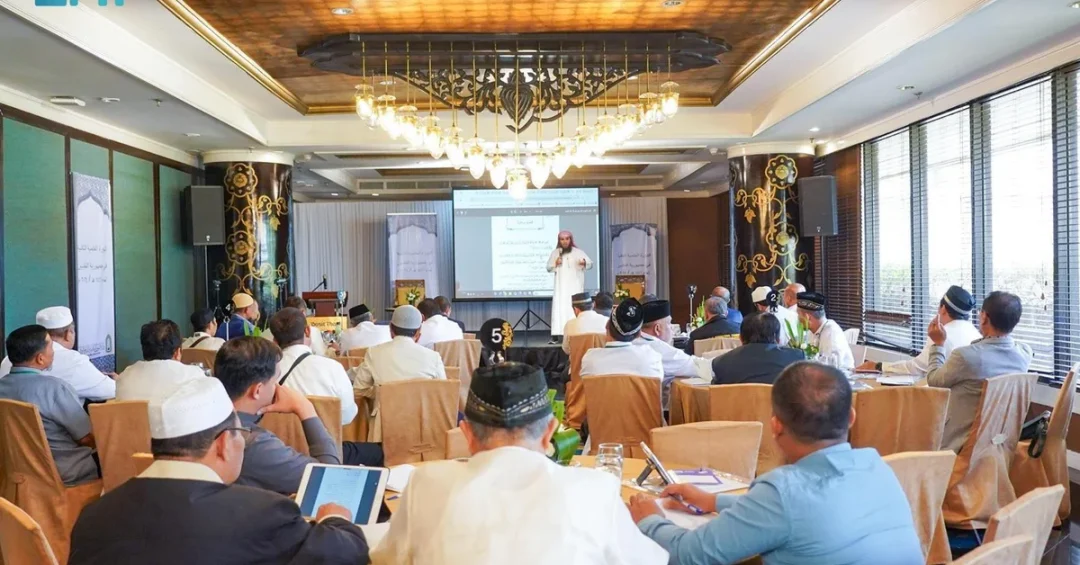
The Ministry of Islamic Affairs, Call and Guidance continued its training course for imams and preachers in Manila, the Philippines, with more than 160 participants attending the second day of sessions, the Saudi Press Agency reported. The course is being conducted by the religious mission at the Saudi embassy in Manila and focuses on deepening understanding of Islamic teachings through structured discussions on religious concepts.
Context and Background
This training course represents the second such initiative organized by the Ministry of Islamic Affairs for preachers and imams in the Philippines, reflecting the Kingdom of Saudi Arabia’s ongoing commitment to supporting Islamic education and moderate religious discourse worldwide. The program is designed to equip religious leaders with accurate knowledge and understanding of core Islamic principles, enabling them to serve their communities effectively.
The Kingdom has a long-standing tradition of supporting Islamic institutions and religious education globally, in line with its role as the custodian of the Two Holy Mosques. These efforts are part of a broader strategy to promote moderation, tolerance, and interfaith understanding, which are central pillars of Saudi Arabia’s religious diplomacy.
Key Details
On the second day of the course, participants engaged in a detailed exposition of the Tawhid book, which addresses the Unity of Allah. The session was led by lecturer Dr. Fahd Al-Fuhaid, who provided comprehensive insights into the fundamental concepts of Islamic monotheism. The Tawhid book is a foundational text that helps imams and preachers articulate the core tenets of the faith with clarity and precision.
The course has attracted broad engagement from imams and preachers across the Philippines, demonstrating the strong demand for such educational programs. Participants include religious leaders from various regions of the country, all eager to enhance their knowledge and improve their ability to guide their communities in accordance with moderate Islamic teachings.
The religious mission at the Saudi embassy in Manila plays a crucial role in facilitating these training sessions, ensuring that they are conducted in accordance with the highest standards of Islamic scholarship and in line with the Kingdom’s vision of promoting peaceful coexistence and mutual respect among different cultures and religions.
Implications and Impact
The continuation of this training course underscores Saudi Arabia’s commitment to fostering moderate religious discourse and supporting Muslim communities worldwide. By investing in the education of imams and preachers, the Kingdom helps to counter extremist narratives and promote a balanced understanding of Islam that emphasizes tolerance, compassion, and peaceful coexistence.
For the Philippines, which has a significant Muslim population, this initiative is particularly valuable. It strengthens the capacity of local religious leaders to address contemporary challenges and to contribute positively to their communities. The course also serves as a platform for cultural exchange and mutual learning, reinforcing the bonds of friendship between Saudi Arabia and the Philippines.
Internationally, the program reflects Saudi Arabia’s broader efforts to promote moderation and interfaith dialogue, aligning with its Vision 2030 goals of enhancing global engagement and projecting a positive image of the Kingdom. Such initiatives demonstrate Saudi Arabia’s leadership in supporting Islamic education and its dedication to building bridges of understanding across nations.
Vision 2030 Alignment
This training course is a clear manifestation of Saudi Arabia’s Vision 2030, which seeks to strengthen the Kingdom’s role as a global leader in promoting moderate Islam and supporting Muslim communities abroad. By empowering imams and preachers with sound religious knowledge, the Ministry of Islamic Affairs contributes to the Vision’s objectives of fostering a tolerant, moderate, and forward-looking society. Furthermore, the course enhances Saudi Arabia’s soft power and reinforces its position as a beacon of Islamic scholarship and moderation, ultimately contributing to global peace and stability.
20 Questions
Q1. What is the purpose of the Ministry of Islamic Affairs’ training course in Manila?
A1. The course aims to deepen imams’ and preachers’ understanding of Islamic teachings, promote moderate discourse, and equip them with accurate knowledge to serve their communities effectively.
Q2. How many participants attended the training course?
A2. More than 160 imams and preachers attended the second day of the course, indicating broad engagement from religious leaders across the Philippines.
Q3. Who conducted the training course?
A3. The religious mission at the Saudi embassy in Manila conducted the course, with lecturer Dr. Fahd Al-Fuhaid leading a detailed exposition of the Tawhid book.
Q4. What is the Tawhid book about?
A4. The Tawhid book addresses the Unity of Allah, explaining the fundamental concept of monotheism in Islam. It is a foundational text for understanding Islamic theology.
Q5. Is this the first such training course in the Philippines?
A5. No, this is the second training course for preachers and imams in the Philippines, following a previous successful initiative.
Q6. What key topics were discussed during the second day?
A6. The day focused on a thorough exposition of the Tawhid book, covering the Unity of Allah and related religious concepts to enhance understanding of Islamic teachings.
Q7. Who is Dr. Fahd Al-Fuhaid?
A7. Dr. Fahd Al-Fuhaid is the lecturer who delivered the detailed exposition of the Tawhid book during the training course in Manila.
Q8. Why is the Philippines significant for this initiative?
A8. The Philippines has a significant Muslim population, and supporting local imams helps promote moderate Islam and strengthen community resilience against extremism.
Q9. How does this course align with Saudi Arabia’s Vision 2030?
A9. It aligns with Vision 2030’s goals of promoting moderate Islam, enhancing global engagement, and supporting Muslim communities abroad, thereby reinforcing Saudi Arabia’s global leadership.
Q10. What is the role of the Saudi embassy in Manila?
A10. The Saudi embassy’s religious mission facilitates and conducts the training course, ensuring it meets high standards of Islamic scholarship and promotes moderate teachings.
Q11. What benefits do participants gain from the course?
A11. Participants gain deeper knowledge of Islamic teachings, improved preaching skills, and a better understanding of how to address contemporary challenges in their communities.
Q12. How does this initiative contribute to countering extremism?
A12. By providing imams and preachers with accurate, moderate Islamic knowledge, the course helps counter extremist narratives and promotes tolerance and peaceful coexistence.
Q13. Will there be more such courses in the future?
A13. The Ministry of Islamic Affairs continues to support educational programs globally. Future courses will depend on demand and strategic priorities.
Q14. What is the significance of the Tawhid book in Islamic education?
A14. The Tawhid book is essential for understanding the core concept of monotheism. It provides a foundation for correct belief and practice in Islam.
Q15. How does the course foster cultural exchange?
A15. The course brings together Saudi scholars and Filipino imams, facilitating dialogue and mutual learning that strengthens cultural ties and mutual respect.
Q16. What impact does the course have on the local community?
A16. It empowers local religious leaders to guide their communities towards moderation, tolerance, and positive social contributions, enhancing social cohesion.
Q17. How does Saudi Arabia support Islamic education worldwide?
A17. Through the Ministry of Islamic Affairs, Saudi Arabia organizes training courses, distributes religious materials, and supports Islamic institutions globally to promote moderate Islam.
Q18. What is the duration of the training course?
A18. The course is conducted over multiple days. The second day featured the exposition of the Tawhid book. The total duration is not specified in the source.
Q19. Are there any other Saudi religious initiatives in the Philippines?
A19. The source mentions this is the second training course for imams and preachers. Other initiatives may exist but are not detailed in the provided information.
Q20. How does this course reflect Saudi Arabia’s leadership in the Islamic world?
A20. It demonstrates Saudi Arabia’s commitment to supporting Muslims globally, promoting moderate Islam, and fostering international cooperation, reinforcing its leadership role.
Reader Feedback
We value your thoughts. Please share your feedback on this article.
Your feedback helps us improve our coverage.