


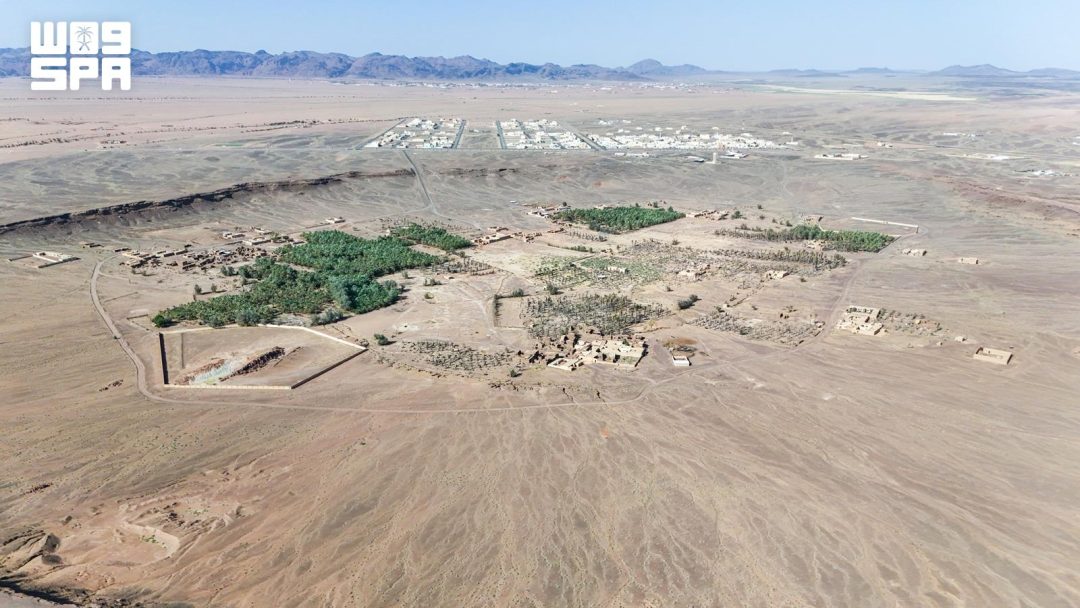
The Taba crater is located southeast of Hail near the Salma Mountains within Al-Shanan Governorate, over 90 kilometers from Hail. Formed by volcanic eruptions thousands of years ago, the crater served as the foundation for the historic village of Taba.
According to SPA, the site features concentric rings made of porous basaltic rock and solidified volcanic ash. These formations document the ancient volcanic record of the northern Arabian Peninsula and provide insight into prehistoric regional eruptions.
The area is one of the region’s oldest inhabited settlements and attracts international and local travelers. The governorate preserves agricultural terrain, rock inscriptions, and historic wells that sit alongside the volcanic rim, which is bordered by palm groves and verdant farms.
Where is the Taba crater located and what is its geographical context? The Taba crater is situated southeast of Hail near the Salma Mountains. It is located within Al-Shanan Governorate, positioned over 90 kilometers away from Hail. The site is characterized by a blend of rare geological heritage and agricultural terrain, featuring palm groves and verdant farms that border the volcanic rim.
What are the geological characteristics of the Taba crater? The crater consists of distinct concentric rings composed of porous basaltic rock and solidified volcanic ash. These geological formations were created by volcanic eruptions thousands of years ago and serve as a record of ancient volcanic activity in the northern Arabian Peninsula, offering insight into prehistoric eruptions in the region.
What historical and cultural features are found at the Taba site? Taba is recognized as one of the oldest inhabited settlements in the region. Beyond the volcanic crater, the Al-Shanan Governorate preserves various heritage sites, including rock inscriptions and historic wells. These archaeological elements exist alongside the natural landscape, attracting both local and international travelers to the area.