


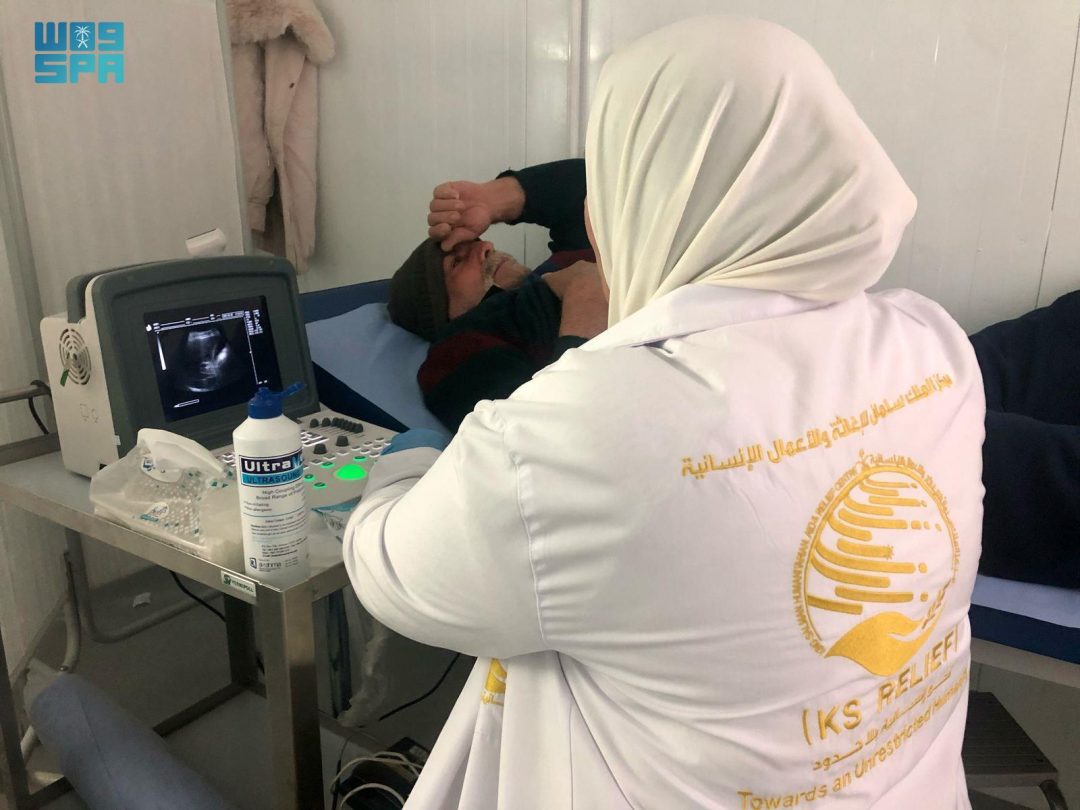
Zaatari Camp for Syrian refugees in Jordan received healthcare services for 2,668 patients over one week. The services were provided by clinics from the King Salman Humanitarian Aid and Relief Center (KSrelief).
According to SPA, general medicine clinics received 940 patients, while 256 children were attended to by pediatric clinics. The internal medicine clinic treated 125 patients for asthma, hypertension, and diabetes, and the dental clinic provided care to 195 patients.
Gynecology clinics received 260 female patients, and the ear, nose, and throat clinic treated 71 patients with middle ear, tonsil, throat, and sinus infections. Other services included the eye clinic for 63 patients, the cardiology clinic for 22 patients, the dermatology clinic for 34 patients, the rehabilitation medicine clinic for 24 patients, and the diagnostic radiology clinic for 20 patients.
Laboratory tests totaling 1,890 were conducted for 262 patients, while 104 patients received 138 X-rays. The immunization clinic administered vaccines to 91 patients, and the physical therapy department conducted 130 sessions. Additionally, 71 individuals and groups received health education sessions.
How many patients did KSrelief clinics treat at Zaatari Camp in one week? KSrelief clinics provided healthcare services to 2,668 patients at the Zaatari Camp for Syrian refugees in Jordan. Among these, the general medicine clinics received 940 patients and the pediatric clinics attended to 256 children.
What specialized medical services were provided to refugees at the camp? Specialized care included 260 female patients at gynecology clinics and 195 patients at the dental clinic. Other services were provided by the eye clinic for 63 patients, the cardiology clinic for 22 patients, and the dermatology clinic for 34 patients.
What diagnostic and preventative services were available at the clinics? Diagnostic services included 1,890 laboratory tests for 262 patients and 138 X-rays for 104 patients. Preventative and supportive care involved administering vaccines to 91 patients and providing health education sessions to 71 individuals and groups.