


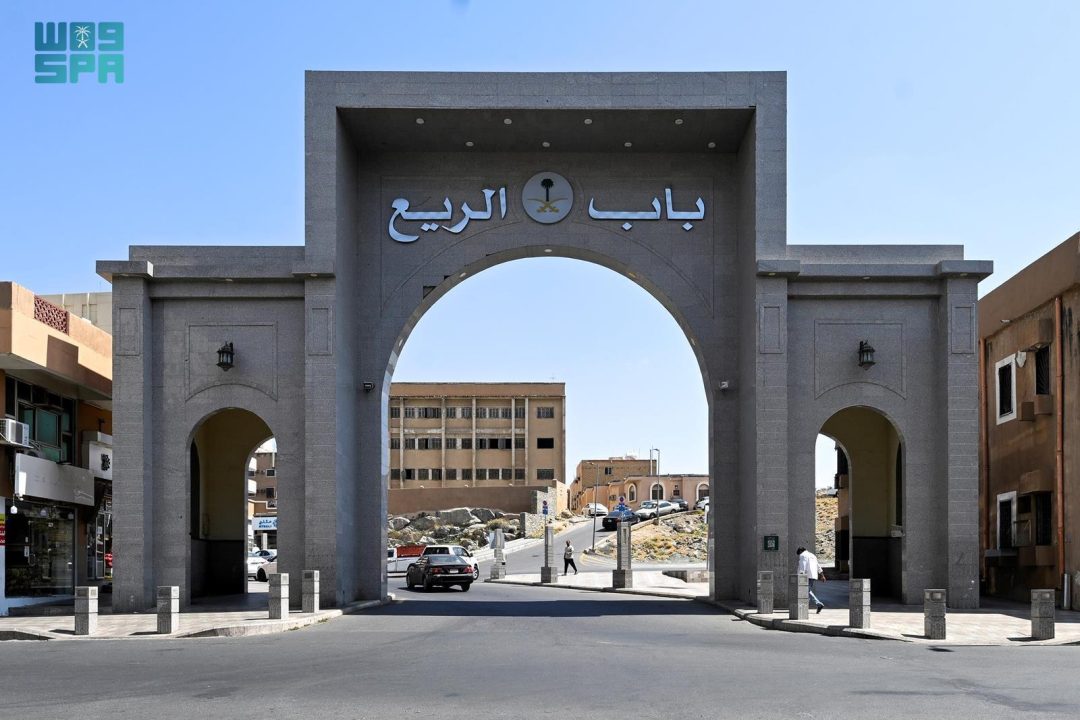
Bab Ibn Abbas, Bab Al-Hazm, and Bab Al-Rai are the ancient gates of the historic district of Taif that served as sources of Arabic language, Islamic, Quranic, literary, and cultural knowledge.
According to SPA, these gates were part of an old wall that surrounded Taif from all directions and overlooked old neighborhoods such as Al-Sulaimaniyah and Al-Aqiq.
Bab Al-Hazm refers to a small or ancient mountain in the old Taif dialect. Bab Al-Rai is located on the western side and provides access to elevated areas with views of historical landmarks, while Bab Ibn Abbas is a prominent southern gate named after the companion Abdullah bin Abbas.
Historian Issa bin Alawi stated that the gates are linked to Arab poets including Urwah bin Udhaynah, Al-Ahwas, and Jarir. Their poems mentioned the city and its gates to celebrate its symbolism in belonging, protection, and unique geographic location, making the gates part of the cultural heritage of Hijaz.
The gates are located adjacent to historic palaces and served as passages for families and individuals into the region’s historical heritage of literature, culture, and poetry.
Which gates are located in the historic district of Taif? The historic district of Taif features ancient gates including Bab Al-Rai, Bab Al-Hazm, and Bab Ibn Abbas. These gates were originally part of an old wall that surrounded the city from all directions and overlooked old neighborhoods such as Al-Sulaimaniyah and Al-Aqiq.
What are the specific characteristics and locations of Taif’s gates? Bab Ibn Abbas is a significant gate located on the southern side and named after the companion Abdullah bin Abbas. Bab Al-Rai is situated on the western side as an entrance to elevated areas, while Bab Al-Hazm is named after the old Taif dialect term for a small or ancient mountain.
How is the literary heritage of Taif linked to its gates? Historian Issa bin Alawi noted that the gates are linked to Arab poets such as Jarir, Urwah bin Udhaynah, and Al-Ahwas. These poets wrote about the gates and the city to celebrate its unique geographic location and its symbolism regarding protection and belonging.