


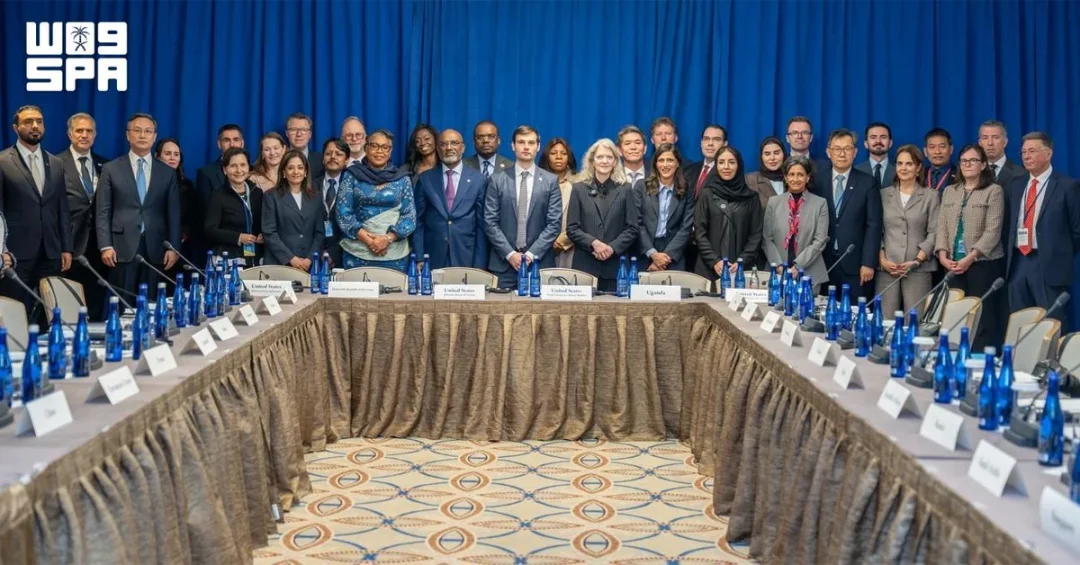
Saudi Arabia participated in the G20 Foreign Ministers’ Meeting on accelerating collective action to defeat Ebola, held on the sidelines of the 81st session of the United Nations General Assembly in New York. Representing Minister of Foreign Affairs Prince Faisal bin Farhan bin Abdullah, Dr. Nouf Alnumair, Deputy Minister for International Cooperation at the Ministry of Health, joined representatives of G20 countries, invited nations, and international organizations, alongside senior officials from affected countries, to strengthen global coordination against the outbreak. The meeting, reported by the Saudi Press Agency (SPA), underscored the Kingdom’s commitment to international health security and multilateral cooperation.
Context and Background
The G20 Foreign Ministers’ Meeting convened in New York to address the urgent need for collective action to contain the Ebola outbreak, which continues to pose a significant cross-border health threat. The gathering brought together not only G20 member states but also invited nations and international organizations, reflecting a broad consensus that health crises require unified global responses. Senior representatives from affected countries shared firsthand insights into the challenges on the ground, emphasizing the importance of rapid support for surveillance, diagnosis, and field response. Saudi Arabia’s participation aligns with its longstanding role in global health diplomacy and its proactive engagement in multilateral forums.
The meeting took place against the backdrop of the 81st United Nations General Assembly, a key platform for international dialogue on pressing global issues. Discussions highlighted the necessity of enhancing regional and international health preparedness, building capacities to limit transmission, and preventing the spread of Ebola across borders. Dr. Nouf Alnumair’s presence signaled Saudi Arabia’s dedication to supporting international efforts and ensuring that the Kingdom contributes meaningfully to global health security.
Key Details
During the meeting, participants explored ways to accelerate joint efforts to contain the Ebola outbreak, focusing on strengthening coordination among governments, international institutions, and health bodies. Key areas of discussion included scaling up support to affected areas, improving surveillance systems, ensuring timely diagnosis, and bolstering field response capabilities. The need to build sustainable health capacities in vulnerable regions was also emphasized, with a view to preventing future outbreaks and mitigating cross-border risks.
Saudi Arabia’s representation by Dr. Nouf Alnumair, Deputy Minister for International Cooperation at the Ministry of Health, highlights the Kingdom’s technical expertise and its commitment to international cooperation in health. The Ministry of Health has been actively involved in global health initiatives, and this participation further cements Saudi Arabia’s role as a responsible global partner. The meeting concluded with a shared resolve to unify international efforts and accelerate support to affected countries, ensuring a coordinated and effective response to the Ebola crisis.
Implications and Impact
Saudi Arabia’s engagement in the G20 Foreign Ministers’ Meeting on Ebola demonstrates its proactive approach to addressing global health challenges and its willingness to collaborate with international partners. By participating in such high-level discussions, the Kingdom reinforces its position as a key player in global health diplomacy and a supporter of multilateral solutions. The meeting’s outcomes are expected to enhance international coordination, leading to more effective containment of the outbreak and improved health security worldwide.
For the international community, Saudi Arabia’s involvement signals a collective commitment to combating cross-border health threats. The Kingdom’s experience in managing public health crises, including its successful handling of the COVID-19 pandemic, offers valuable insights that can contribute to global strategies. Furthermore, this participation aligns with Saudi Arabia’s broader foreign policy objectives, which prioritize international cooperation and humanitarian assistance.
Vision 2030 Alignment
Saudi Arabia’s active role in the G20 Ebola response meeting reflects the principles of Vision 2030, which seeks to enhance the Kingdom’s global standing and contribute to international peace and prosperity. Vision 2030 emphasizes the importance of health security, innovation, and global partnerships, all of which are exemplified by Saudi Arabia’s engagement in this multilateral effort. By supporting global health initiatives, the Kingdom not only protects its own citizens but also reinforces its commitment to being a responsible and influential member of the international community.
As Saudi Arabia continues to advance its Vision 2030 goals, its participation in forums like the G20 Foreign Ministers’ Meeting will remain crucial in shaping a healthier, safer, and more cooperative world. The Kingdom’s leadership in health diplomacy underscores its dedication to sustainable development and its role as a catalyst for positive change on the global stage.
20 Questions
Q1. What was the G20 Foreign Ministers’ Meeting on Ebola?
A1. The G20 Foreign Ministers’ Meeting on Ebola was a high-level gathering held on the sidelines of the 81st United Nations General Assembly in New York. It aimed to accelerate collective action to defeat the Ebola outbreak, bringing together G20 countries, invited nations, and international organizations.
Q2. Who represented Saudi Arabia at the meeting?
A2. Dr. Nouf Alnumair, Deputy Minister for International Cooperation at the Ministry of Health, represented Saudi Arabia on behalf of Minister of Foreign Affairs Prince Faisal bin Farhan bin Abdullah. Her participation highlighted the Kingdom’s commitment to global health diplomacy.
Q3. When and where did the meeting take place?
A3. The meeting took place in New York on September 27, 2026, on the sidelines of the 81st session of the United Nations General Assembly. It was reported by the Saudi Press Agency.
Q4. What was the main objective of the meeting?
A4. The main objective was to strengthen international coordination, accelerate joint efforts to contain the Ebola outbreak, support response in affected countries, and build health capacities to limit transmission and prevent cross-border spread.
Q5. Which entities participated in the meeting?
A5. Participants included representatives of G20 countries, invited nations, international organizations, and senior representatives from affected countries. This broad participation underscored the global consensus on the need for unified action against Ebola.
Q6. What key topics were discussed?
A6. Discussions focused on unifying international efforts to address cross-border health threats, strengthening coordination among governments and health bodies, and accelerating support for surveillance, diagnosis, field response, and capacity building in affected areas.
Q7. Why is Saudi Arabia’s participation significant?
A7. Saudi Arabia’s participation demonstrates its proactive role in global health security and multilateral cooperation. It reinforces the Kingdom’s position as a responsible international partner committed to addressing global health challenges.
Q8. How does this meeting relate to the United Nations General Assembly?
A8. The meeting was held on the sidelines of the 81st session of the UN General Assembly, leveraging the assembly’s platform to convene world leaders and address urgent global health issues like the Ebola outbreak.
Q9. What is Ebola and why is it a global concern?
A9. Ebola is a severe viral disease that can cause outbreaks with high fatality rates. It is a global concern because it can spread across borders, necessitating international cooperation for containment and prevention.
Q10. What role did the Ministry of Health play in Saudi Arabia’s participation?
A10. The Ministry of Health, represented by Dr. Nouf Alnumair, played a key role by bringing technical expertise to the discussions. This reflects the ministry’s active involvement in global health initiatives and international cooperation.
Q11. What outcomes are expected from the meeting?
A11. The meeting is expected to enhance international coordination, leading to more effective containment of the Ebola outbreak. It aims to accelerate support to affected countries and improve global health preparedness.
Q12. How does Saudi Arabia’s participation align with Vision 2030?
A12. Saudi Arabia’s participation aligns with Vision 2030’s goals of enhancing global standing, fostering international partnerships, and contributing to global health security. It showcases the Kingdom’s commitment to responsible global citizenship.
Q13. What specific support was discussed for affected countries?
A13. Discussions included support for surveillance, diagnosis, field response, and capacity building. The goal was to limit transmission, prevent cross-border spread, and strengthen regional and international health preparedness.
Q14. How does this meeting reflect Saudi Arabia’s foreign policy?
A14. It reflects Saudi Arabia’s foreign policy priorities of international cooperation, humanitarian assistance, and active engagement in multilateral forums. The Kingdom aims to be a constructive partner in addressing global challenges.
Q15. What is the significance of Dr. Nouf Alnumair’s role?
A15. Dr. Nouf Alnumair’s role as Deputy Minister for International Cooperation at the Ministry of Health underscores Saudi Arabia’s technical expertise and commitment to health diplomacy. Her participation highlights the Kingdom’s focus on global health security.
Q16. How can international coordination be strengthened against Ebola?
A16. International coordination can be strengthened through unified efforts among governments, international institutions, and health bodies. Sharing resources, expertise, and best practices is essential to contain outbreaks effectively.
Q17. What lessons has Saudi Arabia learned from previous health crises?
A17. Saudi Arabia has gained valuable experience from managing public health crises, including the COVID-19 pandemic. These lessons include the importance of rapid response, surveillance, and international collaboration.
Q18. What is the expected impact on global health security?
A18. The meeting is expected to enhance global health security by fostering coordination, accelerating support to affected areas, and building capacities to prevent future outbreaks. It reinforces the need for collective action.
Q19. How does this meeting contribute to Saudi Arabia’s global image?
A19. It enhances Saudi Arabia’s global image as a proactive and responsible international actor. By participating in such forums, the Kingdom demonstrates its commitment to global health and multilateral cooperation.
Q20. What are the next steps following the meeting?
A20. Next steps include implementing the discussed measures, such as strengthening surveillance and field response in affected countries. Continued international cooperation and support will be crucial to defeat Ebola and prevent future outbreaks.
Reader Feedback
We value your thoughts. Please share your feedback on this article.
Your feedback helps us improve our coverage.