


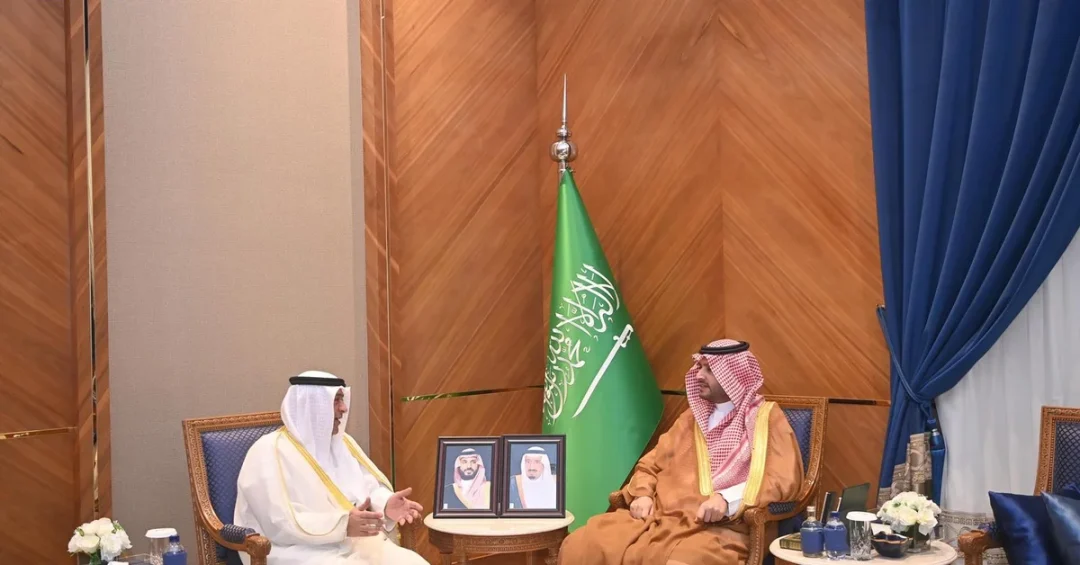
Prince Turki bin Mohammed bin Fahd bin Abdulaziz, Saudi Minister of State and Cabinet Member, received Jasem Albudaiwi, Secretary General of the Gulf Cooperation Council (GCC), in Riyadh on November 6, 2024, according to the Saudi Press Agency (SPA). The meeting focused on topics of common interest, underscoring Saudi Arabia’s ongoing commitment to regional cooperation and dialogue.
Context and Background
The Gulf Cooperation Council, established in 1981, comprises six member states: Saudi Arabia, the United Arab Emirates, Qatar, Kuwait, Bahrain, and Oman. It serves as a vital platform for political, economic, and security coordination among its members. Saudi Arabia, as the largest GCC economy and host of the council’s headquarters in Riyadh, plays a pivotal role in shaping the organization’s agenda. This meeting between Prince Turki bin Mohammed bin Fahd and Secretary General Jasem Albudaiwi reflects the Kingdom’s continuous efforts to strengthen ties within the Gulf region and advance shared objectives.
Key Details
Prince Turki bin Mohammed bin Fahd bin Abdulaziz holds the position of Minister of State and Cabinet Member, a role that involves advising on key national policies and representing the Kingdom in significant domestic and international matters. Jasem Albudaiwi, a seasoned Kuwaiti diplomat, has served as GCC Secretary General since February 2023. During their meeting, the two officials discussed a range of issues of mutual concern to GCC member states. While specific details of the discussions were not disclosed, such high-level engagements typically cover political, economic, and security topics aimed at enhancing integration and addressing regional challenges.
Implications and Impact
This meeting highlights the importance of continuous dialogue among GCC leaders to address evolving regional and global dynamics. The GCC has been instrumental in fostering economic cooperation, with initiatives such as the customs union and the common market. It also plays a key role in mediating regional conflicts and promoting stability. The exchange between Prince Turki and Secretary General Albudaiwi reinforces Saudi Arabia’s leadership in the Gulf and its dedication to multilateralism. Enhanced GCC cohesion can lead to greater economic prosperity, security, and influence on the world stage, benefiting all member states.
Vision 2030 Alignment
Saudi Arabia’s Vision 2030, a comprehensive plan to diversify the economy and strengthen the Kingdom’s global standing, relies heavily on regional stability and cooperation. The GCC serves as a crucial partner in achieving Vision 2030 goals, particularly in areas such as economic diversification, investment, and sustainable development. By engaging with GCC leadership, Saudi Arabia continues to build the alliances and frameworks necessary to realize its ambitious vision. This meeting is a testament to the Kingdom’s proactive diplomacy and its commitment to a prosperous and secure Gulf region.
20 Questions
Q1. Who received the GCC Secretary General in Riyadh?
A1. Prince Turki bin Mohammed bin Fahd bin Abdulaziz, Saudi Minister of State and Cabinet Member, received GCC Secretary General Jasem Albudaiwi in Riyadh on November 6, 2024.
Q2. What is the role of Prince Turki bin Mohammed bin Fahd?
A2. He is the Saudi Minister of State and a Cabinet Member, advising on key national policies and representing the Kingdom in significant domestic and international matters.
Q3. Who is Jasem Albudaiwi?
A3. Jasem Albudaiwi is the Secretary General of the Gulf Cooperation Council, having assumed the position in February 2023. He is a seasoned Kuwaiti diplomat.
Q4. What was discussed during the meeting?
A4. The meeting focused on topics of common interest, likely covering regional political, economic, and security issues relevant to GCC member states.
Q5. Where did the meeting take place?
A5. The meeting took place in Riyadh, the capital of Saudi Arabia and headquarters of the Gulf Cooperation Council.
Q6. When did the meeting occur?
A6. The meeting occurred on November 6, 2024, as reported by the Saudi Press Agency.
Q7. What is the Gulf Cooperation Council?
A7. The GCC is a regional intergovernmental organization established in 1981, comprising six Arab states of the Persian Gulf: Saudi Arabia, UAE, Qatar, Kuwait, Bahrain, and Oman.
Q8. What are the main objectives of the GCC?
A8. The GCC aims to promote political, economic, and security coordination among its members, fostering integration and addressing regional challenges collectively.
Q9. Why is Saudi Arabia important in the GCC?
A9. Saudi Arabia is the largest GCC economy and hosts the council’s headquarters, playing a pivotal role in shaping its agenda and fostering regional cooperation.
Q10. How does this meeting reflect Saudi Arabia’s foreign policy?
A10. It demonstrates Saudi Arabia’s commitment to multilateralism, regional stability, and proactive diplomacy, aligning with its leadership role in the Gulf.
Q11. What are some key GCC initiatives?
A11. Key initiatives include the customs union, common market, and various security and defense agreements aimed at enhancing integration and collective security.
Q12. What is Saudi Arabia’s Vision 2030?
A12. Vision 2030 is a strategic plan to diversify Saudi Arabia’s economy, reduce oil dependence, and enhance global competitiveness through social and economic reforms.
Q13. How does the GCC support Vision 2030?
A13. The GCC facilitates regional economic integration, investment, and stability, which are essential for Saudi Arabia to achieve its Vision 2030 goals.
Q14. What is the significance of high-level GCC meetings?
A14. They provide a platform for leaders to discuss shared challenges, coordinate policies, and strengthen ties, ensuring collective progress and security.
Q15. Has the GCC mediated in regional conflicts?
A15. Yes, the GCC has played roles in mediating conflicts, such as in Yemen and Qatar, promoting dialogue and stability in the region.
Q16. What economic benefits does the GCC offer?
A16. The GCC fosters economic cooperation, free trade, and investment opportunities, contributing to the prosperity and diversification of member states’ economies.
Q17. How does Saudi Arabia contribute to GCC security?
A17. Saudi Arabia actively participates in GCC security initiatives, including joint military exercises and intelligence sharing, to ensure regional stability.
Q18. What future challenges does the GCC face?
A18. Challenges include regional tensions, economic diversification, and adapting to global shifts, requiring continued cooperation and strategic planning.
Q19. How does this meeting benefit Saudi citizens?
A19. By promoting regional stability and economic integration, it can lead to job creation, investment, and improved quality of life for Saudi citizens.
Q20. What is the expected outcome of such meetings?
A20. Expected outcomes include strengthened GCC cohesion, enhanced policy coordination, and progress toward shared goals, benefiting all member states.
Reader Feedback
We value your thoughts. Please share your feedback on this article.
Your feedback helps us improve our coverage.