


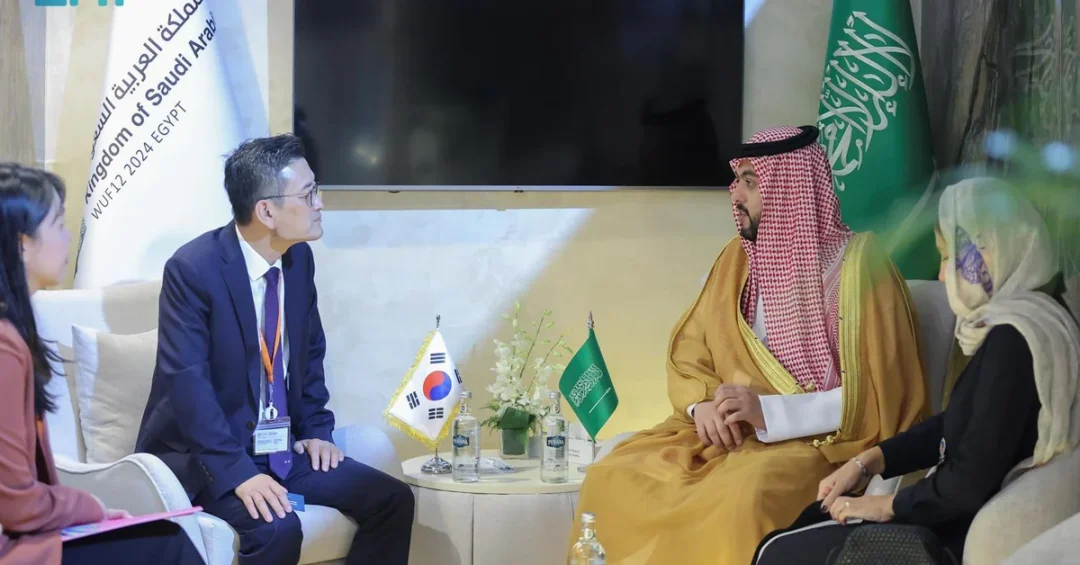
Khalid Albaker, CEO of Saudi Arabia’s Quality of Life Program, met with a Republic of Korea delegation led by Jeong-kee Kim, Secretary General of the World Smart Sustainable Cities Organization (WeGO), on the sidelines of the 12th World Urban Forum in Cairo. The meeting, announced by the Saudi Press Agency, focused on managing natural resources and improving urban landscapes in line with the United Nations Sustainable Development Goals. Held from November 4 to 8, the forum brought together global leaders to discuss sustainable urbanization. The discussions underscore Saudi Arabia’s commitment to international partnerships that advance city sustainability and community well-being.
Context and Background
The 12th World Urban Forum, convened by UN-Habitat, is a premier global conference on sustainable urban development. This year’s edition in Cairo gathered policymakers, urban planners, and experts to address pressing challenges such as rapid urbanization, climate resilience, and resource management. Saudi Arabia’s participation highlights its proactive role in shaping global urban agendas, particularly as it undergoes a historic transformation under Vision 2030.
The Quality of Life Program, a key initiative under Vision 2030, aims to enhance the living standards of citizens and residents by improving urban environments, promoting cultural and recreational activities, and fostering community engagement. Its collaboration with WeGO, an international organization advocating smart sustainable cities, signals Saudi Arabia’s intent to leverage global expertise in its domestic projects.
Key Details
During the meeting, Albaker and Kim explored opportunities to implement joint strategies that prioritize people in urban development. They emphasized the importance of sustainable resource management and the enhancement of urban landscapes to create healthier, more vibrant communities. The discussions also touched on exchanging best practices in smart city technologies and inclusive urban planning.
“This meeting is part of the program’s efforts to bolster international partnerships to achieve the objectives of the Kingdom’s Vision 2030 to improving the urban landscape and enhancing the quality of services in cities,” according to the Saudi Press Agency. The two sides underscored the need to explore new avenues for cooperation that align with the UN Sustainable Development Goals, particularly Goal 11, which aims to make cities inclusive, safe, resilient, and sustainable.
Implications and Impact
The Saudi-Korean dialogue at the World Urban Forum carries significant implications for both nations and the broader region. For Saudi Arabia, it reinforces its position as a global leader in sustainable urban development, showcasing its ability to forge partnerships that drive innovation. The exchange of expertise with WeGO could accelerate the adoption of smart city solutions in Saudi projects like NEOM and the Red Sea Project, which are central to Vision 2030.
For the Republic of Korea, the engagement strengthens its ties with Saudi Arabia, a key economic partner in the Middle East. Korean expertise in smart cities and sustainable technologies can find new markets in the Kingdom’s ambitious giga-projects. The collaboration also aligns with Korea’s own Green New Deal and its commitment to international cooperation on climate action.
Regionally, the meeting sets a precedent for cross-border cooperation on urban sustainability, demonstrating how countries can work together to address shared challenges. It also highlights the role of international organizations like WeGO in facilitating knowledge transfer and capacity building.
Vision 2030 Alignment
This partnership directly supports Vision 2030’s Quality of Life Program, which seeks to make Saudi cities more livable, economically vibrant, and culturally rich. By integrating global best practices in sustainability, the Kingdom is not only improving its urban landscapes but also contributing to the global pursuit of sustainable development. As Saudi Arabia continues to invest in smart cities and green initiatives, collaborations like this with Korea will be instrumental in realizing its long-term vision of a diversified, knowledge-based economy and a society where citizens enjoy a high quality of life.
20 Questions
Q1. What was the main purpose of the meeting between Khalid Albaker and Jeong-kee Kim?
A1. The meeting aimed to discuss management of natural resources and improvement of urban landscapes in alignment with the United Nations Sustainable Development Goals, while strengthening ties and exchanging experiences in quality of life and city sustainability.
Q2. Where and when did the meeting take place?
A2. The meeting occurred on the sidelines of the 12th World Urban Forum in Cairo, which was held from November 4 to 8, 2024. Cairo hosted this global conference on sustainable urban development.
Q3. Who is Khalid Albaker?
A3. Khalid Albaker is the CEO of Saudi Arabia’s Quality of Life Program, a key initiative under Vision 2030 that aims to enhance the living standards of citizens and residents by improving urban environments and promoting cultural and recreational activities.
Q4. Who is Jeong-kee Kim?
A4. Jeong-kee Kim is the Secretary General of the World Smart Sustainable Cities Organization (WeGO), an international organization that advocates for smart and sustainable cities through knowledge sharing and cooperation.
Q5. What is the World Urban Forum?
A5. The World Urban Forum is a premier global conference convened by UN-Habitat to address sustainable urbanization, bringing together policymakers, urban planners, and experts to discuss challenges like rapid urbanization and climate resilience.
Q6. What is the Quality of Life Program?
A6. The Quality of Life Program is a Vision 2030 initiative that aims to improve the quality of life for citizens and residents by enhancing urban landscapes, promoting cultural and recreational activities, and fostering community engagement.
Q7. What is WeGO?
A7. WeGO, the World Smart Sustainable Cities Organization, is an international association of cities, companies, and institutions focused on promoting smart and sustainable urban development through digital technologies and innovative solutions.
Q8. How does this meeting align with the UN Sustainable Development Goals?
A8. The meeting aligns with SDG 11, which aims to make cities inclusive, safe, resilient, and sustainable. Discussions focused on managing natural resources and improving urban landscapes to enhance community well-being.
Q9. What is the significance of Saudi Arabia’s participation in the World Urban Forum?
A9. Saudi Arabia’s participation showcases its proactive role in shaping global urban agendas and its commitment to sustainable development, particularly as it undergoes a historic transformation under Vision 2030.
Q10. What are the key objectives of Vision 2030 related to urban development?
A10. Vision 2030 aims to improve the urban landscape, enhance quality of services in cities, and create vibrant communities. It supports sustainable urban development through projects like NEOM and the Red Sea Project.
Q11. How can Korean expertise benefit Saudi Arabia’s smart city projects?
A11. Korea’s advanced smart city technologies and sustainable solutions can be integrated into Saudi giga-projects like NEOM, accelerating innovation and helping achieve Vision 2030’s goals of economic diversification and high quality of life.
Q12. What are the implications of this meeting for Saudi-Korean relations?
A12. The meeting strengthens bilateral ties by fostering cooperation in sustainable urban development. It opens avenues for Korean companies to participate in Saudi projects and reinforces economic partnerships beyond traditional energy sectors.
Q13. What role does the Quality of Life Program play in Vision 2030?
A13. The program is one of Vision 2030’s key realization programs. It works to enhance urban environments, promote cultural and recreational activities, and improve community well-being, directly contributing to a higher quality of life for all.
Q14. What specific topics were discussed regarding natural resource management?
A14. The discussions focused on sustainable management of natural resources to support urban development, including efficient use of water, energy, and land, in line with global best practices and the UN Sustainable Development Goals.
Q15. How does this collaboration promote community well-being?
A15. By prioritizing people in urban development agendas, the collaboration aims to create healthier, more inclusive, and vibrant communities. Improved urban landscapes and services enhance the overall well-being of residents.
Q16. What are the next steps following this meeting?
A16. While specific next steps were not detailed, the two sides underscored the importance of exploring new opportunities to implement joint strategies. This likely includes continued dialogue and potential joint projects.
Q17. What other international partnerships has the Quality of Life Program pursued?
A17. The program actively seeks collaborations with international organizations and governments to exchange expertise and implement best practices in urban sustainability, as part of its efforts to achieve Vision 2030 objectives.
Q18. How does this meeting reflect Saudi Arabia’s commitment to global cooperation?
A18. It demonstrates Saudi Arabia’s proactive engagement in international forums and its willingness to partner with other nations and organizations to address global challenges like sustainable urbanization, aligning with its leadership role in the region.
Q19. What is the expected impact of this collaboration on Saudi cities?
A19. The collaboration is expected to accelerate the adoption of smart city technologies and sustainable practices, leading to improved urban landscapes, better services, and enhanced quality of life in Saudi cities.
Q20. How does this meeting contribute to the global sustainable development agenda?
A20. By sharing knowledge and forming partnerships, Saudi Arabia and Korea contribute to global efforts to make cities more sustainable. This supports the UN’s SDGs and promotes international cooperation for a better urban future.
Reader Feedback
We value your thoughts. Please share your feedback on this article.
Your feedback helps us improve our coverage.