


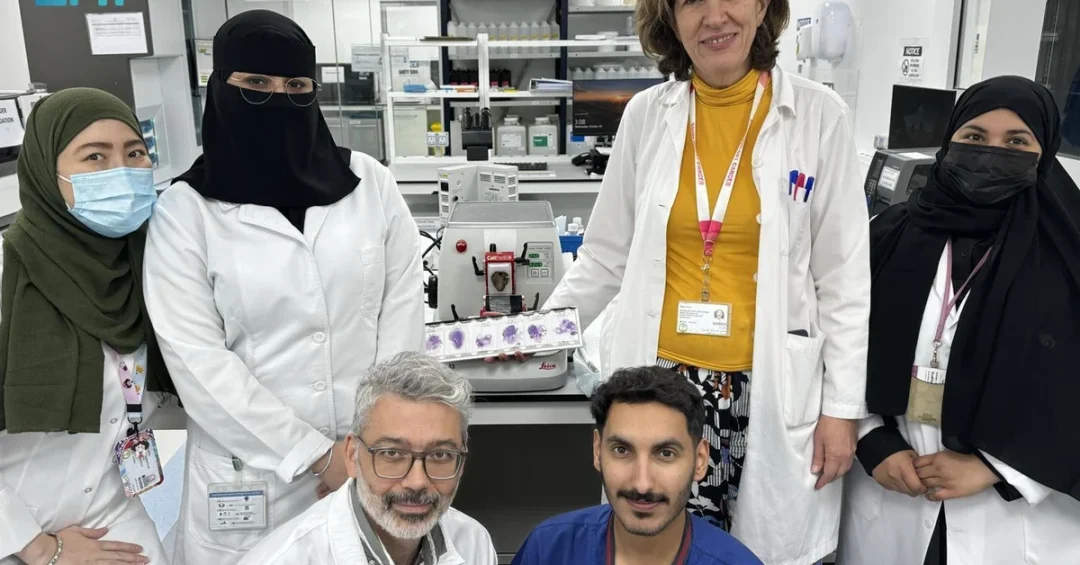
King Faisal Specialist Hospital & Research Centre (KFSHRC) in Madinah has become the first medical facility in Saudi Arabia to implement Large-Format Tissue Processing (Supa Mega Block), a breakthrough technology that enables the examination of cancerous tissues in a single step, as announced by the Saudi Press Agency (SPA). This advanced system accelerates the assessment of excised tissues, ensuring complete removal of affected areas while saving time, reducing costs, and enhancing the patient experience.
Context and Background
KFSHRC, a leading healthcare institution in the Kingdom, continues to pioneer innovative medical solutions that align with Saudi Arabia’s Vision 2030 goals for a world-class healthcare system. The introduction of Supa Mega Block technology in Madinah marks a significant leap forward in cancer diagnostics and treatment. Traditionally, pathologists faced limitations in examining large tissue samples, often requiring multiple slides and stages to accurately assess cancer margins. This new approach allows for comprehensive scanning of excised tissues, facilitating precise identification of cancer boundaries and confirmation that tissue margins are free of cancer cells.
Key Details
The Large-Format Tissue Processing technology enables pathologists to examine four times the amount of tissue in a single test compared to conventional methods. This not only enhances diagnostic accuracy but also streamlines the correlation between radiological images and anatomical samples. Previously, this process involved numerous lab slides and multiple stages due to the limited tissue size examined. With Supa Mega Block, specialists can now achieve a complete excision of affected areas in one step, eliminating the need for additional interventions and improving patient outcomes. The technology also reduces costs and time, contributing to a more efficient healthcare delivery system.
Implications and Impact
The adoption of this technology by KFSHRC-Madinah positions Saudi Arabia at the forefront of medical innovation in the region. It underscores the Kingdom’s commitment to advancing healthcare services and improving patient care. By enabling faster and more accurate cancer diagnostics, this technology can lead to earlier interventions, better treatment planning, and ultimately, higher survival rates. Furthermore, it reduces the burden on healthcare resources, allowing for more efficient use of laboratory facilities and personnel. This development is expected to set a benchmark for other medical institutions in Saudi Arabia and beyond, promoting the adoption of similar advanced diagnostic tools.
Vision 2030 Alignment
This milestone directly supports Saudi Arabia’s Vision 2030 objectives, which aim to transform the Kingdom into a global leader in healthcare by enhancing the quality, efficiency, and accessibility of medical services. KFSHRC’s implementation of Large-Format Tissue Processing exemplifies the vision’s emphasis on innovation and technology to drive progress in key sectors. As Saudi Arabia continues to invest in cutting-edge healthcare solutions, such advancements will play a crucial role in achieving the vision’s goal of a vibrant and healthy society, while also contributing to the nation’s economic diversification through improved healthcare outcomes and reduced long-term costs.
20 Questions
Q1. What is Large-Format Tissue Processing (Supa Mega Block)?
A1. Large-Format Tissue Processing is an advanced technology that allows pathologists to examine larger tissue samples in a single step, improving the accuracy and efficiency of cancer diagnostics. It was recently implemented by KFSHRC in Madinah.
Q2. Which facility in Saudi Arabia first adopted this technology?
A2. King Faisal Specialist Hospital & Research Centre (KFSHRC) in Madinah is the first medical facility in Saudi Arabia to adopt this technology, as reported by the Saudi Press Agency.
Q3. How does this technology benefit cancer patients?
A3. It ensures complete excision of cancerous tissues in a single step, reducing the need for additional interventions, saving time and costs, and enhancing the overall patient experience through more accurate diagnoses.
Q4. What is the main advantage of Supa Mega Block over traditional methods?
A4. The main advantage is that it allows examination of four times the amount of tissue in a single test, significantly improving diagnostic accuracy and eliminating the need for multiple lab slides and stages.
Q5. How does this technology improve diagnostic accuracy?
A5. By enabling comprehensive scanning of excised tissues, pathologists can accurately identify cancer boundaries and confirm that margins are free of cancer cells, ensuring the success of the medical procedure.
Q6. Does this technology reduce healthcare costs?
A6. Yes, it reduces costs by streamlining the examination process, requiring fewer lab resources and eliminating the need for additional interventions, thus making healthcare delivery more efficient.
Q7. What role does KFSHRC play in Saudi Arabia’s healthcare system?
A7. KFSHRC is a leading medical institution that pioneers innovative treatments and technologies, contributing to the Kingdom’s Vision 2030 goals for a world-class healthcare system.
Q8. How does this technology align with Vision 2030?
A8. It supports Vision 2030 by enhancing healthcare quality and efficiency through innovation, helping to build a vibrant society and diversify the economy via improved health outcomes.
Q9. Can this technology be used for other types of cancer?
A9. Yes, Large-Format Tissue Processing is applicable to various cancer types where tissue examination is required, as it enhances the assessment of any excised tissue.
Q10. What is the significance of examining tissue margins?
A10. Examining tissue margins confirms whether cancer cells are present at the edges of removed tissue. Clear margins indicate successful removal, reducing the risk of recurrence and the need for further surgery.
Q11. How does this technology streamline radiological correlation?
A11. It allows direct correlation of radiological images with larger anatomical samples in a single step, eliminating the multiple stages and numerous slides previously required.
Q12. Is this technology available in other hospitals in Saudi Arabia?
A12. Currently, KFSHRC-Madinah is the first to implement it. However, its success may encourage adoption by other healthcare institutions in the Kingdom.
Q13. What training is required for pathologists to use this technology?
A13. Pathologists receive specialized training to operate the Large-Format Tissue Processing system, ensuring they can effectively utilize its capabilities for accurate diagnoses.
Q14. How does this technology impact patient waiting times?
A14. It significantly reduces waiting times for results by accelerating the examination process, allowing for quicker treatment decisions and improved patient care.
Q15. Does this technology replace traditional pathology methods?
A15. It complements traditional methods by offering a more efficient and comprehensive approach for certain cases, particularly those requiring examination of large tissue samples.
Q16. What is the source of this announcement?
A16. The announcement was made by the Saudi Press Agency (SPA), the official news agency of Saudi Arabia, highlighting the Kingdom’s advancements in healthcare.
Q17. How does this technology contribute to Saudi Arabia’s medical leadership?
A17. By being the first to adopt such advanced technology, Saudi Arabia demonstrates its commitment to medical innovation and positions itself as a leader in healthcare in the region.
Q18. What are the economic benefits of this technology?
A18. It reduces costs associated with multiple tests and interventions, leading to more efficient use of resources and potential long-term savings for the healthcare system.
Q19. Can this technology be used in telepathology?
A19. While not specified, the enhanced digital imaging capabilities of Large-Format Tissue Processing could facilitate remote consultations and telepathology in the future.
Q20. What future developments can we expect from KFSHRC?
A20. KFSHRC is expected to continue pioneering advanced medical technologies and treatments, further contributing to Saudi Arabia’s healthcare excellence and Vision 2030 objectives.
Reader Feedback
We value your thoughts. Please share your feedback on this article.
Your feedback helps us improve our coverage.