


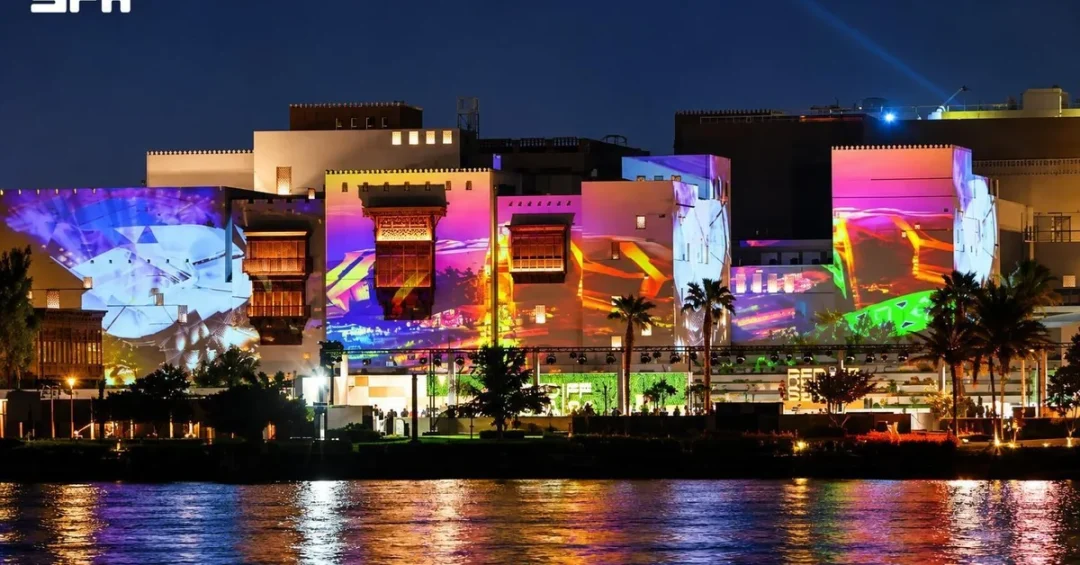
Historic Jeddah’s iconic wooden rawasheen have inspired the visual identity of the 27th Arabian Gulf Cup (Khaleeji 27), which concluded today in Jeddah, according to the Saudi Press Agency (SPA). The tournament’s official logo features interlocking geometric patterns drawn from these traditional architectural elements, creating a design that forms the shape of the competition trophy while celebrating the region’s rich heritage.
Context and Background
Rawasheen are among the most distinctive features of Historic Jeddah, a UNESCO World Heritage Site. These wooden structures, with their intricate geometric details, have adorned the facades of old houses for centuries. They serve both practical and aesthetic purposes: providing natural ventilation, allowing light to enter, and enabling residents to look outside while maintaining privacy. The rawasheen are crafted using the “Manjour” technique, which creates interwoven geometric patterns with precisely spaced openings. This traditional craftsmanship reflects the ingenuity of Jeddah’s artisans and the city’s role as a historic gateway for trade and cultural exchange.
Key Details
The official Khaleeji 27 logo draws directly from the rawasheen’s interlocking designs, translating an element of the area’s architecture into a contemporary visual language that resonates across the Gulf. As the tournament progressed and fans from Gulf national teams arrived in Jeddah, the rawasheen returned from the logo to their original place on the facades of Historic Jeddah, symbolizing the living heritage of the city. The 27th Arabian Gulf Cup, hosted in Jeddah, brought together teams from across the region, highlighting the city’s capacity to blend tradition with modernity on an international stage.
Implications and Impact
The integration of rawasheen into the tournament’s identity underscores the enduring cultural significance of Historic Jeddah and its ability to inspire contemporary events. It also reinforces Saudi Arabia’s commitment to preserving its heritage while engaging with the global community. By featuring these architectural elements, Khaleeji 27 not only celebrated sport but also promoted cultural understanding and appreciation among Gulf nations. The event showcased Jeddah as a vibrant hub where history and modernity coexist, attracting visitors and enriching the experience for all attendees.
Vision 2030 Alignment
This initiative aligns with Saudi Vision 2030, which seeks to diversify the economy, promote tourism, and preserve cultural heritage. By highlighting Historic Jeddah’s rawasheen through a major sporting event, the Kingdom demonstrates its dedication to showcasing its unique identity to the world. Such efforts contribute to the goals of enhancing quality of life, fostering national pride, and strengthening international ties, further positioning Saudi Arabia as a leader in cultural diplomacy and sustainable development.
20 Questions
Q1. What is the main inspiration behind the Khaleeji 27 logo?
A1. The Khaleeji 27 logo was inspired by the rawasheen, the traditional wooden architectural elements found on the facades of historic houses in Jeddah, featuring intricate geometric patterns.
Q2. What are rawasheen?
A2. Rawasheen are wooden structures with intricate geometric designs that adorn the facades of old houses in Historic Jeddah. They provide ventilation, light, and privacy while allowing residents to view the outside.
Q3. Where did Khaleeji 27 take place?
A3. The 27th Arabian Gulf Cup, known as Khaleeji 27, was held in Jeddah, Saudi Arabia, and concluded today according to the Saudi Press Agency.
Q4. What is the Manjour technique?
A4. The Manjour technique is a traditional method used to create rawasheen, involving interwoven geometric patterns in wooden pieces with precisely spaced openings, reflecting skilled craftsmanship.
Q5. How does the logo connect to Jeddah’s heritage?
A5. The logo’s interlocking elements mirror the rawasheen’s geometric designs, forming the shape of the tournament trophy and bringing Jeddah’s architectural heritage into a modern visual context.
Q6. Why are rawasheen significant to Historic Jeddah?
A6. Rawasheen are a defining feature of Historic Jeddah, a UNESCO World Heritage Site, representing the city’s rich cultural history and architectural ingenuity developed over centuries.
Q7. What purpose do rawasheen serve beyond decoration?
A7. Beyond their aesthetic appeal, rawasheen provide natural ventilation, allow light to enter, and enable residents to look outside while maintaining privacy indoors.
Q8. How did the tournament affect the visibility of rawasheen?
A8. As fans arrived in Jeddah for the tournament, the rawasheen gained renewed attention, returning from the logo to their original place on the facades of Historic Jeddah.
Q9. What does the Khaleeji 27 logo symbolize?
A9. The logo symbolizes the fusion of tradition and modernity, using the rawasheen’s interlocking patterns to create a contemporary emblem that resonates with Gulf audiences.
Q10. Which organization reported on this development?
A10. The Saudi Press Agency (SPA) reported on the inspiration behind the Khaleeji 27 logo and the significance of the rawasheen.
Q11. How does the logo reach audiences across the Gulf?
A11. The logo presents an element of Jeddah’s architecture in a contemporary visual language, appealing to audiences across Gulf countries and fostering a sense of shared heritage.
Q12. What is the historical significance of Jeddah as a port city?
A12. Jeddah has long been a gateway for trade and cultural exchange, and its Historic District, with its rawasheen, reflects the city’s openness and rich history.
Q13. How does the use of rawasheen in the logo align with Saudi Vision 2030?
A13. It aligns with Vision 2030’s goals of preserving cultural heritage, promoting tourism, and showcasing Saudi Arabia’s unique identity to the world.
Q14. What role did the tournament play in promoting cultural exchange?
A14. The tournament brought together Gulf national teams and fans, fostering cultural exchange and appreciation through the shared celebration of sport and heritage.
Q15. Are rawasheen still present in Jeddah today?
A15. Yes, rawasheen remain on the facades of buildings in Historic Jeddah, serving as a testament to the city’s architectural heritage and ongoing preservation efforts.
Q16. How does the Manjour technique contribute to the uniqueness of rawasheen?
A16. The Manjour technique creates interwoven geometric patterns with precise openings, making each rawasheen a unique piece of functional art that reflects skilled craftsmanship.
Q17. What message does the Khaleeji 27 logo convey to the world?
A17. The logo conveys a message of pride in regional heritage and the ability to adapt tradition into modern expressions, showcasing Jeddah’s cultural dynamism.
Q18. How did the local community respond to the logo’s inspiration?
A18. While specific responses are not detailed, the integration of rawasheen into the logo likely fostered pride among locals, as it highlighted their city’s unique heritage on a regional stage.
Q19. What other events or initiatives have been inspired by Jeddah’s heritage?
A19. Various cultural and tourism initiatives in Saudi Arabia draw from Jeddah’s heritage, including restoration projects and festivals that celebrate the city’s history, in line with Vision 2030.
Q20. How does the Khaleeji 27 logo contribute to Saudi Arabia’s global image?
A20. It enhances Saudi Arabia’s global image by presenting a positive, culturally rich facet of the Kingdom, demonstrating its commitment to heritage and international engagement.
Reader Feedback
We value your thoughts. Please share your feedback on this article.
Your feedback helps us improve our coverage.