


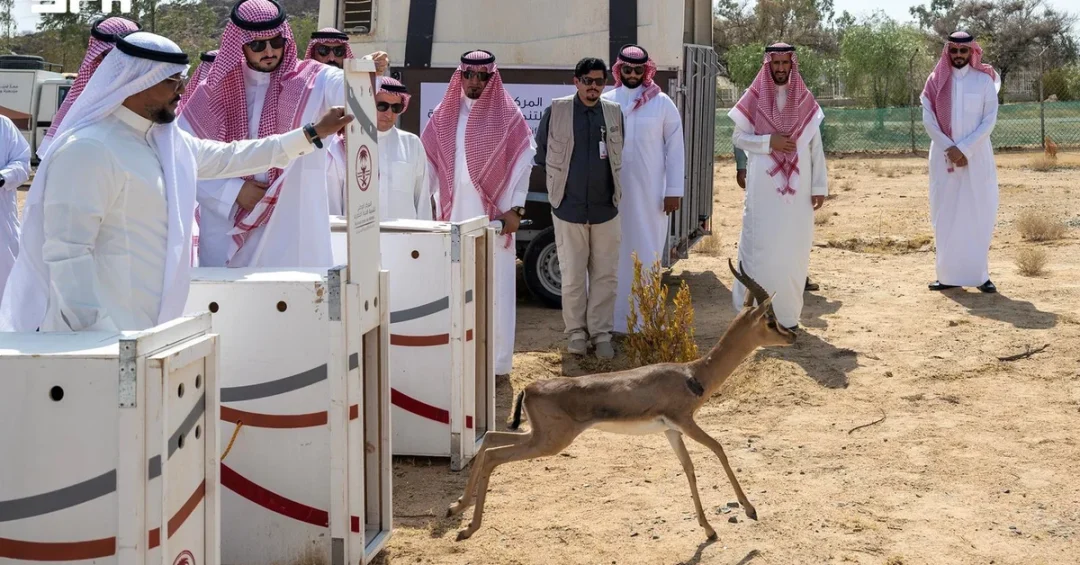
Taif Governor Prince Fawaz bin Sultan bin Abdulaziz released 10 wild animals into Saiysad National Park on September 3, 2026, marking a significant step in Saudi Arabia’s ongoing efforts to restore native species and enhance biodiversity. The release, carried out by the National Center for Wildlife (NCW) in collaboration with the National Center for Vegetation Cover Development and Combating Desertification, included three Arabian oryx, four red-necked ostriches, and three wild rabbits. This initiative reflects the Kingdom’s commitment to environmental conservation and sustainable development under Vision 2030.
Context and Background
Saudi Arabia has long recognized the importance of preserving its natural heritage. The National Center for Wildlife, established to protect and reintroduce endangered species, has been at the forefront of these efforts. The reintroduction at Saiysad National Park follows a series of successful programs across the Kingdom, aimed at restoring ecological balance and promoting ecotourism. The park, located in the Taif region, serves as a vital corridor linking nature reserves, allowing wildlife to thrive in a protected environment.
Key Details
During his visit, Prince Fawaz was briefed on a specialized forest research center being established within the park. This center will focus on forest development and vegetation sustainability, further supporting the Kingdom’s environmental goals. Dr. Mohammad Qurban, CEO of the National Center for Wildlife, emphasized that the reintroduction programs follow scientific stages, from habitat assessment to post-release monitoring. “National parks serve as safe corridors linking nature reserves while also supporting ecotourism,” he said. The release included three Arabian oryx, four red-necked ostriches, and three wild rabbits, all native species chosen for their ecological importance.
Implications and Impact
This reintroduction initiative has broader implications for Saudi Arabia’s biodiversity and ecotourism. By restoring native species, the Kingdom enhances its natural ecosystems, which can attract tourists and support local economies. The collaboration between the NCW and the National Center for Vegetation Cover underscores the integrated approach to environmental management. Furthermore, the establishment of the forest research center will provide valuable data for future conservation efforts, positioning Saudi Arabia as a leader in environmental stewardship in the region.
Vision 2030 Alignment
This initiative aligns with Saudi Vision 2030’s goals of environmental sustainability and quality of life improvement. By protecting biodiversity and promoting ecotourism, the Kingdom is diversifying its economy and creating new opportunities for communities. The reintroduction of native species at Saiysad National Park is a testament to Saudi Arabia’s commitment to preserving its natural heritage for future generations, while also showcasing its leadership in global conservation efforts.
20 Questions
Q1. What event took place at Saiysad National Park?
A1. On September 3, 2026, Taif Governor Prince Fawaz bin Sultan bin Abdulaziz released 10 wild animals, including Arabian oryx, red-necked ostriches, and wild rabbits, as part of a biodiversity initiative.
Q2. Which organizations cooperated in this reintroduction?
A2. The National Center for Wildlife (NCW) carried out the reintroduction in cooperation with the National Center for Vegetation Cover Development and Combating Desertification.
Q3. How many Arabian oryx were released?
A3. Three Arabian oryx were released into Saiysad National Park as part of the initiative to reintroduce native species.
Q4. What is the significance of Saiysad National Park?
A4. Saiysad National Park serves as a safe corridor linking nature reserves and supports ecotourism, while also hosting a specialized forest research center.
Q5. Who is Dr. Mohammad Qurban?
A5. Dr. Mohammad Qurban is the CEO of the National Center for Wildlife, and he emphasized the scientific approach of reintroduction programs.
Q6. What stages do reintroduction programs follow?
A6. Reintroduction programs follow scientific stages, from habitat assessment to post-release monitoring, to ensure the survival and sustainability of released species.
Q7. What is the purpose of the forest research center?
A7. The forest research center is being established to advance studies on forest development and vegetation sustainability within the park.
Q8. How does this initiative support ecotourism?
A8. By restoring native species, the initiative enhances biodiversity and attracts tourists, thereby supporting local economies and promoting ecotourism in the region.
Q9. Which species were reintroduced besides Arabian oryx?
A9. Four red-necked ostriches and three wild rabbits were also released alongside the Arabian oryx.
Q10. What is the role of the National Center for Wildlife?
A10. The NCW is responsible for protecting and reintroducing endangered species, and it leads biodiversity conservation efforts across Saudi Arabia.
Q11. How does this initiative align with Vision 2030?
A11. It aligns with Vision 2030’s environmental sustainability goals by preserving natural heritage, promoting ecotourism, and improving quality of life.
Q12. What preparations were made before the release?
A12. Field preparations were conducted to ensure habitat suitability and support sustainable population growth for the released animals.
Q13. What are the benefits of reintroducing native species?
A13. Reintroducing native species restores ecological balance, enhances biodiversity, and supports the overall health of the ecosystem.
Q14. How does this project contribute to global conservation?
A14. It showcases Saudi Arabia’s leadership in environmental stewardship and contributes to global efforts to protect biodiversity.
Q15. What is the expected impact on local communities?
A15. The initiative is expected to boost ecotourism, creating economic opportunities and fostering community engagement in conservation.
Q16. What other initiatives has the NCW undertaken?
A16. The NCW has carried out similar reintroduction programs across the Kingdom, aiming to restore native species and protect biodiversity.
Q17. Why is biodiversity important for Saudi Arabia?
A17. Biodiversity is crucial for maintaining healthy ecosystems, supporting sustainable development, and preserving the Kingdom’s natural heritage for future generations.
Q18. How does the release of wild rabbits contribute to the ecosystem?
A18. Wild rabbits play a role in the food chain and help maintain ecological balance within the park.
Q19. What future plans exist for Saiysad National Park?
A19. Future plans include the completion of the forest research center and continued reintroduction efforts to enhance the park’s ecological value.
Q20. How can the public support these conservation efforts?
A20. The public can support by respecting protected areas, participating in ecotourism responsibly, and spreading awareness about the importance of biodiversity.
Reader Feedback
We value your thoughts. Please share your feedback on this article.
Your feedback helps us improve our coverage.