


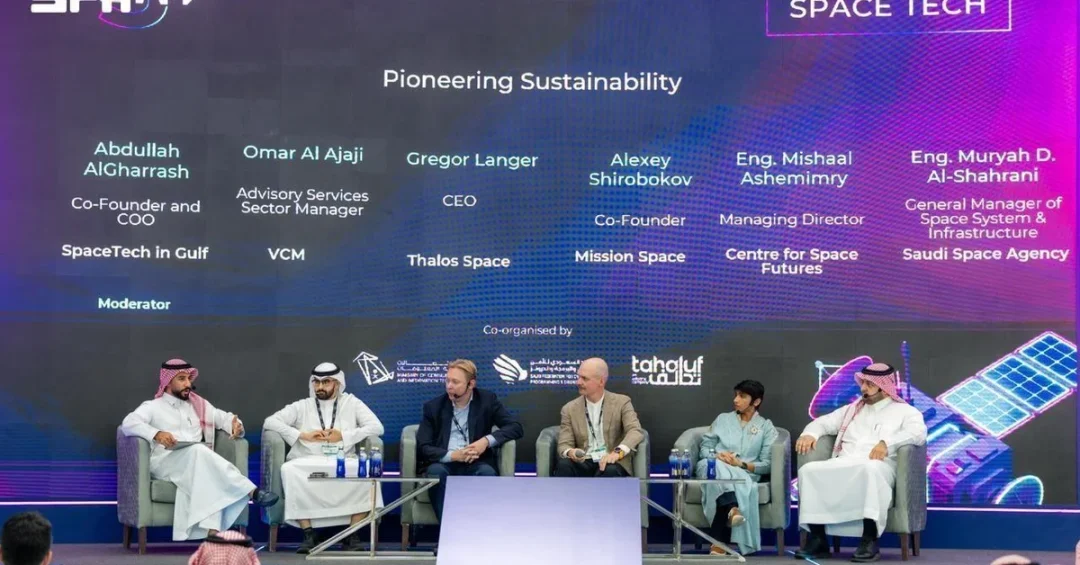
The Saudi Space Agency concluded its participation in LEAP 2026, held in Riyadh from August 31 to September 3, 2026, showcasing its leadership in advancing the space sector through innovation, sustainable development, and national capacity building. The agency’s engagements highlighted the Kingdom’s commitment to harnessing space technology for societal benefit and economic growth, in line with Vision 2030.
Context and Background
LEAP 2026, a premier global technology event, brought together industry leaders, innovators, and policymakers to explore emerging trends. The Saudi Space Agency’s active role underscores Saudi Arabia’s strategic focus on space as a driver of diversification and technological sovereignty. By participating in such forums, the Kingdom reinforces its position as a regional hub for space innovation and international collaboration.
Key Details
During the event, agency leaders and experts led specialized sessions on critical topics. They discussed the role of science communication in translating space knowledge into societal impact, emphasizing the importance of public engagement and education. Innovations in Earth observation were explored, highlighting challenges and opportunities for enhanced environmental monitoring and resource management. The future of space data centers was also a key focus, with discussions on enabling advanced applications and maximizing data utilization. Additionally, the agency addressed the integration of space research and artificial intelligence to advance healthcare, improve sustainability in the space sector, and develop human capabilities. These engagements reflect the agency’s comprehensive approach to fostering a robust space ecosystem.
Implications and Impact
The Saudi Space Agency’s participation in LEAP 2026 signals the Kingdom’s growing influence in the global space arena. By sharing insights and collaborating with international partners, Saudi Arabia is poised to contribute to global efforts in space exploration and technology. This engagement also supports the development of national talent, creating opportunities for Saudi professionals to lead in space science and innovation. The focus on AI and healthcare demonstrates the potential of space technology to address terrestrial challenges, improving quality of life and driving economic diversification.
Vision 2030 Alignment
This initiative aligns directly with Vision 2030, which aims to diversify the economy and enhance national capabilities. The Saudi Space Agency’s efforts in innovation, sustainability, and human capital development are integral to building a knowledge-based economy. As the Kingdom continues to invest in space technology, it reinforces its role as a global leader and a catalyst for progress, ensuring a prosperous future for generations to come.
20 Questions
Q1. What was the main outcome of the Saudi Space Agency’s participation in LEAP 2026?
A1. The agency successfully showcased its leadership in space innovation and sustainable development, engaging with global experts to discuss the future of the space sector and its role in supporting Vision 2030 objectives.
Q2. When and where was LEAP 2026 held?
A2. LEAP 2026 was held in Riyadh, Saudi Arabia, from August 31 to September 3, 2026, bringing together technology leaders and innovators from around the world.
Q3. What topics did the Saudi Space Agency address during the event?
A3. The agency covered science communication, Earth observation innovations, space data centers, and the use of space research and AI to advance healthcare and sustainability.
Q4. How does the agency’s participation support Vision 2030?
A4. It aligns with Vision 2030 by promoting economic diversification, technological innovation, and the development of national talent in the space sector, contributing to a knowledge-based economy.
Q5. What role does science communication play in the space sector?
A5. Science communication transforms space knowledge into societal impact by making complex information accessible to the public, fostering awareness and support for space initiatives.
Q6. What are the challenges in Earth observation mentioned by the agency?
A6. Challenges include data accuracy, integration with other technologies, and ensuring sustainable practices, but these also present opportunities for innovation and improved environmental monitoring.
Q7. How can space data centers enable advanced applications?
A7. They provide the infrastructure to process and analyze vast amounts of space data, enabling applications in navigation, climate monitoring, and telecommunications, and maximizing data utilization for economic benefit.
Q8. In what ways is AI used in space research for healthcare?
A8. AI analyzes space-derived data to improve medical research, such as studying the effects of space travel on human health, leading to advancements in telemedicine and personalized healthcare on Earth.
Q9. What is the significance of developing national talent in the space sector?
A9. It builds a skilled workforce capable of driving innovation, reduces reliance on foreign expertise, and ensures the sustainability of Saudi Arabia’s space program for future generations.
Q10. How does the agency enhance the sustainability of the space sector?
A10. By promoting responsible practices, such as debris mitigation and sustainable resource use, and integrating AI for efficient operations, the agency ensures long-term viability of space activities.
Q11. What international collaborations resulted from LEAP 2026?
A11. The event facilitated networking and potential partnerships with global space agencies and technology companies, opening avenues for joint research and knowledge exchange.
Q12. How does the Saudi Space Agency contribute to global space exploration?
A12. Through participation in international forums and projects, the agency shares expertise and collaborates on missions, enhancing global efforts in space science and technology.
Q13. What are the economic benefits of space innovation for Saudi Arabia?
A13. Space innovation drives economic diversification by creating new industries, attracting investment, and generating high-tech jobs, reducing dependence on oil revenues.
Q14. How does the agency engage the public in space activities?
A14. Through science communication initiatives, educational programs, and outreach events, the agency inspires youth and raises awareness about the importance of space exploration.
Q15. What future missions is the Saudi Space Agency planning?
A15. While specific missions are not detailed, the agency continues to invest in satellite technology, Earth observation, and human spaceflight capabilities as part of its strategic roadmap.
Q16. How does AI enhance the sustainability of space operations?
A16. AI optimizes resource management, predicts maintenance needs, and improves data analysis, reducing waste and extending the lifespan of space assets.
Q17. What is the role of the Saudi Space Agency in national security?
A17. The agency supports national security by providing secure communication, surveillance, and Earth observation capabilities that enhance defense and disaster response.
Q18. How does the agency support the growth of space startups?
A18. By fostering an innovation ecosystem, offering funding opportunities, and providing mentorship, the agency encourages entrepreneurship in the space sector.
Q19. What educational programs does the agency offer for youth?
A19. The agency collaborates with universities and schools to offer STEM education, internships, and competitions, nurturing the next generation of space professionals.
Q20. How does the agency measure the success of its participation in events like LEAP?
A20. Success is measured by the number of partnerships formed, knowledge exchanged, and the advancement of projects that contribute to the agency’s strategic goals and Vision 2030.
Reader Feedback
We value your thoughts. Please share your feedback on this article.
Your feedback helps us improve our coverage.
Related articles
 Saudi Arabia Adopts Balanced Approach to AI Innovation, Governance
 TETCO Concludes LEAP 2026 with Strategic Digital Agreements
 Digital Saudi Concludes Successful Participation in LEAP 2026
 stc Concludes LEAP 2026 with Strategic Partnerships
 CST Concludes LEAP 2026 with Major Investments
 MCIT, Snap Partner to Equip 20,000 Saudis with Digital Skills