


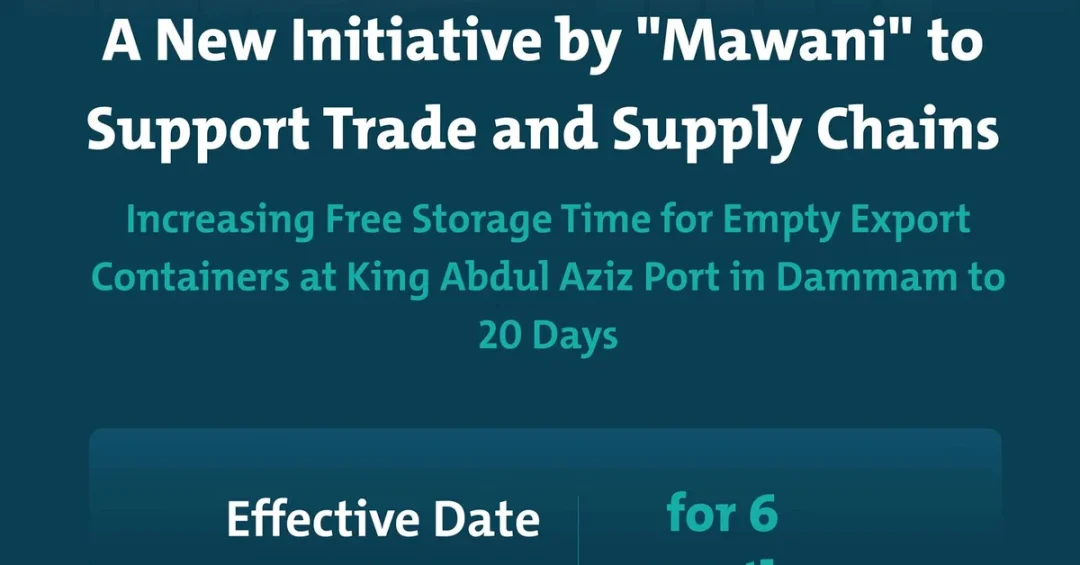
The Saudi Ports Authority (Mawani) announced on July 4, 2024, the extension of the exemption period for storage fees on exported empty containers at King Abdulaziz Port in Dammam from 10 days to 20 days, effective immediately for six months. This decision is part of Mawani’s ongoing efforts to support operational processes for all beneficiaries and stakeholders in the port sector and to facilitate trade and supply chains.
Context and Background
King Abdulaziz Port in Dammam is one of the Kingdom’s most vital maritime gateways, serving as a major hub for import and export activities in the Eastern Province. The port has undergone significant development in recent years, with investments in infrastructure and technology to enhance its capacity and efficiency. The extension of the storage fee exemption for empty containers is a continuation of Mawani’s initiatives to streamline port operations and reduce logistical bottlenecks.
Previously, the exemption period stood at 10 days, which, while beneficial, was sometimes insufficient to accommodate fluctuations in cargo volume and shipping schedules. By doubling the exemption period to 20 days, Mawani aims to provide greater flexibility for exporters and logistics providers, allowing them to manage container returns more effectively without incurring additional costs.
Key Details
The exemption applies specifically to exported empty containers at King Abdulaziz Port and will remain in effect for six months starting from the announcement date. This initiative is designed to enhance operational efficiency, increase the speed of empty container retrieval, and improve truck turnaround times. It also seeks to elevate the level of logistical services provided at the port.
Mawani emphasized that this measure will contribute to the smooth and flexible movement of exported containers, quick completion of procedures, and addressing the continuous increase in cargo volume. It will help clear the yards rapidly, thereby improving port performance and raising quality and productivity levels. Furthermore, the initiative supports the economic environment and commercial activity in the Kingdom, boosts partnerships with the private sector, and offers attractive competitive services, ultimately contributing to the support of global supply chains.
Implications and Impact
The extension of the storage fee exemption is expected to have a positive impact on both local and international trade. For exporters, it reduces the cost burden associated with storing empty containers beyond the free period, enabling them to allocate resources more efficiently. For logistics companies, it facilitates smoother operations, as trucks can be dispatched and containers returned without the pressure of tight deadlines.
From a broader perspective, this initiative enhances the competitiveness of King Abdulaziz Port and positions it as a more attractive destination for shipping lines and cargo owners. It aligns with global best practices in port management, where flexibility in container storage is seen as a key factor in attracting business. By improving turnaround times and reducing congestion, the port can handle higher volumes of cargo, thereby supporting the Kingdom’s growing role in international trade.
Additionally, the initiative reinforces Saudi Arabia’s commitment to maintaining resilient supply chains, which is crucial in the post-pandemic global economy. As countries seek to diversify their trade routes and reduce dependencies, Saudi Arabia’s investment in port infrastructure and logistics services sends a strong signal that it is ready to meet the demands of the future.
Vision 2030 Alignment
This initiative is in line with the objectives of the National Strategy for Transport and Logistics Services, a key component of Saudi Vision 2030. The strategy aims to enhance the Kingdom’s position as a global logistics hub, connecting three continents and facilitating the flow of goods and services. By improving port efficiency and reducing costs for businesses, Mawani is contributing to the realization of Vision 2030’s goals of economic diversification and sustainable development.
As Saudi Arabia continues to invest in its maritime infrastructure and streamline regulations, it is poised to become a leading player in global trade. The extension of the storage fee exemption at King Abdulaziz Port is a concrete step towards achieving this ambition, demonstrating the Kingdom’s proactive approach to supporting the private sector and fostering economic growth.
20 Questions
Q1. What did Mawani announce regarding storage fees at King Abdulaziz Port?
A1. Mawani announced the extension of the exemption period for storage fees on exported empty containers from 10 days to 20 days, effective July 4, 2024, for six months.
Q2. Which port does this exemption apply to?
A2. The exemption applies to King Abdulaziz Port in Dammam, a major maritime hub in Saudi Arabia’s Eastern Province.
Q3. How long will the extended exemption period last?
A3. The extended exemption period will last for six months, starting from the announcement date of July 4, 2024.
Q4. What is the purpose of extending the storage fee exemption?
A4. The purpose is to support operational processes, facilitate trade and supply chains, enhance efficiency, and improve logistical services at the port.
Q5. Who benefits from this initiative?
A5. Exporters, logistics companies, shipping lines, and other stakeholders in the port sector benefit from reduced costs and smoother operations.
Q6. How does this initiative affect truck turnaround times?
A6. It improves truck turnaround times by allowing faster retrieval of empty containers and reducing congestion at the port.
Q7. What impact does this have on supply chains?
A7. It supports global supply chains by enabling quicker movement of containers and enhancing the reliability of export processes.
Q8. Is this exemption applicable to all types of containers?
A8. No, it specifically applies to exported empty containers at King Abdulaziz Port.
Q9. How does this align with Saudi Vision 2030?
A9. It aligns with the National Strategy for Transport and Logistics Services, aiming to position Saudi Arabia as a global logistics hub.
Q10. What are the expected economic benefits?
A10. It reduces costs for businesses, boosts commercial activity, and enhances the Kingdom’s competitiveness in international trade.
Q11. Will the exemption be reviewed after six months?
A11. The announcement does not specify, but Mawani regularly evaluates such initiatives based on their impact and market needs.
Q12. How does this initiative support the private sector?
A12. It boosts partnerships with the private sector by offering attractive competitive services and reducing operational burdens.
Q13. What role does King Abdulaziz Port play in Saudi trade?
A13. It is a key gateway for imports and exports, especially for the Eastern Province, and supports the Kingdom’s trade with global markets.
Q14. Are there any environmental benefits?
A14. Faster turnaround times can reduce idle times and emissions, contributing to more sustainable port operations.
Q15. How does this compare to other ports in the region?
A15. It enhances King Abdulaziz Port’s competitiveness by offering more flexible storage terms than many regional counterparts.
Q16. What is Mawani’s role in Saudi Arabia?
A16. Mawani is the Saudi Ports Authority, responsible for developing and managing the Kingdom’s ports to support economic growth.
Q17. Will this initiative increase port capacity?
A17. It helps clear yards rapidly, effectively increasing the port’s capacity to handle more cargo.
Q18. How does this affect import processes?
A18. While the exemption targets empty exports, improved efficiency overall can streamline import processes as well.
Q19. What feedback has the private sector given?
A19. The private sector has generally welcomed such initiatives as they reduce costs and improve predictability in logistics.
Q20. Where can I find more information about Mawani’s initiatives?
A20. More information is available on Mawani’s official website and through official Saudi Press Agency announcements.
Reader Feedback
We value your thoughts. Please share your feedback on this article.
Your feedback helps us improve our coverage.
Related articles
 Saudi Arabia and Romania Sign MoU to Enhance Agricultural Cooperation
 ZATCA Urges Taxpayers to File WHT Returns for June
 ZATCA Updates Customs Exemption Rules for Returned Goods
 Container Handling Services Surge 48% in Q2 2024
 Federation of Saudi Chambers Revives Saudi-Canadian Business Council
 Saudi Liquidity Hits Record SAR2.825 Trillion