


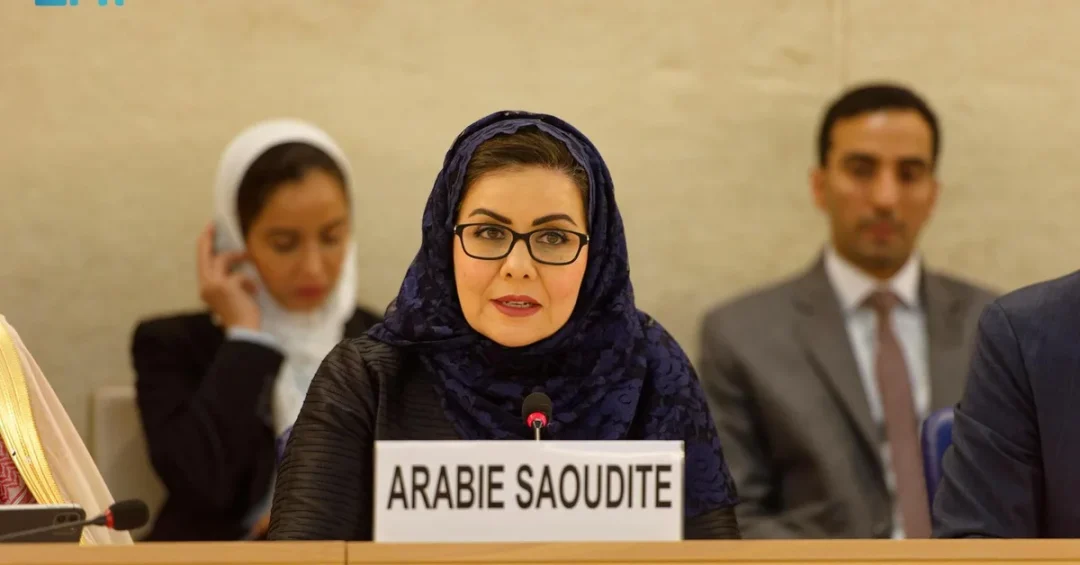
Saudi Arabia has reaffirmed its commitment to the highest international standards in protecting and promoting human rights, grounded in its deep-rooted principles and values and the leadership’s prioritization of human welfare above all else, according to Dr. Hala bint Mazyed Al-Tuwaijri, President of the Saudi Human Rights Commission (HRC). Speaking at the United Nations Human Rights Council in Geneva on July 4, 2024, Dr. Al-Tuwaijri led the Kingdom’s delegation during a session to adopt the outcomes of the fourth cycle of the Universal Periodic Review (UPR) mechanism. Her remarks underscored Saudi Arabia’s active engagement with international human rights mechanisms and its ongoing efforts to advance human rights both domestically and globally.
Context and Background
The Universal Periodic Review is a unique mechanism of the UN Human Rights Council that involves a periodic review of the human rights records of all 193 UN member states. Saudi Arabia’s participation in the fourth cycle of the UPR reflects its consistent cooperation with international human rights bodies. The session in Geneva marked the adoption of the review’s results, a critical step that allows states to outline their responses to recommendations and reaffirm their commitments. Dr. Al-Tuwaijri’s presence at the session highlights the Kingdom’s proactive approach to international dialogue and its dedication to transparency and collaboration in the field of human rights.
During the interactive dialogue, Dr. Al-Tuwaijri emphasized that principles such as equality, dialogue, cooperation, neutrality, objectivity, and transparency should form the foundation for any collaborative efforts between states in the realm of human rights. She noted that Saudi Arabia’s acceptance of over 80 percent of the recommendations from the fourth cycle demonstrates its genuine dedication to human rights. This high acceptance rate is a testament to the Kingdom’s willingness to engage constructively with the international community and to continuously improve its human rights framework.
Key Details
Dr. Al-Tuwaijri outlined the significant reforms and advancements in human rights that Saudi Arabia has achieved, particularly since the launch of Saudi Vision 2030. She stated that more than 150 legislative, institutional, judicial, and procedural reforms have been accomplished, with these reforms continuing even during the challenging circumstances brought about by the COVID-19 pandemic. These reforms span a wide range of areas, including women’s empowerment, labor rights, judicial transparency, and social welfare, reflecting a comprehensive approach to human rights that is integrated into the Kingdom’s national vision.
The HRC President underscored that Saudi Arabia’s commitment to human rights is rooted in its national vision, as human rights are an integral part of its authentic values and culture, which are reflected in its laws and practices. She highlighted that the Kingdom’s approach is not merely a response to international obligations but a genuine expression of its societal principles. This alignment between cultural values and human rights standards ensures that reforms are sustainable and widely supported within Saudi society.
Implications and Impact
Saudi Arabia’s active participation in the UPR and its high acceptance rate of recommendations send a strong signal to the international community about its commitment to human rights. This engagement enhances the Kingdom’s standing as a responsible global actor and reinforces its role as a bridge-builder in international forums. By emphasizing principles of equality, dialogue, and cooperation, Saudi Arabia contributes to shaping a balanced and objective discourse on human rights that respects national contexts and cultural diversity.
Furthermore, the reforms undertaken by the Kingdom have tangible impacts on the daily lives of its citizens and residents. They promote greater social inclusion, economic participation, and legal protection, which are essential for sustainable development. Saudi Arabia’s experience demonstrates that human rights advancements can be achieved in harmony with cultural and religious values, offering a model that resonates with many countries around the world.
Vision 2030 Alignment
The human rights reforms are intrinsically linked to Saudi Vision 2030, the Kingdom’s ambitious blueprint for economic and social transformation. Vision 2030 aims to create a vibrant society, a thriving economy, and an ambitious nation, with human rights serving as a cornerstone of this journey. The leadership’s unwavering commitment to human welfare ensures that as Saudi Arabia progresses towards its Vision 2030 goals, the protection and promotion of human rights will remain central to its national agenda. This holistic approach not only benefits the Kingdom but also contributes to global efforts to uphold human dignity and justice.
20 Questions
Q1. Who is the President of the Saudi Human Rights Commission?
A1. Dr. Hala bint Mazyed Al-Tuwaijri serves as the President of the Saudi Human Rights Commission. She has been a prominent advocate for human rights and leads the Kingdom’s efforts in this field.
Q2. Where did Dr. Al-Tuwaijri make her remarks about Saudi Arabia’s human rights commitment?
A2. She made her remarks at the United Nations Human Rights Council in Geneva, Switzerland, during a session to adopt the results of the fourth cycle of the Universal Periodic Review.
Q3. What is the Universal Periodic Review (UPR)?
A3. The UPR is a mechanism of the UN Human Rights Council that reviews the human rights records of all UN member states every four years. It aims to improve human rights situations worldwide.
Q4. What percentage of UPR recommendations did Saudi Arabia accept?
A4. Saudi Arabia accepted over 80 percent of the recommendations from the fourth cycle of the Universal Periodic Review, demonstrating its genuine dedication to human rights.
Q5. How many reforms has Saudi Arabia implemented since Vision 2030?
A5. More than 150 legislative, institutional, judicial, and procedural reforms have been accomplished since the adoption of Saudi Vision 2030, covering various aspects of human rights.
Q6. Did the COVID-19 pandemic affect Saudi Arabia’s reform efforts?
A6. No, the reforms continued even during the challenging circumstances brought about by the COVID-19 pandemic, showcasing the Kingdom’s resilience and commitment.
Q7. What principles did Dr. Al-Tuwaijri emphasize for international cooperation?
A7. She emphasized equality, dialogue, cooperation, neutrality, objectivity, and transparency as foundational principles for collaborative efforts between states in human rights.
Q8. What are some areas of reform in Saudi Arabia?
A8. Reforms span women’s empowerment, labor rights, judicial transparency, and social welfare, among others, reflecting a comprehensive approach to human rights.
Q9. How does Saudi Arabia’s commitment to human rights align with its values?
A9. Saudi Arabia’s commitment is rooted in its deep-rooted principles and values, as human rights are an integral part of its authentic culture and are reflected in its laws and practices.
Q10. What is the significance of Saudi Arabia’s participation in the UPR?
A10. It demonstrates the Kingdom’s proactive engagement with international human rights mechanisms, its transparency, and its willingness to collaborate with the global community.
Q11. How does the UPR benefit human rights globally?
A11. The UPR serves as a crucial tool for the Human Rights Council to enhance human rights globally by promoting dialogue, sharing best practices, and encouraging accountability among states.
Q12. What role does the Saudi Human Rights Commission play?
A12. The HRC promotes and protects human rights in Saudi Arabia, monitors compliance with international standards, and engages with international bodies to showcase the Kingdom’s progress.
Q13. What is Saudi Vision 2030?
A13. Saudi Vision 2030 is a strategic framework to diversify the economy, modernize society, and enhance the quality of life, with human rights as a cornerstone of its objectives.
Q14. How does Saudi Arabia’s approach to human rights differ from other countries?
A14. Saudi Arabia integrates human rights with its cultural and religious values, ensuring reforms are sustainable and resonate with its society, offering a unique model.
Q15. What impact have the reforms had on Saudi society?
A15. The reforms have promoted greater social inclusion, economic participation, and legal protection, improving the daily lives of citizens and residents.
Q16. What message does Saudi Arabia’s high acceptance rate send to the international community?
A16. It signals the Kingdom’s genuine dedication to human rights, its openness to international feedback, and its commitment to continuous improvement.
Q17. How does Saudi Arabia contribute to global human rights discourse?
A17. By advocating for equality, dialogue, and cooperation, Saudi Arabia helps shape a balanced and objective discourse that respects national contexts and cultural diversity.
Q18. What are the future prospects for human rights in Saudi Arabia?
A18. With ongoing reforms under Vision 2030, Saudi Arabia is committed to further advancing human rights, ensuring the protection and promotion of dignity for all.
Q19. Who leads Saudi Arabia’s delegation at the UN Human Rights Council?
A19. Dr. Hala bint Mazyed Al-Tuwaijri, President of the Saudi Human Rights Commission, led the Kingdom’s delegation at the session in Geneva.
Q20. Why is Saudi Arabia’s participation in the UPR important for its global standing?
A20. It enhances the Kingdom’s reputation as a responsible global actor, reinforces its role as a bridge-builder, and demonstrates its commitment to international cooperation and human rights.
Reader Feedback
We value your thoughts. Please share your feedback on this article.
Your feedback helps us improve our coverage.