


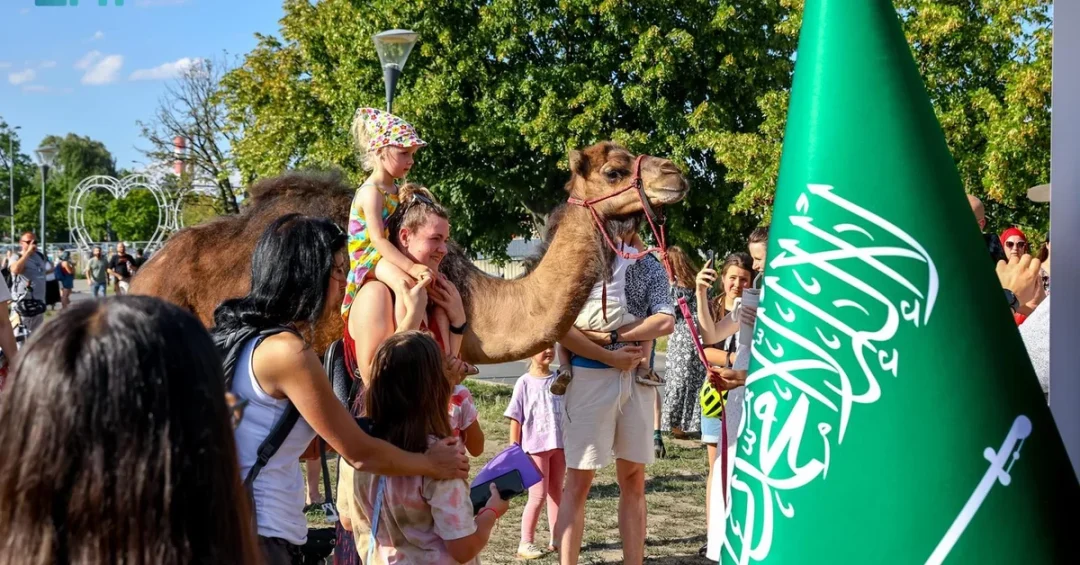
The Embassy of Saudi Arabia in Poland hosted a special event in Warsaw on July 7, 2024, to commemorate the International Year of Camelids, highlighting the cultural and historical significance of camels to Saudi identity. The celebration, held under the patronage of the Saudi Ministry of Foreign Affairs, featured a traditional tent adorned with brochures and presentations that showcased the Kingdom’s rich heritage and the enduring bond between Saudis and camels.
Context and Background
The United Nations declared 2024 as the International Year of Camelids to recognize the vital role these animals play in the livelihoods of millions of people worldwide and in cultural heritage. Saudi Arabia, home to the iconic Arabian camel, has been at the forefront of celebrating this designation. The event in Warsaw reflects the Kingdom’s commitment to sharing its cultural legacy with the global community and strengthening people-to-people ties.
Camels have been integral to Saudi society for centuries, serving as a means of transportation, a source of sustenance, and a symbol of resilience and hospitality. Today, they remain a cherished part of Saudi heritage, celebrated through festivals, competitions, and even dedicated research centers.
Key Details
The event drew a diverse audience, including Polish citizens, diplomats, and media representatives. Guests were welcomed with traditional Saudi coffee and dates, a gesture embodying the renowned hospitality of the Kingdom. A specially erected tent displayed informative brochures and presentations that highlighted the historical and cultural importance of camels, as well as Saudi Arabia’s efforts to preserve this heritage through initiatives like the King Abdulaziz Camel Festival and the Camel Club.
According to the Saudi Press Agency (SPA), the celebration aimed to foster cultural exchange and educate the international community about the deep-rooted traditions of Saudi Arabia. The embassy’s initiative is part of a broader effort to promote the Kingdom’s Vision 2030 goals, which include enhancing cultural diplomacy and global engagement.
Implications and Impact
This event in Poland underscores Saudi Arabia’s growing role in international cultural diplomacy. By showcasing its heritage, the Kingdom not only educates but also builds bridges with nations across Europe and beyond. The International Year of Camelids provides a unique platform to highlight the sustainable practices and economic potential associated with camelid farming, which aligns with global efforts toward food security and rural development.
Moreover, such cultural exchanges strengthen bilateral relations, paving the way for cooperation in tourism, trade, and investment. Poland, with its rich history and strategic location in Europe, represents a key partner for Saudi Arabia in advancing mutual interests. The positive reception of the event indicates a keen interest in Saudi culture and opens avenues for future collaborations, including potential tourism exchanges and joint heritage projects.
Vision 2030 Alignment
Saudi Arabia’s Vision 2030, spearheaded by Crown Prince Mohammed bin Salman, emphasizes the importance of cultural heritage as a pillar of national identity and a driver of economic diversification. The celebration of the International Year of Camelids in Warsaw exemplifies how the Kingdom is sharing its traditions with the world while promoting sustainable development and global partnerships. As Saudi Arabia continues to open up to the world, events like these reinforce its commitment to fostering cross-cultural understanding and positioning itself as a leader in cultural diplomacy, in line with Vision 2030’s objectives.
20 Questions
Q1. What event did the Saudi Embassy in Poland host?
A1. The Saudi Embassy in Poland hosted an event in Warsaw on July 7, 2024, to commemorate the International Year of Camelids, highlighting the cultural significance of camels.
Q2. Where was the event held?
A2. The event was held in Warsaw, the capital of Poland, at a venue organized by the Saudi Embassy, featuring a traditional tent.
Q3. Who attended the celebration?
A3. The event drew Polish citizens, diplomats, and media representatives, indicating broad interest in Saudi culture and heritage.
Q4. What was served to the guests?
A4. Guests were treated to traditional Saudi coffee and dates, exemplifying the Kingdom’s renowned hospitality and culinary traditions.
Q5. What is the significance of the International Year of Camelids?
A5. The United Nations designated 2024 as the International Year of Camelids to recognize the cultural, economic, and environmental importance of these animals worldwide.
Q6. How are camels important to Saudi culture?
A6. Camels have been integral to Saudi society for centuries, symbolizing resilience, hospitality, and heritage, and remain a cherished part of national identity.
Q7. What materials were available at the event?
A7. Brochures and an informative presentation were provided, showcasing Saudi culture, history, and the role of camels in the Kingdom’s heritage.
Q8. What Saudi initiatives promote camel heritage?
A8. Initiatives like the King Abdulaziz Camel Festival and the Camel Club celebrate and preserve the cultural significance of camels in Saudi Arabia.
Q9. How does this event relate to Saudi Vision 2030?
A9. The event aligns with Vision 2030 by promoting cultural diplomacy and global engagement, key components of the Kingdom’s strategic goals.
Q10. What was the purpose of the tent?
A10. The tent served as a cultural pavilion, offering a traditional setting to display brochures and presentations about Saudi heritage and camels.
Q11. How did the audience receive the event?
A11. The event was well-received, with a substantial crowd showing interest in Saudi culture and hospitality, as reported by the Saudi Press Agency.
Q12. What is the significance of serving Saudi coffee and dates?
A12. Serving Saudi coffee and dates is a traditional gesture of hospitality, reflecting the Kingdom’s warm and generous culture.
Q13. What role does the Saudi Embassy play in cultural diplomacy?
A13. The embassy facilitates cultural exchange, educates international audiences about Saudi heritage, and strengthens bilateral relations through events like this.
Q14. Why was Poland chosen for this event?
A14. Poland represents a key European partner, and hosting the event there supports Saudi Arabia’s efforts to build bridges and foster mutual understanding.
Q15. How does the celebration benefit Saudi-Polish relations?
A15. It enhances cultural ties, opens avenues for cooperation in tourism, trade, and investment, and promotes people-to-people connections.
Q16. What global recognition do camels have?
A16. Camels are recognized by the UN for their role in food security, livelihoods, and cultural heritage, leading to the International Year designation.
Q17. What economic potential do camelids have?
A17. Camelids contribute to sustainable agriculture, food production, and rural development, offering economic opportunities in various regions.
Q18. How does Saudi Arabia preserve its camel heritage?
A18. Through festivals, research centers, and cultural initiatives, Saudi Arabia actively preserves and promotes its camel heritage for future generations.
Q19. What other cultural events does Saudi Arabia organize abroad?
A19. Saudi embassies worldwide host various cultural events, including art exhibitions, heritage showcases, and culinary experiences, to share the Kingdom’s rich culture.
Q20. What message does this event convey about Saudi Arabia?
A20. It conveys that Saudi Arabia is open, proud of its heritage, and committed to engaging with the global community in a spirit of friendship and cooperation.
Reader Feedback
We value your thoughts. Please share your feedback on this article.
Your feedback helps us improve our coverage.
Related articles
 Diplomats Visit “Imagine Monet” at Jeddah Season 2024
 Cairo Nights Enriches Jeddah Season 2024
 Jeddah Season Hosts Monet Exhibition with 200+ Works
 RCU Unveils Neolithic Settlement in Northwest Saudi Arabia
 Saudi Museums Commission Appoints Dr. Hartwig Fischer to Lead New World Cultures Museum
 Ithra to Crown Arab World’s Reader of the Year on Saturday