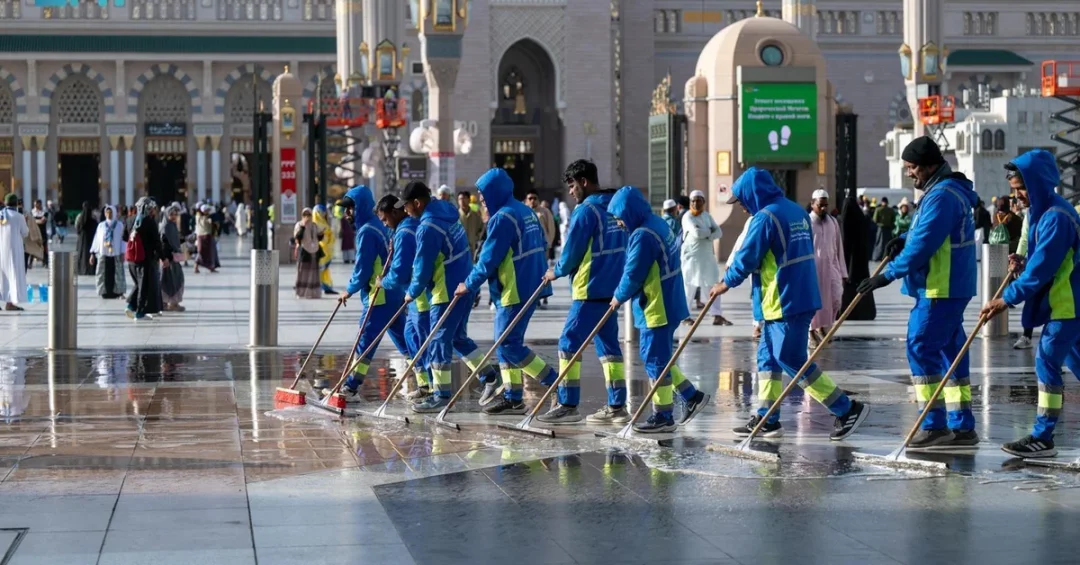
The Madinah Municipality conducted more than 9,700 inspection tours during the first half of Ramadan 1446 AH, according to the Saudi Press Agency (SPA), overseeing commercial establishments, monitoring health standards in markets and restaurants, and carrying out food safety inspections through its laboratories to ensure top-quality service for residents and visitors. The announcement underscores the Kingdom’s commitment to maintaining the highest standards of public health, safety, and urban cleanliness during the holy month, when the city welcomes millions of worshippers and visitors from around the world.
Context and Background
Madinah holds a unique place in the Islamic world as the site of the Prophet’s Mosque (Al-Masjid an-Nabawi), one of the holiest sites in Islam. During Ramadan, the city experiences a substantial influx of pilgrims and visitors performing Umrah and observing the fast, placing additional demands on municipal services, food establishments, and public infrastructure. The Madinah Municipality, the government body responsible for municipal affairs across the Madinah region, ramps up its operational capacity each year during Ramadan to meet these heightened needs.
The intensified inspection campaign reflects a broader, year-round effort by Saudi authorities to uphold food safety, environmental hygiene, and quality-of-life standards in the Kingdom’s cities. Under the guidance of the Kingdom’s leadership and in line with Vision 2030, municipalities across Saudi Arabia are deploying increasingly sophisticated monitoring and service systems to protect residents and guests alike.
Key Details of the Inspection Campaign
According to the SPA report, the municipality’s field operations during the first half of Ramadan included the collection of 1,144 laboratory samples, 25 mobile laboratory inspections, and 1,323 central laboratory inspections. These laboratory checks are designed to verify that food products and commercial offerings meet national health and safety standards before reaching consumers.
Beyond food safety, the municipality removed more than 22,000 tons of residential waste, preserving a clean and healthy environment across the city’s neighborhoods and high-traffic zones. The campaign was carried out by a dedicated workforce of more than 8,000 personnel, supported by over 800 machines and pieces of equipment.
In addition, 3,780 volunteers contributed more than 10,113 hours to a range of activities, including monitoring and guidance, food preservation, pilgrim services, water distribution, and the prevention of public sleeping. The participation of volunteers highlights the strong culture of civic engagement and community service that characterizes Saudi society, particularly during the holy month.
The Madinah Municipality reaffirmed its commitment to continuous field and inspection activities throughout Ramadan, with a heightened focus on densely populated areas. Operational plans include increased public cleaning, enhanced urban landscape maintenance, and intensified health monitoring. Vital locations and high-traffic areas are reinforced with dedicated work teams to ensure a safe and comfortable environment for all.
The municipality also encouraged public cooperation, urging residents and visitors to report any violations or observations through the Unified Reporting Center 940 for prompt action. This direct channel reflects the Kingdom’s emphasis on responsive governance and citizen participation in maintaining public standards.
Implications for Pilgrims and Residents
The scale of the operation carries significant implications for the millions of worshippers and tourists who visit Madinah during Ramadan. Reliable food safety inspections and rigorous health monitoring help protect public health at a time when communal meals, iftar gatherings, and street-level commerce reach peak volumes. The extensive cleaning and waste removal effort likewise supports a dignified and comfortable experience for pilgrims, many of whom travel from abroad to perform religious rites.
For the wider region, the campaign demonstrates the operational readiness of Saudi municipal authorities and their capacity to manage large seasonal surges in population and commercial activity. It also reinforces confidence among international visitors, travel operators, and hospitality businesses that Madinah maintains world-class public service standards throughout the year’s most demanding period.
Vision 2030 Alignment
The Madinah Municipality’s Ramadan campaign aligns closely with Saudi Arabia’s Vision 2030 objectives, which prioritize quality of life, public health, sustainable urban development, and the enhancement of religious and cultural tourism. By combining advanced laboratory testing, large-scale field operations, and volunteer engagement, the initiative exemplifies the Kingdom’s integrated approach to serving pilgrims and residents while elevating municipal services to global standards. As Saudi Arabia continues to expand its capacity to host growing numbers of Umrah and Hajj visitors, efforts such as these will remain central to the Kingdom’s long-term vision of becoming a leading destination for faith, hospitality, and modern urban living.
20 Questions
Q1. How many inspection tours did the Madinah Municipality conduct during the first half of Ramadan 1446 AH?
A1. The Madinah Municipality conducted more than 9,700 inspection tours during the first half of Ramadan 1446 AH, according to the Saudi Press Agency, covering commercial establishments, markets, and restaurants across the city.
Q2. What was the main purpose of these inspections?
A2. The inspections aimed to oversee commercial establishments and monitor market and restaurant health standards, ensuring top-quality service and food safety for residents and visitors during the holy month of Ramadan.
Q3. How many laboratory samples were collected during the campaign?
A3. The municipality collected 1,144 laboratory samples as part of its food safety inspection efforts, verifying that products met national health standards before reaching consumers in Madinah.
Q4. How many mobile laboratory inspections were carried out?
A4. The Madinah Municipality conducted 25 mobile laboratory inspections during the first half of Ramadan, bringing testing capabilities directly to markets and commercial locations across the city.
Q5. How many central laboratory inspections took place?
A5. A total of 1,323 central laboratory inspections were conducted, forming a key part of the municipality’s comprehensive food safety monitoring program during Ramadan 1446 AH.
Q6. How much residential waste was removed by the municipality?
A6. The municipality removed more than 22,000 tons of residential waste, ensuring a clean and healthy environment for residents and the many pilgrims visiting Madinah during the holy month.
Q7. How many personnel supported the Ramadan operations?
A7. More than 8,000 personnel were deployed by the Madinah Municipality, working across inspection, cleaning, and maintenance roles to maintain high service standards throughout the city.
Q8. How many machines and pieces of equipment were used?
A8. The operation used more than 800 machines and pieces of equipment, supporting tasks such as waste collection, street cleaning, laboratory testing, and urban landscape maintenance across Madinah.
Q9. How many volunteers contributed to the campaign?
A9. A total of 3,780 volunteers contributed their time to the campaign, reflecting the strong spirit of civic engagement and community service that characterizes Saudi society during Ramadan.
Q10. How many volunteer hours were recorded?
A10. Volunteers contributed more than 10,113 hours to activities including monitoring, guidance, food preservation, pilgrim services, water distribution, and preventing public sleeping in Madinah.
Q11. What kinds of volunteer activities took place?
A11. Volunteers participated in monitoring and guidance, food preservation, pilgrim services, water distribution, and efforts to prevent public sleeping, supporting the municipality’s broader mission of service during Ramadan.
Q12. Which areas received heightened focus during the campaign?
A12. The municipality focused on densely populated areas, vital locations, and high-traffic zones, reinforcing them with dedicated work teams to ensure a safe and comfortable environment for all.
Q13. What operational plans did the municipality implement?
A13. Operational plans included increased public cleaning, enhanced urban landscape maintenance, and intensified health monitoring, all designed to maintain high standards throughout the holy month of Ramadan.
Q14. How can residents and visitors report violations?
A14. The municipality encourages the public to report violations or observations through the Unified Reporting Center 940, which ensures prompt action by the relevant municipal teams.
Q15. Why is Madinah’s municipal work especially important during Ramadan?
A15. Madinah welcomes a large influx of pilgrims and visitors during Ramadan, placing additional demands on food establishments and public infrastructure, making rigorous inspections and cleaning essential for public health.
Q16. What role do the laboratories play in the campaign?
A16. The municipality’s laboratories test food and commercial samples to verify compliance with national health and safety standards, protecting consumers from potential health risks during the busy Ramadan period.
Q17. How does the campaign benefit pilgrims visiting Madinah?
A17. The campaign helps ensure safe food, clean public spaces, and reliable municipal services, allowing pilgrims to focus on their religious duties in a comfortable and healthy environment.
Q18. What does the campaign say about Saudi municipal readiness?
A18. The scale of the operation demonstrates Saudi municipal authorities’ strong operational readiness and their ability to manage large seasonal surges in population and commercial activity effectively and efficiently.
Q19. How does this effort relate to Vision 2030?
A19. The campaign supports Vision 2030 goals of enhancing quality of life, public health, sustainable urban development, and religious tourism, reflecting the Kingdom’s integrated approach to serving pilgrims and residents.
Q20. What is the municipality’s commitment going forward?
A20. The Madinah Municipality reaffirmed its commitment to continuous field and inspection activities throughout Ramadan, maintaining heightened focus in densely populated areas and ensuring a safe environment for all.
Reader Feedback
We value your thoughts. Please share your feedback on this article.
Your feedback helps us improve our coverage.