


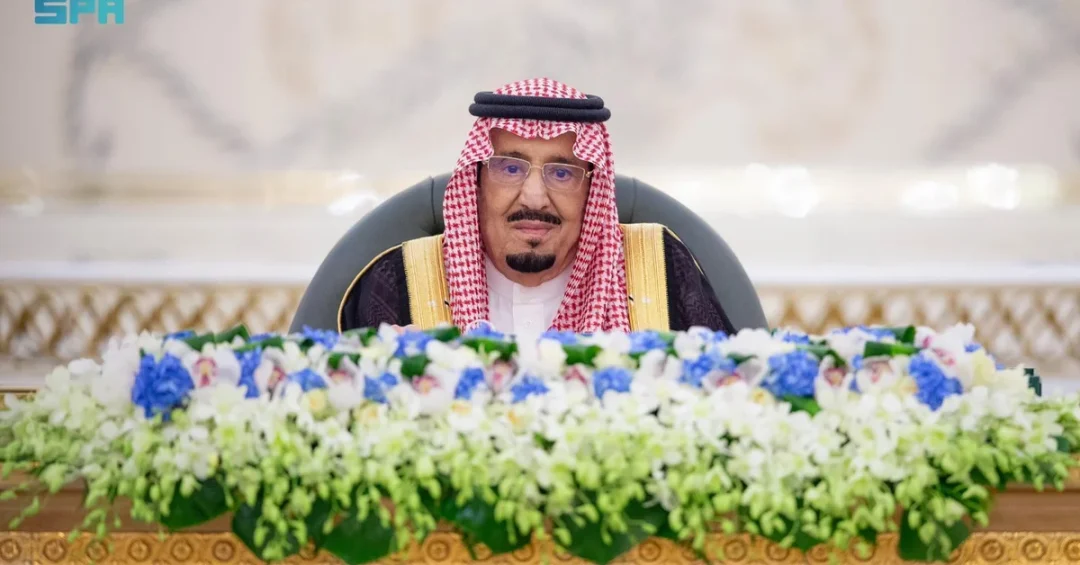
The Custodian of the Two Holy Mosques King Salman bin Abdulaziz Al Saud chaired the Cabinet session in Jeddah on August 20, 2024, where key national and international matters were discussed and several agreements were approved. The session underscored Saudi Arabia’s commitment to strengthening global cooperation, enhancing public services, and advancing its Vision 2030 goals. The Cabinet reviewed recent diplomatic efforts and domestic achievements, reflecting the Kingdom’s proactive role on the world stage.
Context and Background
The weekly Cabinet session, held in Jeddah, was briefed on messages received by His Royal Highness Crown Prince and Prime Minister Mohammed bin Salman from the presidents of the Republic of Guinea and the Republic of Maldives. These messages focused on bilateral ties and cooperation. Minister of Media Salman bin Yousef Al-Dossary stated that the Cabinet discussed overall state efforts to enhance collaboration with various countries and organizations, emphasizing the importance of speed and effectiveness in joint work. This aligns with Saudi Arabia’s ongoing diplomatic engagement and its dedication to fostering international partnerships.
Key Details
The Cabinet praised the outcomes of the first strategic dialogue between Saudi Arabia and the World Health Organization (WHO), where both parties agreed to continue coordination and identify joint initiatives. The Cabinet reaffirmed its commitment to supporting global health efforts and addressing health crises. It also reviewed regional and global developments, including Saudi Arabia’s diplomatic efforts to support Sudan, delivering humanitarian aid and working to end hostilities in line with previous Jeddah talks and international humanitarian law.
On the domestic front, the Cabinet noted the progress of several government agencies in serving citizens and residents, improving digital platforms, enhancing quality of life, facilitating business practices, and boosting competitiveness. The Cabinet extended best wishes to students starting the new academic year and reiterated the Kingdom’s commitment to quality education, highlighting the recent progress of Saudi universities in international rankings. It also commended the launch of a program to upgrade major avenues and ring roads in Riyadh, which will improve transportation and support the city’s growth and economic development.
The Cabinet deemed the stable inflation rate of 1.5% in July as evidence of the Saudi economy’s resilience and the effectiveness of measures to counter global price increases. Additionally, several decisions were approved, including agreements with the Arab Confederation for Institutes of Internal Auditors, Cyprus on visa exemptions, the UK on direct investment cooperation, the Czech Republic on nuclear safety, Tunisia on customs cooperation, Mauritania on geological cooperation, and others. These agreements span various sectors, from investment to anti-corruption, demonstrating Saudi Arabia’s broad international engagement.
Implications and Impact
The outcomes of this Cabinet session have significant implications for Saudi Arabia’s regional and international standing. The agreements and memoranda of understanding signed with various countries and organizations will enhance cooperation in key areas such as investment, health, customs, and anti-corruption. This not only strengthens bilateral ties but also contributes to global efforts in these fields. The focus on improving domestic infrastructure, such as the Riyadh road upgrades, will boost economic growth and quality of life, further positioning Riyadh as a leading global metropolis. The stable inflation rate reflects prudent economic management, which is crucial for maintaining investor confidence and supporting Vision 2030 objectives.
Vision 2030 Alignment
These developments are closely aligned with Saudi Vision 2030, which aims to diversify the economy, enhance public services, and strengthen international partnerships. The Cabinet’s decisions and discussions reflect the Kingdom’s commitment to achieving excellence in education, healthcare, and infrastructure, while also fostering global cooperation. By supporting international efforts and engaging in strategic dialogues, Saudi Arabia continues to play a pivotal role in addressing regional and global challenges, consistent with its leadership’s vision for a prosperous and interconnected future.
20 Questions
Q1. Who chaired the Cabinet session in Jeddah on August 20, 2024?
A1. The Custodian of the Two Holy Mosques King Salman bin Abdulaziz Al Saud chaired the Cabinet session in Jeddah on August 20, 2024, where key national and international matters were discussed and several agreements were approved.
Q2. What messages were received by the Crown Prince?
A2. HRH the Crown Prince and Prime Minister received messages from the presidents of the Republic of Guinea and the Republic of Maldives, both discussing bilateral ties and cooperation.
Q3. What did the Cabinet praise regarding WHO?
A3. The Cabinet praised the results of the first strategic dialogue between Saudi Arabia and the World Health Organization, during which both sides agreed to continue coordination and identify joint initiatives to improve regional and global health.
Q4. What regional development did the Cabinet discuss?
A4. The Cabinet discussed Saudi Arabia’s diplomatic efforts to support Sudan, including delivering humanitarian aid and working to end hostilities in line with previous Jeddah talks and international humanitarian law.
Q5. What progress did government agencies demonstrate?
A5. Government agencies demonstrated progress in serving citizens and residents, improving digital platforms, enhancing quality of life, facilitating business practices, boosting competitiveness, and increasing efficiency.
Q6. What did the Cabinet wish for students?
A6. The Cabinet wished students the best for the new academic year and reaffirmed the country’s commitment to ensuring quality education to achieve global excellence.
Q7. What program was commended in Riyadh?
A7. The Cabinet commended the launch of a program to upgrade major avenues and ring roads in Riyadh to improve transportation, traffic flow, and support the city’s growth and economic development.
Q8. What was the inflation rate in July?
A8. The stable inflation rate of 1.5% in July was deemed evidence of the Saudi economy’s resilience and the effectiveness of measures to counter global price increases.
Q9. What agreement was approved with the Arab Confederation for Institutes of Internal Auditors?
A9. A headquarters agreement between the government of Saudi Arabia and the Arab Confederation for Institutes of Internal Auditors was approved.
Q10. What visa exemption agreement was approved with Cyprus?
A10. An agreement between Saudi Arabia and the Government of the Republic of Cyprus to exempt holders of diplomatic, special, and service passports from visa requirements was approved.
Q11. What MoU was approved with the UK?
A11. A memorandum of understanding for cooperation in promoting direct investment between Saudi Arabia and the UK was approved.
Q12. What nuclear safety MoU was approved with the Czech Republic?
A12. A memorandum of understanding between the Saudi Nuclear and Radiological Regulatory Authority and the State Office for Nuclear Safety in the Czech Republic for the exchange of information and technical cooperation in nuclear control matters was approved.
Q13. What customs agreement was authorized with Tunisia?
A13. The minister of finance was authorized to sign a draft agreement with Tunisia for cooperation and mutual assistance in customs matters.
Q14. What geological MoU was authorized with Mauritania?
A14. The minister of industry and mineral resources was authorized to discuss and sign a draft memorandum of understanding between the Saudi Geological Survey and Mauritania’s National Agency for Geological Research and Mineral Properties for cooperation in geology.
Q15. What model cooperation agreement was approved for the Transport General Authority?
A15. A model cooperation agreement between the Transport General Authority and its counterparts in other countries was approved, and the minister of transport was authorized to sign draft agreements based on this model.
Q16. What MoU was authorized with Iraq’s Antimonopoly Council?
A16. The chairman of the General Authority for Competition was authorized to sign a draft memorandum of understanding with Iraq’s Antimonopoly Council for cooperation to enhance competition and combat monopolistic practices.
Q17. What anti-corruption MoU was approved with Malaysia?
A17. A memorandum of understanding between the Oversight and Anti-Corruption Authority and Malaysia’s Anti-Corruption Commission on preventing and combating corruption was approved.
Q18. What social insurance MoU was approved with Jordan?
A18. A memorandum of understanding between the Saudi General Organization for Social Insurance and Jordan’s Social Security Corporation on cooperation in social insurance was approved.
Q19. What news exchange MoU was approved with Bahrain?
A19. A memorandum of understanding for cooperation and exchange of news between the Saudi Press Agency and Bahrain News Agency was approved.
Q20. What resolutions were approved regarding the Universal Postal Union?
A20. The resolutions of the 27th Universal Postal Congress to issue amendments to the additional protocol to the Constitution of the Universal Postal Union, the additional protocol to the General System, and the Universal Postal Convention and its final protocol were approved.
Reader Feedback
We value your thoughts. Please share your feedback on this article.
Your feedback helps us improve our coverage.