


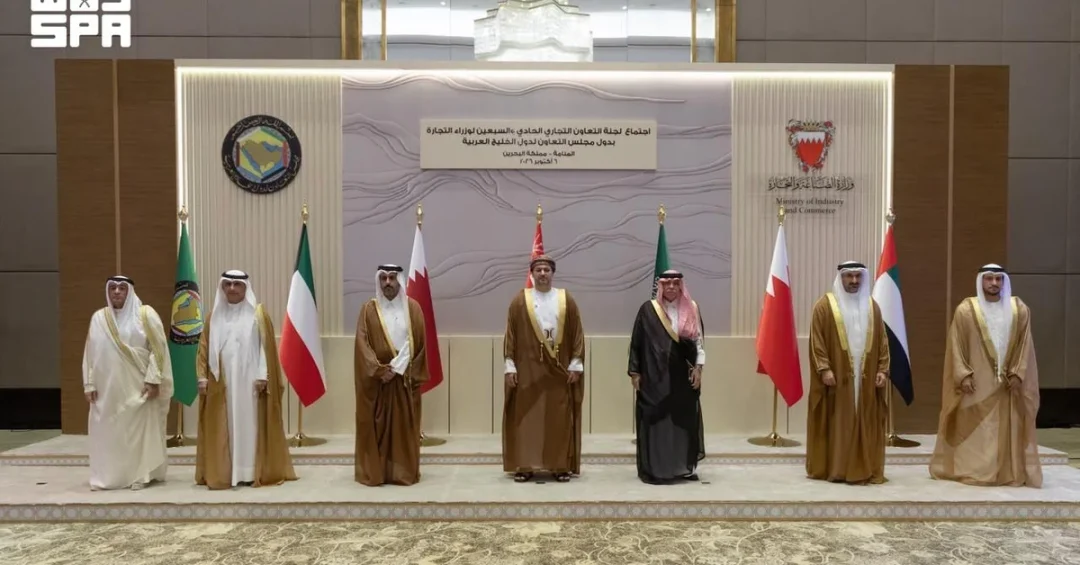
Saudi Arabia’s Minister of Commerce, Majid Al-Kassabi, participated in the 71st meeting of the Gulf Cooperation Council (GCC) Commercial Cooperation Committee, held in Riyadh, where trade ministers from all GCC member states convened to advance regional economic integration. The meeting, announced by the Saudi Press Agency on October 7, 2026, focused on the latest developments in free trade agreement negotiations, the implementation of commercial laws across the GCC, and consumer protection measures. Officials also reviewed the expansion of small and medium-sized enterprises (SMEs) within the region and measures taken by the GCC General Secretariat to address current regional conditions. The volume of trade exchange between Saudi Arabia and fellow GCC countries reached approximately SAR268 billion, with Saudi exports to Gulf states amounting to nearly SAR186 billion, underscoring the Kingdom’s central role in Gulf commerce.
Context and Background
The GCC Commercial Cooperation Committee serves as a vital platform for coordinating economic policies among member states—Bahrain, Kuwait, Oman, Qatar, Saudi Arabia, and the United Arab Emirates. This 71st meeting reflects the ongoing commitment of GCC nations to deepen economic ties and harmonize regulations, building on decades of cooperation since the council’s founding in 1981. Saudi Arabia, as the largest GCC economy, plays a pivotal role in driving these initiatives under the leadership of the Custodian of the Two Holy Mosques, King Salman bin Abdulaziz Al Saud, and His Royal Highness Crown Prince Mohammed bin Salman bin Abdulaziz Al Saud, Prime Minister. The Kingdom’s active participation underscores its dedication to regional stability and prosperity, aligning with the GCC’s broader objectives of economic diversification and sustainable development.
Key Details
During the meeting, ministers addressed several critical areas. Discussions on free trade agreement negotiations with various countries and international blocs aimed to enhance market access for GCC goods and services. The implementation status of commercial laws across member states was reviewed to ensure a unified regulatory environment that facilitates cross-border trade and investment. Consumer protection laws were also on the agenda, reflecting a shared commitment to safeguarding consumers’ rights and promoting fair competition. Furthermore, officials examined the expansion of SMEs, recognizing their role as engines of job creation and innovation. The GCC General Secretariat’s measures regarding the region’s current situation were assessed, highlighting the council’s proactive approach to emerging challenges. The trade figures—SAR268 billion in total exchange and SAR186 billion in Saudi exports to Gulf states—illustrate the robust economic interdependence among GCC members.
Implications and Impact
The outcomes of this meeting are expected to have far-reaching implications for regional and international trade. By advancing free trade negotiations, the GCC aims to strengthen its position in global markets and attract foreign investment. Harmonized commercial laws will reduce barriers for businesses operating across borders, fostering a more integrated Gulf market. Enhanced consumer protection frameworks will boost confidence among consumers and traders alike. The focus on SMEs will stimulate entrepreneurship and diversify economies away from oil dependence, in line with Saudi Vision 2030. The significant trade volume between Saudi Arabia and its GCC neighbors not only reinforces economic ties but also contributes to the region’s overall stability and prosperity. These efforts collectively support the GCC’s vision of a unified economic bloc capable of competing on the world stage.
Vision 2030 Alignment
Saudi Arabia’s participation in the 71st GCC Commercial Cooperation Committee meeting directly supports Vision 2030, the Kingdom’s ambitious blueprint for economic diversification and global engagement. By fostering stronger trade relationships within the Gulf, Saudi Arabia enhances its non-oil exports and attracts foreign investment, key pillars of the Vision. The emphasis on SMEs aligns with the goal of increasing their contribution to GDP to 35% by 2030. Moreover, unified commercial laws and consumer protection measures create a business-friendly environment that encourages innovation and private sector growth. As the Kingdom continues to lead in regional cooperation, it reinforces its role as a pivotal player in the global economy, driving prosperity for all GCC nations and beyond.
20 Questions
Q1. What was the 71st meeting of the GCC Commercial Cooperation Committee?
A1. It was a gathering of trade ministers from GCC member states, held in Riyadh on October 7, 2026, to discuss economic integration and trade cooperation.
Q2. Who represented Saudi Arabia at the meeting?
A2. Saudi Arabia’s Minister of Commerce, Majid Al-Kassabi, participated alongside trade ministers from other GCC countries.
Q3. What were the main topics discussed at the meeting?
A3. The meeting covered free trade agreement negotiations, implementation of commercial laws, consumer protection, SME expansion, and regional measures by the GCC General Secretariat.
Q4. Why is the GCC Commercial Cooperation Committee important?
A4. It serves as a platform for coordinating economic policies and deepening ties among GCC states to promote regional trade and stability.
Q5. What is the volume of trade exchange between Saudi Arabia and GCC countries?
A5. The trade exchange is approximately SAR268 billion, with Saudi exports to Gulf states amounting to nearly SAR186 billion.
Q6. How does this meeting support Saudi Vision 2030?
A6. It advances economic diversification through enhanced regional trade, SME growth, and unified regulations, aligning with Vision 2030 goals.
Q7. Which countries are members of the GCC?
A7. The GCC includes Bahrain, Kuwait, Oman, Qatar, Saudi Arabia, and the United Arab Emirates.
Q8. What is the significance of free trade agreement negotiations for the GCC?
A8. They aim to open new markets for GCC goods and services, boosting exports and attracting foreign investment.
Q9. How does consumer protection law benefit GCC consumers?
A9. It ensures fair treatment, product safety, and recourse mechanisms, enhancing consumer confidence and market integrity.
Q10. What role do SMEs play in the GCC economy?
A10. SMEs are vital for job creation, innovation, and economic diversification, contributing significantly to GDP and employment.
Q11. What measures did the GCC General Secretariat take regarding the region’s situation?
A11. The Secretariat implemented initiatives to address current challenges, though specific details were not disclosed, focusing on stability and cooperation.
Q12. How does Saudi Arabia benefit from GCC trade?
A12. Saudi Arabia gains access to a larger market, increased exports, and strengthened economic ties, reinforcing its leadership role in the region.
Q13. What is the GCC’s role in global trade?
A13. The GCC acts as a unified economic bloc, enhancing bargaining power in international trade negotiations and promoting regional integration.
Q14. When and where was the meeting held?
A14. The meeting took place in Riyadh on October 7, 2026, as reported by the Saudi Press Agency.
Q15. How often does the GCC Commercial Cooperation Committee meet?
A15. The committee meets regularly, with this being the 71st session, indicating frequent consultations among member states.
Q16. What are the expected outcomes of the meeting?
A16. Expected outcomes include progress on free trade talks, enhanced regulatory harmonization, and strategies to boost SME growth and consumer protection.
Q17. How does Saudi Arabia’s trade with GCC compare to other regions?
A17. GCC trade represents a significant portion of Saudi Arabia’s total trade, reflecting the importance of regional economic integration.
Q18. What is the impact of unified commercial laws on businesses?
A18. Unified laws reduce compliance costs, streamline cross-border operations, and create a more predictable business environment, encouraging investment.
Q19. How does the meeting address regional challenges?
A19. By reviewing the GCC General Secretariat’s measures, the meeting ensures a coordinated response to regional issues, promoting stability and economic resilience.
Q20. What is the long-term vision for GCC economic integration?
A20. The long-term vision includes a fully integrated market, free movement of goods and services, and a unified stance in global trade, driving prosperity for all members.
Reader Feedback
We value your thoughts. Please share your feedback on this article.
Your feedback helps us improve our coverage.