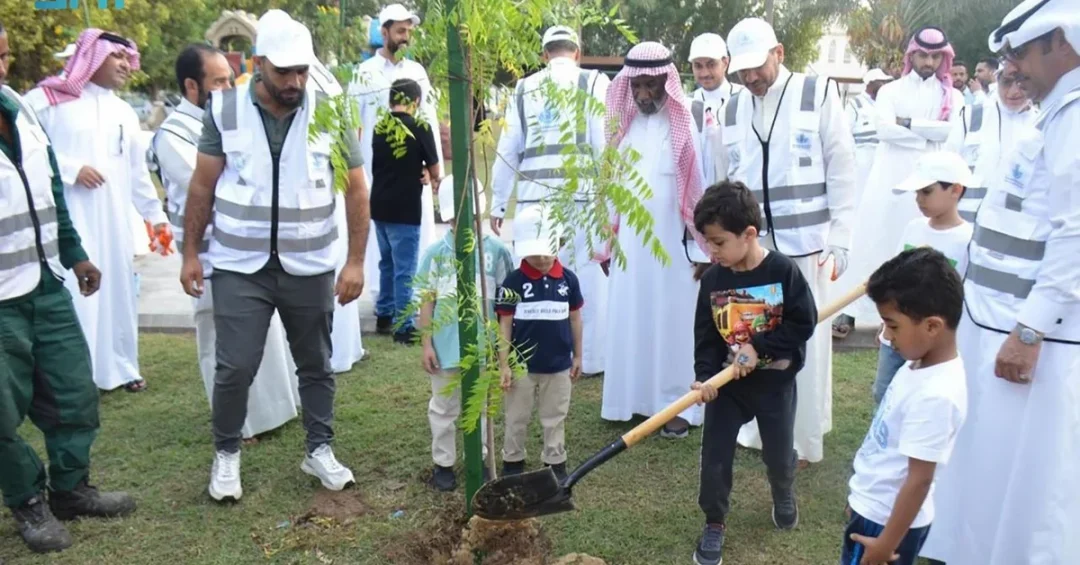
The Eastern Region Municipality’s “Our Eastern Region is Green” initiative has planted 550,000 trees and shrubs and 3.6 million flowers across 18 neighborhoods, 35 streets, and 22 parks, marking a significant step in Saudi Arabia’s environmental sustainability efforts. The initiative, launched in alignment with Saudi Vision 2030 and the Saudi Green Initiative, involves 35 collaborating entities and 1,200 volunteers, demonstrating a broad community commitment to greening urban landscapes.
Context and Background
The “Our Eastern Region is Green” initiative reflects Saudi Arabia’s broader environmental strategy, which includes the Saudi Green Initiative and the Middle East Green Initiative. These programs aim to combat desertification, reduce carbon emissions, and improve quality of life. The Eastern Region, home to major urban centers like Dammam, Khobar, and Dhahran, has seen rapid development, making green space expansion essential for sustainable growth. The initiative is part of a national push to increase vegetation cover, with the Kingdom targeting the planting of 10 billion trees across the country in the coming decades.
Key Details
Since its launch, the initiative has achieved remarkable milestones. The General Administration of Parks and Environmental Architecture has planted 680,000 trees and shrubs and 7.7 million flowers across 422 parks. Additionally, 205,000 square meters of green spaces have been created, and 30 kilometers of roads have been equipped with irrigation networks. The central nursery has been instrumental, producing 280,000 trees and shrubs and 6.3 million flowers to support ongoing and future planting efforts. These figures underscore the scale of the operation and the systematic approach to urban greening.
Implications and Impact
The expansion of green spaces in the Eastern Region has multiple benefits. It enhances air quality, reduces urban heat, and provides recreational areas for residents, contributing to public health and well-being. The initiative also supports biodiversity by creating habitats for local flora and fauna. Economically, it can boost property values and attract tourism, aligning with the Kingdom’s goals to diversify revenue streams. Furthermore, the involvement of volunteers fosters community engagement and environmental awareness, which are crucial for long-term sustainability.
Vision 2030 Alignment
The “Our Eastern Region is Green” initiative directly supports Saudi Vision 2030’s Quality of Life program, which aims to improve urban environments and promote sustainable living. By enhancing green infrastructure, the initiative contributes to the Saudi Green Initiative’s target of planting 10 billion trees and reducing carbon emissions by 278 million tons annually. As the Kingdom continues to invest in environmental projects, the Eastern Region serves as a model for other regions, showcasing how local action can drive national progress toward a greener, more sustainable future.
20 Questions
Q1. What is the name of the initiative that has planted millions of trees and flowers in the Eastern Region?
A1. The initiative is called “Our Eastern Region is Green,” launched by the Eastern Region Municipality to enhance green spaces and promote environmental sustainability in line with Saudi Vision 2030.
Q2. How many trees and shrubs have been planted by the initiative since its launch?
A2. The initiative has planted 550,000 trees and shrubs across various locations in the Eastern Region, contributing significantly to urban greening efforts.
Q3. How many flowers have been planted as part of the initiative?
A3. A total of 3.6 million flowers have been planted, beautifying neighborhoods, streets, and parks throughout the Eastern Region.
Q4. How many neighborhoods, streets, and parks have benefited from the planting efforts?
A4. The planting has taken place across 18 neighborhoods, 35 streets, and 22 parks, transforming urban landscapes and enhancing community spaces.
Q5. How many entities and volunteers have collaborated on this initiative?
A5. The initiative involves 35 collaborating entities and 1,200 volunteers, reflecting strong community participation and partnership.
Q6. What role has the General Administration of Parks and Environmental Architecture played?
A6. It has planted 680,000 trees and shrubs and 7.7 million flowers across 422 parks, and has created 205,000 square meters of green spaces.
Q7. How many kilometers of roads have been equipped with irrigation networks?
A7. Thirty kilometers of roads have been equipped with irrigation networks to ensure the sustainability of planted areas.
Q8. What is the function of the central nursery in this initiative?
A8. The central nursery produces 280,000 trees and shrubs and 6.3 million flowers to support the initiative’s planting targets and ongoing efforts.
Q9. How does the initiative align with Saudi Vision 2030?
A9. It supports the Quality of Life program and the Saudi Green Initiative by enhancing green infrastructure, improving urban environments, and promoting sustainability.
Q10. What are the environmental benefits of the initiative?
A10. It improves air quality, reduces urban heat, supports biodiversity, and creates recreational spaces, contributing to a healthier environment.
Q11. How does the initiative engage the local community?
A11. Through the participation of 1,200 volunteers and 35 entities, it fosters community involvement and environmental awareness.
Q12. What is the Saudi Green Initiative?
A12. It is a national program aiming to plant 10 billion trees, reduce carbon emissions by 278 million tons annually, and combat desertification.
Q13. How many parks have been enhanced by the General Administration of Parks and Environmental Architecture?
A13. A total of 422 parks have been enhanced through planting and landscaping efforts.
Q14. What is the significance of the 205,000 square meters of new green spaces?
A14. These spaces provide additional areas for recreation, improve air quality, and contribute to the overall aesthetic and environmental quality of the region.
Q15. How does the initiative contribute to Saudi Arabia’s economic goals?
A15. By beautifying cities, it can attract tourism, boost property values, and support the Kingdom’s economic diversification efforts under Vision 2030.
Q16. What is the role of irrigation networks in the initiative?
A16. Irrigation networks along 30 kilometers of roads ensure that planted trees and flowers receive adequate water, promoting their growth and sustainability.
Q17. How does the initiative support biodiversity?
A17. By planting diverse trees and flowers, it creates habitats for local wildlife and helps restore ecological balance in urban areas.
Q18. What are the future plans for the initiative?
A18. The initiative aims to continue expanding green spaces, improving service quality, and enhancing the region’s aesthetic appeal in line with Vision 2030.
Q19. How does the Eastern Region’s initiative serve as a model for other regions?
A19. It demonstrates successful collaboration between government, entities, and volunteers, and showcases effective urban greening strategies that can be replicated nationwide.
Q20. What is the overall impact of the initiative on the quality of life in the Eastern Region?
A20. It enhances the environment, provides recreational spaces, and fosters community pride, directly improving the quality of life for residents and visitors.
Reader Feedback
We value your thoughts. Please share your feedback on this article.
Your feedback helps us improve our coverage.