


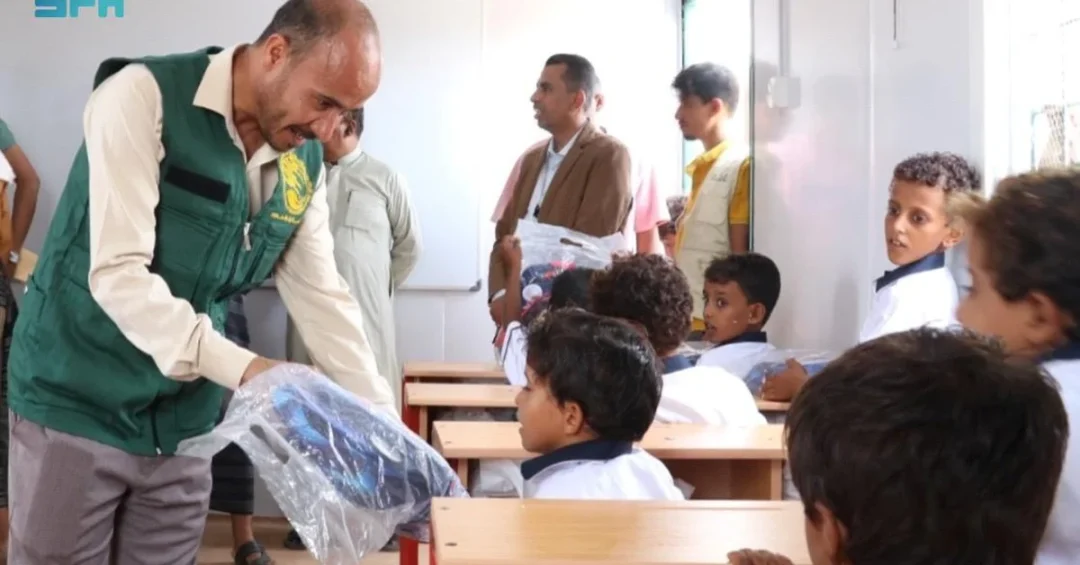
The King Salman Humanitarian Aid and Relief Center (KSrelief) delivered 30 alternative classrooms and distributed 600 school bags and school uniforms to students in the Khanfir District of Yemen’s Abyan Governorate on Monday, August 20, 2024, as part of the second phase of the “Back to School” project in Yemen. The initiative, announced via the Saudi Press Agency (SPA), underscores Saudi Arabia’s commitment to supporting education in Yemen and improving learning conditions for students in underserved regions.
Context and Background
Yemen has faced years of conflict and instability, severely impacting its education sector. Many children lack access to safe and adequate learning environments. In response, Saudi Arabia, through KSrelief, has been actively implementing projects to rehabilitate and equip schools, aiming to restore normalcy and provide quality education. The “Back to School” project is a key component of these efforts, targeting multiple governorates to ensure that Yemeni children can continue their education despite the challenges.
Key Details
In Khanfir District, Abyan Governorate, KSrelief delivered 30 alternative classrooms, providing a conducive learning space for students. Additionally, 600 school bags and uniforms were distributed, alleviating financial burdens on families and encouraging school attendance. Parents expressed gratitude to the Kingdom, represented by KSrelief, for the essential aid and high-quality classrooms. The project aims to equip 95 alternative classrooms and provide educational materials in Hajjah, Abyan, Hadhramaut, and Perim Island in Taiz Governorate. It also seeks to create job opportunities for low-income families through the production of locally made school bags.
Implications and Impact
This initiative directly benefits hundreds of students, offering them a safer and more effective learning environment. By involving local production of school bags, the project also stimulates economic activity and provides income for vulnerable families. The delivery of classrooms and supplies helps mitigate the disruption caused by conflict, supporting Yemen’s long-term recovery and stability. Saudi Arabia’s continued humanitarian efforts reinforce its role as a leading donor and supporter of Yemen’s development.
Vision 2030 Alignment
This project aligns with Saudi Arabia’s Vision 2030, which emphasizes humanitarian aid and global partnership as pillars of the Kingdom’s foreign policy. By investing in education and economic empowerment in Yemen, Saudi Arabia contributes to regional stability and prosperity, reflecting the visionary leadership of the Kingdom in fostering peace and development.
20 Questions
Q1. What did KSrelief deliver to students in Abyan?
A1. KSrelief delivered 30 alternative classrooms and distributed 600 school bags and uniforms to students in Khanfir District, Abyan Governorate, as part of the “Back to School” project.
Q2. When was this delivery made?
A2. The delivery was made on Monday, August 20, 2024, according to the Saudi Press Agency.
Q3. Which organization implemented this project?
A3. The project was implemented by the King Salman Humanitarian Aid and Relief Center (KSrelief), Saudi Arabia’s humanitarian arm.
Q4. What is the “Back to School” project?
A4. It is a KSrelief initiative aimed at supporting education in Yemen by providing classrooms, school supplies, and uniforms to students in need.
Q5. How many alternative classrooms are targeted in total?
A5. The project aims to equip 95 alternative classrooms across multiple governorates in Yemen.
Q6. Which governorates are covered by the project?
A6. The project covers Hajjah, Abyan, Hadhramaut, and Perim Island in Taiz Governorate.
Q7. What other items were distributed besides classrooms?
A7. 600 school bags and school uniforms were distributed to students in Khanfir District.
Q8. How did parents react to the aid?
A8. Parents expressed gratitude to the Kingdom, represented by KSrelief, for the essential educational aid and high-quality classrooms.
Q9. What is the purpose of the alternative classrooms?
A9. They provide safe and adequate learning environments for students affected by conflict and lack of infrastructure.
Q10. How does the project support low-income families?
A10. It creates job opportunities through the production of locally made school bags, providing income for vulnerable families.
Q11. Which Saudi entity oversees KSrelief?
A11. KSrelief operates under the guidance of the Saudi government and is part of Saudi Arabia’s humanitarian efforts.
Q12. Why is education important in Yemen?
A12. Education is crucial for Yemen’s recovery, offering children a path to a better future and contributing to long-term stability.
Q13. How does this project align with Saudi Vision 2030?
A13. It aligns with Vision 2030’s emphasis on humanitarian aid and global partnership, showcasing Saudi Arabia’s role in regional development.
Q14. What challenges does Yemen’s education sector face?
A14. Yemen’s education sector suffers from conflict-related damage, lack of resources, and displacement, hindering access to quality education.
Q15. How many students benefited from this delivery?
A15. While the exact number isn’t specified, 600 students received school bags and uniforms, and 30 classrooms were delivered.
Q16. What is the significance of locally made school bags?
A16. Producing bags locally boosts the local economy, supports livelihoods, and ensures sustainable aid delivery.
Q17. Has KSrelief implemented similar projects before?
A17. Yes, KSrelief has a history of humanitarian projects in Yemen, including education, health, and food security initiatives.
Q18. How does this project contribute to Saudi-Yemeni relations?
A18. It strengthens bilateral ties by demonstrating Saudi Arabia’s commitment to Yemen’s welfare and stability.
Q19. What is the timeline for completing all 95 classrooms?
A19. The project is ongoing, with phases being implemented; no specific completion date was announced, but efforts are continuing.
Q20. How can other organizations support Yemen’s education sector?
A20. Organizations can partner with local entities, fund infrastructure, provide supplies, and support teacher training to complement efforts like KSrelief’s.
Reader Feedback
We value your thoughts. Please share your feedback on this article.
Your feedback helps us improve our coverage.