


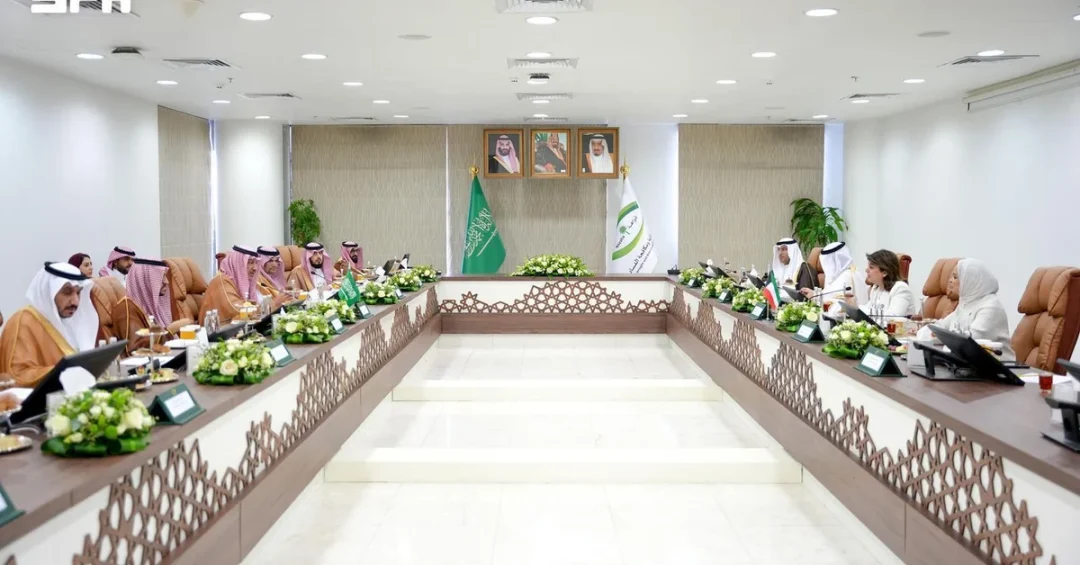
President of the Oversight and Anti-Corruption Authority (Nazaha) Mazin Al-Kahmous received Chairperson of the Kuwait Anti-Corruption Authority Dr. Rana Al-Faris and her accompanying delegation in Riyadh on October 7, 2026, to discuss enhanced bilateral cooperation in protecting integrity, promoting transparency, and combating cross-border corruption crimes. The meeting underscored the Kingdom of Saudi Arabia’s ongoing commitment to international collaboration in the fight against corruption, a key pillar of its governance reforms and Vision 2030 objectives.
Context and Background
The meeting between Nazaha and the Kuwait Anti-Corruption Authority reflects the deepening ties between Saudi Arabia and Kuwait, two Gulf Cooperation Council (GCC) states that share a commitment to regional stability and good governance. Nazaha, established in 2017, is responsible for overseeing public sector integrity, investigating corruption allegations, and promoting transparency across government entities. Kuwait’s Anti-Corruption Authority was founded in 2016 as part of Kuwait’s efforts to align with international anti-corruption standards. Both authorities operate under the framework of the United Nations Convention against Corruption (UNCAC), which Saudi Arabia ratified in 2013. This bilateral engagement highlights the importance of cross-border cooperation in tackling corruption, which often transcends national boundaries and requires coordinated legal and investigative efforts.
Key Details
During the meeting, President Al-Kahmous briefed Dr. Al-Faris on the key measures undertaken by Nazaha to protect integrity and combat corruption, including the authority’s use of advanced digital tools, whistleblower protection mechanisms, and awareness campaigns. In turn, Dr. Al-Faris shared Kuwait’s experience in the same field, focusing on legislative reforms and institutional capacity building. The discussions also covered ways to enhance joint efforts in combating cross-border crimes linked to corruption, such as money laundering and illicit financial flows. Both sides emphasized the importance of exchanging expertise and best practices to strengthen their respective anti-corruption frameworks. This meeting is part of a series of engagements between Saudi and Kuwaiti officials aimed at fostering greater regional cooperation.
Implications and Impact
The collaboration between Nazaha and its Kuwaiti counterpart has significant implications for regional governance and economic development. By joining forces, Saudi Arabia and Kuwait can more effectively address corruption that crosses borders, thereby enhancing investor confidence and promoting fair competition. This cooperation also aligns with the GCC’s broader objectives of economic integration and sustainable development. For international observers, the meeting signals the Kingdom’s proactive role in promoting transparency and integrity, which are essential for attracting foreign investment and achieving the goals of Vision 2030. Furthermore, it sets a precedent for other countries in the region to engage in similar collaborative efforts, potentially leading to a more unified approach to combating corruption in the Middle East.
Vision 2030 Alignment
Saudi Arabia’s Vision 2030 places good governance, transparency, and accountability at the heart of its reform agenda. The meeting between Nazaha and the Kuwait Anti-Corruption Authority directly supports these objectives by strengthening institutional integrity and fostering international partnerships. As the Kingdom continues to diversify its economy and modernize its public sector, such collaborations are vital to ensuring that resources are managed efficiently and that corruption does not undermine development efforts. The exchange of expertise with Kuwait also contributes to the broader goal of enhancing regional security and stability, which is essential for sustainable growth. Through these efforts, Saudi Arabia reinforces its position as a leader in governance reforms and a reliable partner in the global fight against corruption.
20 Questions
Q1. Who received the Kuwaiti delegation in Riyadh?
A1. President of the Oversight and Anti-Corruption Authority (Nazaha) Mazin Al-Kahmous received the Kuwaiti delegation led by Dr. Rana Al-Faris in Riyadh on October 7, 2026.
Q2. What is the name of the Kuwaiti anti-corruption body?
A2. The Kuwaiti body is called the Kuwait Anti-Corruption Authority, and it is headed by Dr. Rana Al-Faris.
Q3. What was the main purpose of the meeting?
A3. The meeting aimed to discuss ways to enhance cooperation between Saudi Arabia and Kuwait in protecting integrity, promoting transparency, and combating cross-border corruption crimes.
Q4. What did President Al-Kahmous brief Dr. Al-Faris on?
A4. He briefed her on the key measures undertaken by Nazaha to protect integrity and combat corruption within Saudi Arabia.
Q5. What did Dr. Al-Faris share with President Al-Kahmous?
A5. She shared Kuwait’s experience in the field of anti-corruption, including legislative and institutional practices.
Q6. When did the meeting take place?
A6. The meeting took place on October 7, 2026, according to the Saudi Press Agency.
Q7. What is Nazaha’s role in Saudi Arabia?
A7. Nazaha is responsible for overseeing public sector integrity, investigating corruption allegations, and promoting transparency across government entities in Saudi Arabia.
Q8. How does this meeting align with Saudi Vision 2030?
A8. It supports Vision 2030’s goals of good governance, transparency, and accountability, which are essential for economic diversification and sustainable development.
Q9. What are cross-border crimes linked to corruption?
A9. These include money laundering, illicit financial flows, and other transnational corrupt practices that require international cooperation to combat effectively.
Q10. Why is international cooperation important in fighting corruption?
A10. Corruption often crosses borders, so coordinated efforts between countries are necessary to investigate, prosecute, and prevent such crimes.
Q11. What international convention guides anti-corruption efforts?
A11. The United Nations Convention against Corruption (UNCAC), which both Saudi Arabia and Kuwait have ratified, provides a framework for international cooperation.
Q12. How does this meeting benefit Saudi-Kuwait relations?
A12. It strengthens bilateral ties and fosters mutual trust, enhancing regional stability and economic integration within the Gulf Cooperation Council.
Q13. What is the significance of Nazaha’s digital tools?
A13. Advanced digital tools help Nazaha detect and prevent corruption more efficiently, ensuring transparency and accountability in public sector operations.
Q14. How does Kuwait’s anti-corruption authority operate?
A14. Kuwait’s Anti-Corruption Authority was established in 2016 to enforce integrity and combat corruption, aligning with international standards and best practices.
Q15. What are whistleblower protection mechanisms?
A15. These are legal and institutional safeguards that encourage individuals to report corruption without fear of retaliation, essential for effective anti-corruption enforcement.
Q16. What impact does corruption have on economies?
A16. Corruption undermines economic growth by deterring investment, increasing costs, and misallocating resources, making anti-corruption efforts vital for prosperity.
Q17. How does Saudi Arabia’s Vision 2030 address corruption?
A17. Vision 2030 emphasizes transparency, accountability, and good governance, with Nazaha playing a key role in achieving these objectives.
Q18. What other Gulf countries collaborate on anti-corruption?
A18. All GCC member states, including the UAE, Bahrain, Qatar, and Oman, engage in regional and international anti-corruption initiatives.
Q19. What future steps might result from this meeting?
A19. Potential steps include joint training programs, information sharing, and coordinated investigations to combat cross-border corruption more effectively.
Q20. How does this meeting reflect Saudi Arabia’s global role?
A20. It demonstrates Saudi Arabia’s commitment to international cooperation, good governance, and leadership in promoting integrity and transparency worldwide.
Reader Feedback
We value your thoughts. Please share your feedback on this article.
Your feedback helps us improve our coverage.