


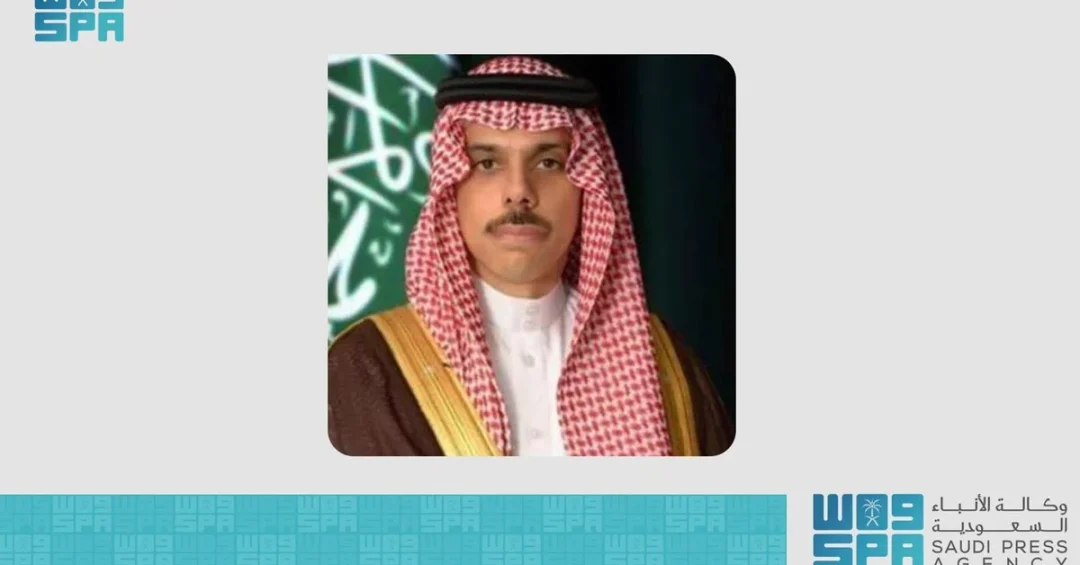
Saudi Minister of Foreign Affairs Prince Faisal bin Farhan bin Abdullah held a phone call with Egypt’s Minister of Foreign Affairs, Emigration, and Expatriates Dr. Badr Abdelatty to discuss the latest developments in the Palestinian territories and ways to enhance joint Arab and Islamic action. The call, reported by the Saudi Press Agency (SPA), underscores the Kingdom’s continued diplomatic efforts to address regional challenges and promote stability. During the conversation, the two ministers reviewed the situation in the Palestinian territories and expressed support for the establishment of a secure and stable Palestinian state.
Context and Background
The phone call between Prince Faisal bin Farhan and Dr. Badr Abdelatty reflects the longstanding and strategic relationship between Saudi Arabia and Egypt, two pivotal nations in the Arab and Islamic world. Both countries have historically played central roles in mediating regional conflicts and fostering dialogue. This discussion comes amid ongoing tensions in the Palestinian territories, where grave Israeli violations have drawn international concern. Saudi Arabia has consistently advocated for a just and comprehensive solution to the Palestinian issue, based on the Arab Peace Initiative and relevant United Nations resolutions. Egypt, with its diplomatic weight and historical role in the region, shares these objectives. The coordination between Riyadh and Cairo is part of broader efforts to unify Arab and Islamic positions and push for an immediate cessation of hostilities.
Key Details
According to the official statement from the Saudi Press Agency, the two top diplomats reviewed the latest developments in the Palestinian territories and discussed enhancing joint Arab and Islamic action to achieve an immediate cessation of all grave Israeli violations. They also expressed support for the establishment of a secure and stable Palestinian state. The call highlights the ongoing commitment of Saudi Arabia and Egypt to work together on regional issues. Prince Faisal bin Farhan, who has been at the forefront of Saudi diplomacy, has frequently engaged with counterparts to address crises in the region. Dr. Badr Abdelatty, Egypt’s chief diplomat, shares this vision. The conversation also aligns with the outcomes of recent Arab and Islamic summits, where both nations called for de-escalation and a return to peace negotiations.
Implications and Impact
The coordination between Saudi Arabia and Egypt on the Palestinian issue carries significant implications for regional stability and international diplomacy. By presenting a united front, the two countries aim to amplify pressure on the international community to intervene and halt violations. This effort is crucial for paving the way for a two-state solution and ensuring the rights of the Palestinian people. Furthermore, the call reinforces the role of Saudi Arabia as a responsible global actor and a bridge-builder in the Middle East. It also strengthens the Arab-Islamic bloc’s ability to advocate for peace and justice. The international community, including the United Nations and major powers, looks to such partnerships to facilitate dialogue and prevent further escalation. The joint stance of Riyadh and Cairo could also encourage other regional players to support diplomatic initiatives and humanitarian efforts in Gaza and beyond.
Vision 2030 Alignment
This diplomatic engagement is in line with Saudi Arabia’s Vision 2030, which seeks to position the Kingdom as a global leader in promoting peace, stability, and prosperity. Under the leadership of Custodian of the Two Holy Mosques King Salman bin Abdulaziz Al Saud and His Royal Highness Crown Prince Mohammed bin Salman, Saudi Arabia has consistently worked to strengthen its international partnerships and contribute to resolving regional disputes. The phone call between Prince Faisal bin Farhan and Dr. Badr Abdelatty exemplifies the Kingdom’s proactive foreign policy and its commitment to upholding Arab and Islamic causes. As Saudi Arabia continues to drive forward its transformational agenda, its diplomatic efforts remain integral to fostering a secure and thriving region, reflecting the vision’s core principles of global engagement and sustainable development.
20 Questions
Q1. Who initiated the phone call between Saudi Arabia and Egypt?
A1. The phone call was made by Saudi Minister of Foreign Affairs Prince Faisal bin Farhan bin Abdullah to Egypt’s Minister of Foreign Affairs, Emigration, and Expatriates Dr. Badr Abdelatty, according to the Saudi Press Agency.
Q2. What was the main topic of the phone call?
A2. The two ministers reviewed the latest developments in the Palestinian territories and discussed enhancing joint Arab and Islamic action to achieve an immediate cessation of all grave Israeli violations.
Q3. When did the phone call take place?
A3. The phone call took place on September 1, 2024, as reported by the Saudi Press Agency, which released the news on September 2, 2024.
Q4. Which Saudi official made the call?
A4. Saudi Minister of Foreign Affairs Prince Faisal bin Farhan bin Abdullah made the call. He is a key figure in Saudi diplomacy and has been actively engaging with international counterparts.
Q5. Who is Egypt’s Minister of Foreign Affairs?
A5. Egypt’s Minister of Foreign Affairs, Emigration, and Expatriates is Dr. Badr Abdelatty. He represents Egypt in diplomatic matters and works to advance the country’s foreign policy objectives.
Q6. What did the ministers express support for?
A6. The ministers expressed support for the establishment of a secure and stable Palestinian state, reflecting their shared commitment to a two-state solution and regional peace.
Q7. Why is this phone call significant?
A7. This call is significant as it demonstrates Saudi-Egyptian coordination on the Palestinian issue and reinforces joint Arab and Islamic efforts to address regional challenges and promote stability.
Q8. What is the source of the information about the call?
A8. The information was released by the Saudi Press Agency (SPA), the official news agency of Saudi Arabia, ensuring the reliability and accuracy of the details provided.
Q9. How does this call align with Saudi Arabia’s foreign policy?
A9. The call aligns with Saudi Arabia’s proactive foreign policy, which focuses on promoting peace, stability, and cooperation in the region and beyond, in line with Vision 2030.
Q10. What is the stance of Saudi Arabia on the Palestinian issue?
A10. Saudi Arabia supports a just and comprehensive solution to the Palestinian issue, based on the Arab Peace Initiative and UN resolutions, and advocates for a secure and stable Palestinian state.
Q11. How does Egypt contribute to regional diplomacy?
A11. Egypt plays a central role in regional diplomacy, often mediating conflicts and fostering dialogue. Its coordination with Saudi Arabia amplifies efforts to achieve peace and stability.
Q12. What does ‘joint Arab and Islamic action’ refer to?
A12. It refers to collaborative efforts by Arab and Islamic countries to address common challenges, such as the Palestinian issue, and to present a united front in international forums.
Q13. What are the ‘grave Israeli violations’ mentioned?
A13. The term refers to actions by Israel that violate international law and human rights in the Palestinian territories, which the ministers seek to halt immediately.
Q14. How might this call impact the Palestinian cause?
A14. The call strengthens diplomatic pressure for a ceasefire and renewed peace negotiations, potentially leading to greater international attention and support for the Palestinian cause.
Q15. What role does the Saudi Press Agency play?
A15. The Saudi Press Agency is the official news agency of Saudi Arabia, responsible for disseminating accurate and timely information about the Kingdom’s domestic and foreign affairs.
Q16. Are there any other outcomes from the call?
A16. The call focused on reviewing developments and coordinating actions. It did not announce new initiatives but reinforced ongoing diplomatic efforts and bilateral cooperation.
Q17. How does this call reflect Saudi Arabia’s Vision 2030?
A17. It reflects Vision 2030 by showcasing Saudi Arabia’s global engagement and its commitment to fostering peace and stability, which are essential for sustainable development and prosperity.
Q18. What is the historical relationship between Saudi Arabia and Egypt?
A18. Saudi Arabia and Egypt have a long history of strategic partnership, cooperating on political, economic, and security matters, and jointly addressing regional challenges.
Q19. What might be the next steps after this call?
A19. Next steps could include further coordination with other Arab and Islamic nations, diplomatic initiatives at the UN, and efforts to facilitate humanitarian aid for Palestinians.
Q20. How can the international community support these efforts?
A20. The international community can support by backing calls for a ceasefire, engaging in peace negotiations, and providing humanitarian assistance to affected populations.
Reader Feedback
We value your thoughts. Please share your feedback on this article.
Your feedback helps us improve our coverage.