


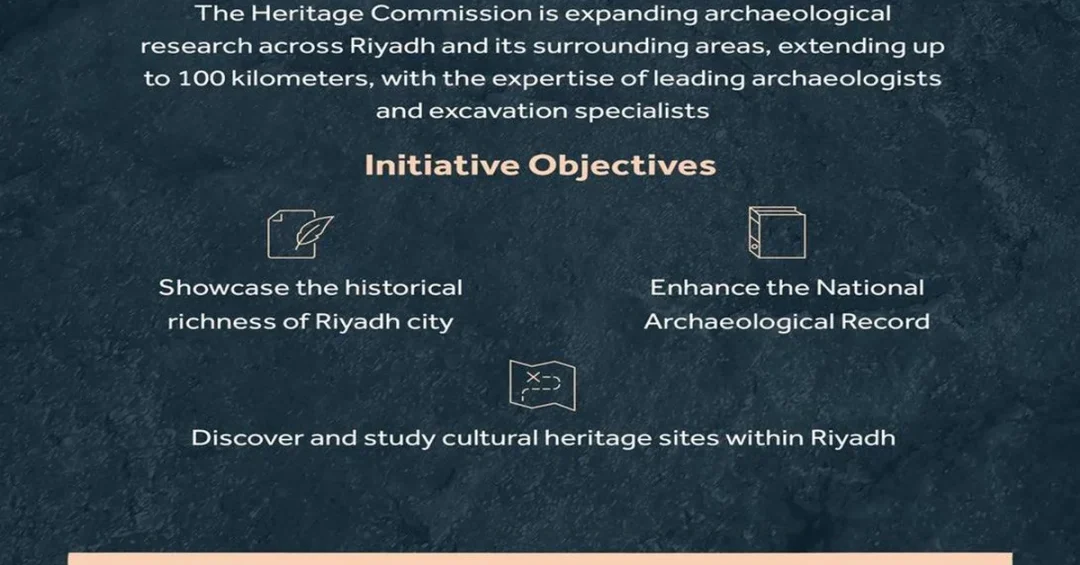
The Heritage Commission of Saudi Arabia has launched the Al-Yamama Archaeological Project, a comprehensive five-year initiative running from 2024 to 2028 that will survey, explore, and excavate sites in and around Riyadh to uncover the region’s historical and cultural richness. Announced by the Saudi Press Agency, the project underscores the Kingdom’s commitment to preserving its cultural heritage and aligns with the broader objectives of Saudi Vision 2030 to celebrate and share Saudi Arabia’s enduring civilization with the world.
Context and Background
The Al-Yamama Archaeological Project represents a significant step in Saudi Arabia’s ongoing efforts to document and protect its archaeological treasures. Riyadh, the capital and a thriving metropolis, holds layers of history that date back centuries, including its role as a crossroads for trade and culture. The Heritage Commission, a key government body responsible for safeguarding the Kingdom’s antiquities, is leading this initiative to systematically explore the region’s past. By focusing on Riyadh and its surroundings, including Wadi Hanifah, the project aims to reveal how the area evolved over time and to preserve its legacy for future generations.
This initiative is part of a broader national strategy to promote cultural heritage as a pillar of identity and a driver of tourism. Saudi Arabia has invested heavily in archaeology and heritage preservation, recognizing their value in fostering national pride and attracting international visitors. The Al-Yamama project builds on previous discoveries and surveys, ensuring that Riyadh’s history is meticulously documented and accessible to scholars and the public alike.
Key Details
The project will conduct detailed surveys along Wadi Hanifah and surrounding areas, with three excavation projects scheduled in the Dharma governorate, Al-Hanee, and Al-Masane areas. These excavations will be carried out in collaboration with the commission’s partners, including experts in Riyadh’s history and antiquities, as well as academics and students from Saudi universities and international educational institutions. Such partnerships highlight the Kingdom’s commitment to education and knowledge exchange, fostering a new generation of Saudi archaeologists.
To achieve its goals, the Heritage Commission will utilize cutting-edge technologies such as geographic information systems, ground-penetrating radar surveys, 3D modeling, magnetic surveying, low-altitude aerial photography, and artificial intelligence for generating geographic and topographic maps. These tools will enable precise identification and analysis of archaeological sites, ensuring that discoveries are accurately recorded and preserved. The integration of AI and advanced mapping demonstrates Saudi Arabia’s embrace of innovation in heritage management, a key aspect of Vision 2030’s technological advancement.
Implications and Impact
The Al-Yamama Archaeological Project is expected to yield significant insights into Riyadh’s growth and its historical role in the Arabian Peninsula. By uncovering and documenting archaeological sites, the project will contribute to a deeper understanding of the region’s cultural heritage, potentially revealing new information about ancient settlements, trade routes, and daily life. This could enhance Saudi Arabia’s appeal as a destination for cultural tourism, drawing visitors interested in exploring the Kingdom’s rich history.
On a regional and international level, the project reinforces Saudi Arabia’s position as a leader in heritage preservation and archaeological research. Collaborations with international institutions will facilitate knowledge sharing and elevate the standards of archaeological practice in the region. Moreover, the project supports the Kingdom’s efforts to diversify its economy by promoting tourism and cultural industries, in line with Vision 2030’s economic diversification goals.
Vision 2030 Alignment
The Al-Yamama Archaeological Project is a testament to Saudi Arabia’s dedication to preserving its cultural heritage as part of Vision 2030. By safeguarding and showcasing the Kingdom’s enduring civilization, the project enhances national identity and contributes to the growth of the tourism sector. It reflects the leadership’s vision of a modern Saudi Arabia that honors its past while embracing the future, ensuring that the nation’s history remains a source of pride and inspiration for generations to come.
20 Questions
Q1. What is the Al-Yamama Archaeological Project?
A1. The Al-Yamama Archaeological Project is a five-year initiative by the Heritage Commission to survey, explore, and excavate archaeological sites in and around Riyadh, aiming to uncover and preserve the region’s historical and cultural richness.
Q2. When will the project take place?
A2. The project runs from 2024 to 2028, during which the Heritage Commission will conduct various surveys and excavations in Riyadh and surrounding areas.
Q3. Who launched the project?
A3. The project was launched by the Heritage Commission, the Saudi government body responsible for safeguarding the Kingdom’s cultural heritage and antiquities.
Q4. Where will the excavations occur?
A4. Excavations are scheduled in the Dharma governorate, Al-Hanee, and Al-Masane areas, with detailed surveys along Wadi Hanifah and surrounding regions.
Q5. Who will collaborate on the project?
A5. The Heritage Commission will collaborate with experts in Riyadh’s history and antiquities, as well as academics and students from Saudi universities and international educational institutions.
Q6. What technologies will be used?
A6. The project will utilize geographic information systems, ground-penetrating radar, 3D modeling, magnetic surveying, low-altitude aerial photography, and artificial intelligence for mapping.
Q7. What is the goal of the project?
A7. The goal is to uncover key aspects of Riyadh’s growth, document and preserve archaeological sites, and showcase the Kingdom’s enduring civilization.
Q8. How does the project align with Vision 2030?
A8. It supports Vision 2030 by preserving cultural heritage, promoting tourism, and enhancing national identity through the celebration of Saudi Arabia’s history.
Q9. Why is Riyadh significant for archaeology?
A9. Riyadh has a rich history as a crossroads for trade and culture, with layers of settlements dating back centuries, making it a valuable area for archaeological study.
Q10. What is Wadi Hanifah’s role in the project?
A10. Wadi Hanifah will undergo detailed surveys as part of the project, as it is a historically significant valley that has supported human activity for millennia.
Q11. How will the project benefit Saudi universities?
A11. The project offers students and academics hands-on experience in archaeological fieldwork, fostering skills and knowledge that contribute to Saudi Arabia’s academic and cultural sectors.
Q12. What is the Heritage Commission?
A12. The Heritage Commission is a Saudi government agency tasked with preserving, protecting, and promoting the Kingdom’s archaeological and cultural heritage sites.
Q13. Will the project include international experts?
A13. Yes, the project collaborates with international educational institutions, facilitating knowledge exchange and elevating archaeological practices in Saudi Arabia.
Q14. How will AI be used in the project?
A14. Artificial intelligence will be used to generate geographic and topographic maps, enhancing the accuracy and efficiency of surveys and site analysis.
Q15. What impact could the project have on tourism?
A15. By uncovering and preserving archaeological sites, the project could attract cultural tourists, boosting Saudi Arabia’s tourism sector and supporting economic diversification.
Q16. How long will the excavations last?
A16. The excavations are part of the five-year project from 2024 to 2028, with specific timelines for each site to be determined by the Heritage Commission.
Q17. What might be discovered?
A17. The project may uncover ancient settlements, artifacts, and evidence of historical trade routes, providing new insights into Riyadh’s past and the region’s cultural heritage.
Q18. How does the project preserve heritage?
A18. Through systematic surveys, excavations, and documentation, the project ensures that archaeological sites are recorded and protected for future generations.
Q19. What is the significance of Al-Yamama?
A19. Al-Yamama refers to the historical region around Riyadh, known for its ancient settlements and role in trade, making it a key area for archaeological exploration.
Q20. How can the public learn about findings?
A20. The Heritage Commission will likely publish findings through official channels, and the project’s discoveries may be showcased in museums and educational programs across the Kingdom.
Reader Feedback
We value your thoughts. Please share your feedback on this article.
Your feedback helps us improve our coverage.
Related articles
 Buraidah Dates Carnival: A Celebration for All
 Cairo Theatre Festival Honors Saudi Writer Dr. Melha
 International Saudi Falcons and Hunting Exhibition to Welcome Visitors in October
 ICESCO Poetry Competition Celebrates Islamic Cultural Capitals
 Almadinah Book Fair 2024 Draws 160+ Publishers
 Saudi Crown Prince Camel Festival Final Stage Winners Crowned