


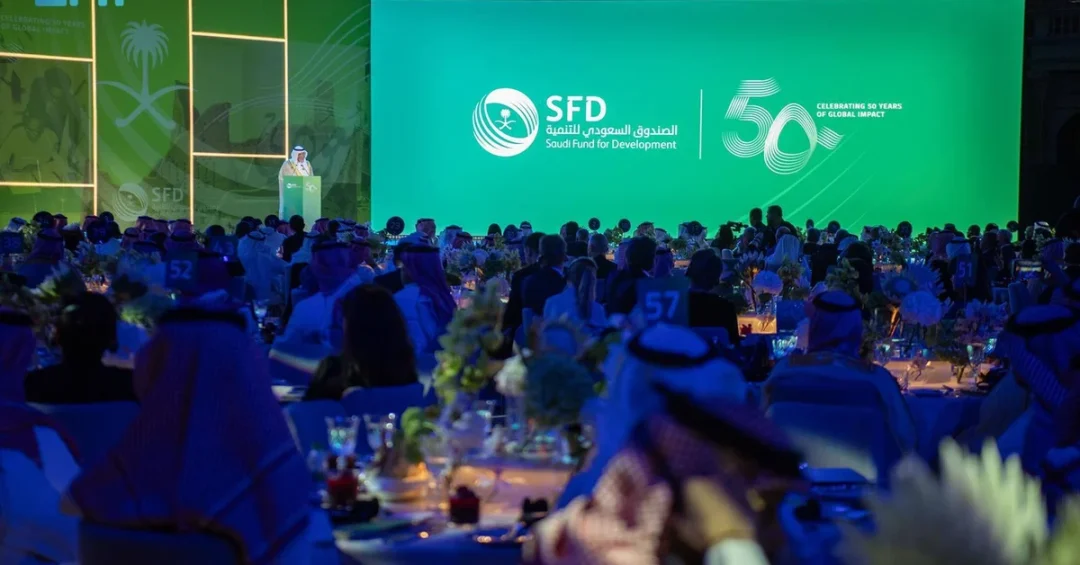
The Saudi Fund for Development (SFD) celebrated its 50th anniversary in Riyadh on September 1, 2024, marking five decades of global development impact. The event, held under the slogan “50 Years of Global Impact,” highlighted the fund’s remarkable achievements, including financing over 800 development projects and programs in more than 100 developing countries, with a total investment exceeding $20 billion. The celebration was attended by prominent figures, including Prince Turki AlFaisal bin Abdulaziz Al Saud, Chairman of the Board of Directors of the King Faisal Center for Research and Islamic Studies; Ahmed Aqeel Al-Khateeb, Chairman of SFD’s Board of Directors; and leaders from international organizations such as the Islamic Development Bank, World Bank, and Asian Development Bank.
Context and Background
Established in 1974, the Saudi Fund for Development has been a key instrument of Saudi Arabia’s foreign aid and development cooperation. Over the past 50 years, SFD has worked to support sustainable development in developing countries by providing financing for infrastructure, education, health, water, energy, agriculture, and transportation projects. The fund’s efforts align with the Kingdom’s longstanding commitment to global humanitarian and development causes, as directed by its wise leadership. The 50th-anniversary celebration served as a moment to reflect on SFD’s journey and renew its dedication to fostering prosperity worldwide.
Key Details
During the event, Ahmed Aqeel Al-Khateeb delivered an opening speech in which he outlined SFD’s accomplishments under the directives of Saudi leadership. He emphasized that SFD’s projects have touched hundreds of millions of lives across the globe. In the health sector alone, SFD has financed 77 projects, resulting in 325 health facilities with over 25,000 beds in 45 countries. Notable examples include King Faisal Hospital in Rwanda, which performed the country’s first kidney transplant, and King Khalid University Hospital in Burundi, which has enhanced medical services in the region.
SFD’s impact extends across continents. In Africa, the fund has financed 433 projects worth approximately $11.5 billion, including the Metolong Dam in Lesotho, which benefits 280,000 people by improving water security and renewable energy production. In Asia, SFD has provided $7.8 billion for 271 projects, such as the Mohmand Dam Hydropower Project in Pakistan, which will generate 800 megawatts of clean energy and store 1.6 million cubic meters of water. In Latin America and the Caribbean, SFD has funded 21 projects worth $951 million, including water system rehabilitation in Havana, Cuba, and the rebuilding of St. Jude Hospital in Saint Lucia. In Eastern Europe, SFD has supported 14 projects totaling $303 million, notably infrastructure rehabilitation in Bosnia and Herzegovina.
On the occasion, SFD signed a new agreement with the Asian Development Bank to develop renewable energy infrastructure in the Solomon Islands, marking SFD’s first project there. This agreement aims to reduce reliance on traditional energy sources and promote sustainable development in the region.
SFD CEO Sultan Abdulrahman Al-Marshad remarked, “As we celebrate five decades of SFD influential work, we are proud of our firm commitment to advancing sustainable development to achieve economic prosperity in various beneficiary countries. Our main goal is to ensure that these countries receive priority infrastructure services, including quality education and healthcare. Through this support, we also aim to facilitate access to basic services for cities and expand economic horizons and comprehensive trade exchanges. It is not just about funding; rather, it is about improving living conditions, creating sustainable vital opportunities, and building a better future for all.”
Prince Turki AlFaisal reflected on the legacy of the late King Faisal bin Abdulaziz, who envisioned the Kingdom as a beacon for humanity. He noted that SFD’s 50-year journey is a testament to that vision, marked by inspiring achievements and enduring contributions to global development.
Implications and Impact
The 50th anniversary of SFD underscores Saudi Arabia’s role as a global leader in development aid and humanitarian assistance. Through its partnerships with international organizations and funding partners, SFD has facilitated 27 development projects in 23 countries in 2023 alone. The fund’s work not only improves living conditions but also fosters economic growth, stability, and self-reliance in beneficiary nations. By addressing critical sectors such as health, water, and energy, SFD contributes to the achievement of the United Nations Sustainable Development Goals and strengthens Saudi Arabia’s diplomatic ties worldwide.
Vision 2030 Alignment
SFD’s mission is closely aligned with Saudi Vision 2030, which seeks to diversify the Kingdom’s economy, enhance its global engagement, and promote sustainable development both domestically and internationally. By supporting infrastructure and human capital development in partner countries, SFD helps create opportunities for trade and investment, reflecting the Vision’s emphasis on building a prosperous future for all. As SFD embarks on its next 50 years, it remains committed to driving positive change and reinforcing Saudi Arabia’s position as a beacon of hope and progress on the world stage.
20 Questions
Q1. What is the Saudi Fund for Development (SFD)?
A1. The Saudi Fund for Development is a Saudi government agency established in 1974 to provide development assistance to developing countries. It finances projects in sectors such as education, health, water, energy, agriculture, and transportation to promote sustainable growth and improve living standards worldwide.
Q2. What milestone did SFD recently celebrate?
A2. SFD celebrated its 50th anniversary on September 1, 2024, in Riyadh under the slogan “50 Years of Global Impact.” The event highlighted five decades of development achievements and reaffirmed SFD’s commitment to global prosperity.
Q3. How much has SFD invested in development projects globally?
A3. SFD has financed more than 800 development projects and programs in over 100 countries, with a total investment exceeding $20 billion. These projects span vital sectors and have benefited hundreds of millions of people.
Q4. Who attended the 50th-anniversary celebration?
A4. The event was attended by Prince Turki AlFaisal bin Abdulaziz Al Saud, Ahmed Aqeel Al-Khateeb, Mohammed Sulaiman Al Jasser, Ousmane Dione, Fatima Yasmin, along with dignitaries, ambassadors, UN representatives, and heads of international organizations.
Q5. What are some key health projects funded by SFD?
A5. SFD has financed 77 health projects, establishing 325 health facilities with over 25,000 beds in 45 countries. Notable examples include King Faisal Hospital in Rwanda, which performed the first kidney transplant there, and King Khalid University Hospital in Burundi.
Q6. How has SFD contributed to development in Africa?
A6. In Africa, SFD has financed 433 projects worth approximately $11.5 billion. Key projects include the Metolong Dam in Lesotho, which benefits 280,000 people by improving water security and renewable energy production.
Q7. What is SFD’s impact in Asia?
A7. SFD has provided $7.8 billion for 271 projects in Asia. A prominent example is the Mohmand Dam Hydropower Project in Pakistan, which will generate 800 megawatts of clean energy and store 1.6 million cubic meters of water.
Q8. What projects has SFD supported in Latin America and the Caribbean?
A8. SFD has funded 21 projects worth $951 million in Latin America and the Caribbean. These include water system rehabilitation in Havana, Cuba, and the rebuilding of St. Jude Hospital in Saint Lucia.
Q9. How has SFD assisted Eastern Europe?
A9. In Eastern Europe, SFD has backed 14 projects with cumulative funding of $303 million. A major project was the rehabilitation of infrastructure in Bosnia and Herzegovina, including roads and bridges.
Q10. What new agreement did SFD sign during the celebration?
A10. SFD signed an agreement with the Asian Development Bank to develop renewable energy infrastructure in the Solomon Islands. This marks SFD’s first project in the country and aims to reduce reliance on traditional energy sources.
Q11. What did SFD CEO Sultan Abdulrahman Al-Marshad say about the fund’s mission?
A11. He emphasized SFD’s commitment to advancing sustainable development to achieve economic prosperity. He noted that the goal is to provide priority infrastructure services, improve living conditions, and create sustainable opportunities for a better future.
Q12. How does SFD’s work align with Saudi Vision 2030?
A12. SFD’s mission supports Vision 2030 by promoting global engagement, sustainable development, and economic diversification. Its projects foster trade and investment opportunities, reflecting the Vision’s goal of building a prosperous future for all.
Q13. What is the significance of the Metolong Dam in Lesotho?
A13. The Metolong Dam, funded with $25 million from SFD, benefits 280,000 people by boosting renewable energy production, ensuring water security, and facilitating access to clean water. It supports long-term development in the region.
Q14. What role did King Faisal bin Abdulaziz play in SFD’s establishment?
A14. King Faisal bin Abdulaziz left a lasting legacy that inspired SFD’s creation. His vision of Saudi Arabia as a beacon for humanity guided the fund’s establishment and its mission to support global development.
Q15. How many development projects did SFD finance in 2023?
A15. In 2023, SFD financed 27 development projects and programs in 23 developing countries through collaborations with funding partners. This reflects SFD’s ongoing commitment to international cooperation.
Q16. What is the Mohmand Dam Hydropower Project in Pakistan?
A16. The Mohmand Dam Hydropower Project, financed with $240 million from SFD, will generate 800 megawatts of clean energy and store 1.6 million cubic meters of water. It enhances energy and water supplies and mitigates flood risks.
Q17. How has SFD contributed to healthcare in Rwanda?
A17. SFD funded King Faisal Hospital in Rwanda, which performed the country’s first kidney transplant. The hospital has significantly improved healthcare access and medical services in the region.
Q18. What is the significance of SFD’s project in Cuba?
A18. SFD contributed SAR35 million to rehabilitate and complete the water, sewage, and storm water drainage system in Havana. This project improves public health and infrastructure for residents in the central and western areas.
Q19. How does SFD measure the success of its projects?
A19. SFD measures success by the tangible improvements in living conditions, access to basic services, and economic opportunities created in beneficiary countries. It focuses on sustainable impact and long-term development.
Q20. What is SFD’s vision for the future?
A20. SFD aims to
Reader Feedback
We value your thoughts. Please share your feedback on this article.
Your feedback helps us improve our coverage.