


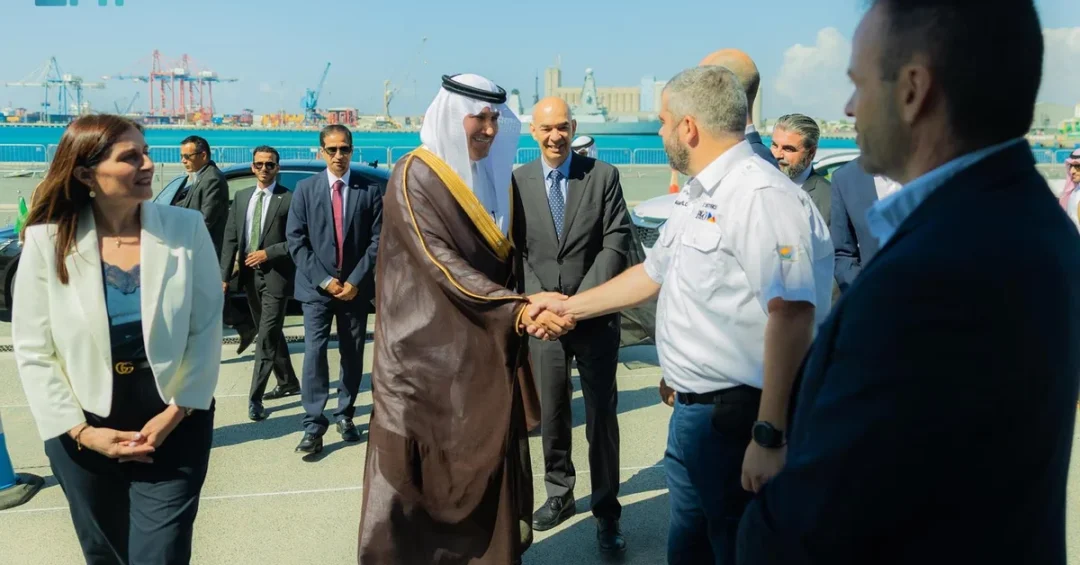
Riyadh, September 2, 2024 — Saudi Arabia’s Minister of Transport and Logistic Services, Eng. Saleh Al-Jasser, led a high-level delegation to Limassol Port in Cyprus, where he was accompanied by Cyprus’s Minister of Transport, Communications, and Works, Alexis Vafeades, and Minister of State for Shipping, Marina Hadjimanolis. The visit, reported by the Saudi Press Agency (SPA), focused on reviewing the port’s operational workflow, logistical capabilities, and the advanced technologies employed in container handling and the reception of cargo and cruise ships.
Context and Background
This visit underscores Saudi Arabia’s commitment to strengthening international maritime cooperation as part of its broader strategy to become a global logistics hub. Under Vision 2030, the Kingdom aims to diversify its economy and enhance its role in global trade, with the National Transport and Logistics Strategy targeting investments exceeding SAR 1 trillion by 2030. Limassol Port, as a key Mediterranean gateway, offers valuable insights into modern port operations that can support Saudi Arabia’s efforts to improve efficiency across its own ports, such as Jeddah Islamic Port and King Abdulaziz Port in Dammam.
The meeting also highlights the growing diplomatic and economic ties between Saudi Arabia and Cyprus, a member of the European Union. Cooperation in transport and logistics can facilitate smoother trade routes between the Gulf and Europe, aligning with Saudi Arabia’s goal to increase non-oil exports and attract foreign investment. The presence of senior Cypriot officials reflects the mutual interest in sharing expertise and exploring potential partnerships.
Key Details
During the visit, Eng. Al-Jasser was briefed on Limassol Port’s container handling systems, cargo reception processes, and cruise ship facilities. The port is one of the busiest in the Eastern Mediterranean, known for its strategic location and modern infrastructure. The delegation observed firsthand how technology optimizes port operations, from automated cranes to digital tracking systems. This knowledge exchange is expected to inform ongoing upgrades at Saudi ports, which are being transformed into smart, interconnected hubs under the National Transport and Logistics Strategy.
Cyprus’s Minister of Transport, Communications, and Works, Alexis Vafeades, and Minister of State for Shipping, Marina Hadjimanolis, accompanied the Saudi delegation, emphasizing the collaborative spirit of the visit. The discussions likely covered potential areas of cooperation, including port management, logistics training, and maritime innovation. Such exchanges are vital as Saudi Arabia seeks to position itself as a leader in logistics performance, aiming to rank among the top 10 countries in the Logistics Performance Index by 2030.
Implications and Impact
This visit carries significant implications for regional and international trade. By learning from Limassol Port’s best practices, Saudi Arabia can enhance the competitiveness of its own ports, which are critical nodes in the global supply chain. Improved efficiency at Saudi ports would reduce shipping times, lower costs, and boost trade volumes, benefiting both the Kingdom and its trading partners. Moreover, stronger ties with Cyprus could open new avenues for cooperation in maritime security, renewable energy, and tourism, further integrating Saudi Arabia into the Mediterranean economic landscape.
On a broader scale, the visit supports Saudi Arabia’s Vision 2030 objective of becoming a pivotal link between Asia, Europe, and Africa. As global trade routes evolve, the Kingdom’s investments in logistics infrastructure, including the creation of special economic zones and the expansion of port capacities, are designed to attract international businesses and create jobs. The exchange with Cyprus is a testament to Saudi Arabia’s proactive approach to international engagement and its determination to learn from global leaders.
Vision 2030 Alignment
This visit aligns seamlessly with Vision 2030, which seeks to transform Saudi Arabia into a global investment powerhouse and a hub connecting three continents. The National Transport and Logistics Strategy, a key Vision 2030 program, aims to increase the sector’s contribution to GDP and create thousands of jobs. By studying successful models like Limassol Port, Saudi Arabia is laying the groundwork for a modern, efficient logistics network that will drive economic diversification and sustainable development for generations to come.
20 Questions
Q1. Who visited Limassol Port?
A1. Saudi Minister of Transport and Logistic Services Eng. Saleh Al-Jasser led the delegation, accompanied by Cyprus’s Minister of Transport, Communications, and Works Alexis Vafeades, and Minister of State for Shipping Marina Hadjimanolis.
Q2. When did the visit take place?
A2. The visit occurred on September 2, 2024, as reported by the Saudi Press Agency.
Q3. What was the purpose of the visit?
A3. The purpose was to review the port’s operational workflow, logistical capabilities, and advanced technologies for handling containers, cargo, and cruise ships.
Q4. Which Saudi ministry was represented?
A4. The Saudi Ministry of Transport and Logistic Services was represented by Eng. Saleh Al-Jasser.
Q5. Who accompanied the Saudi minister from Cyprus?
A5. Cyprus’s Minister of Transport, Communications, and Works Alexis Vafeades and Minister of State for Shipping Marina Hadjimanolis accompanied him.
Q6. What is Limassol Port known for?
A6. Limassol Port is one of the busiest in the Eastern Mediterranean, known for its strategic location and modern infrastructure in container handling and cruise services.
Q7. How does this visit relate to Saudi Vision 2030?
A7. It supports Vision 2030 by enhancing international cooperation and knowledge exchange to develop Saudi Arabia as a global logistics hub.
Q8. What technologies was the Saudi delegation briefed on?
A8. They were briefed on container handling systems, cargo reception processes, and technologies used for cruise ships.
Q9. Why is Cyprus important for Saudi Arabia’s logistics strategy?
A9. Cyprus is an EU member with a key Mediterranean port, offering opportunities for trade routes between the Gulf and Europe.
Q10. What is the National Transport and Logistics Strategy?
A10. It is a Vision 2030 program aiming to diversify the economy, increase non-oil exports, and position Saudi Arabia as a top logistics hub by 2030.
Q11. How might this visit impact Saudi ports?
A11. Insights from Limassol could inform upgrades at Saudi ports, improving efficiency, reducing costs, and boosting trade volumes.
Q12. What are the expected outcomes of the visit?
A12. Enhanced cooperation, potential partnerships, and adoption of best practices to modernize Saudi Arabia’s maritime sector.
Q13. Which Saudi ports could benefit from this exchange?
A13. Major ports like Jeddah Islamic Port and King Abdulaziz Port in Dammam could benefit from improved technologies and processes.
Q14. How does this visit reflect Saudi Arabia’s international engagement?
A14. It demonstrates Saudi Arabia’s proactive approach to learning from global leaders and building diplomatic and economic ties.
Q15. What is the significance of the Eastern Mediterranean for global trade?
A15. The Eastern Mediterranean is a vital trade corridor connecting Europe, Asia, and Africa, making ports like Limassol strategically important.
Q16. Did the visit include discussions on maritime security?
A16. While not specified, such visits often include talks on maritime security, given the strategic nature of port operations and international trade.
Q17. How does Saudi Arabia plan to rank in the Logistics Performance Index?
A17. Saudi Arabia aims to be among the top 10 countries in the Logistics Performance Index by 2030.
Q18. What role does the private sector play in Saudi logistics?
A18. The private sector is encouraged to invest in logistics infrastructure and innovation, driving efficiency and job creation.
Q19. Are there similar visits planned to other ports?
A19. While not confirmed, Saudi Arabia frequently engages in international visits to study best practices and foster partnerships.
Q20. What is the overall message of this visit?
A20. The visit underscores Saudi Arabia’s commitment to global cooperation and its drive to become a leading logistics hub under Vision 2030.
Reader Feedback
We value your thoughts. Please share your feedback on this article.
Your feedback helps us improve our coverage.